

Walk into a dull, neutral room and then step into a vibrant one filled with colorful furniture. The difference is immediate. The colorful space feels lively, inviting, and full of personality. This reaction is not accidental. Color is one of the most powerful tools in interior design, capable of shaping the atmosphere and emotional experience of a space. Designers often rely on color to transform ordinary rooms into environments that feel dynamic and welcoming.
Color affects more than aesthetics. Research in color psychology shows that colors influence mood, perception, and behavior. Different hues can encourage calmness, stimulate creativity, or energize social interaction depending on how they are used. Warm shades such as reds, oranges, and yellows tend to encourage activity and conversation, while cooler tones like blues and greens create relaxation and focus. This is why a room filled with vibrant furniture can feel lively even before anyone speaks.
Another fascinating aspect of color is its ability to change how we perceive space. Light colors can make a room appear larger and brighter, while darker tones create depth and intimacy. Designers often combine multiple colors to manipulate spatial perception and balance visual interest. When multi colored furniture enters the picture, the effect becomes even more powerful. Suddenly, the room gains layers of visual energy that guide the eye and create a sense of movement within the space.
The Psychology Behind Color and Mood
Human beings respond to color instinctively. Think about how a sunny yellow chair can lift your mood or how a calm blue sofa makes a room feel peaceful. These reactions are rooted in psychological associations that our brains have developed over time. Studies suggest that certain colors can influence emotions, productivity, and even appetite. That is why restaurants often use warm tones, while offices lean toward cool hues that promote concentration.
Multi colored furniture takes advantage of these psychological responses by combining several emotional triggers in one space. A living room featuring a turquoise armchair, mustard sofa, and coral accent table does not just look stylish. It also stimulates different emotional cues that make the room feel balanced and alive. Each color contributes its own subtle influence on how people experience the environment.
Designers often describe color as the language of interior design. Just like words in a sentence, colors work together to communicate a message. When used thoughtfully, multi colored furniture tells a story of creativity, warmth, and personality. Instead of a single emotional tone dominating the room, multiple colors create a richer and more engaging atmosphere.
The key lies in harmony. When colors are chosen carefully, they complement each other rather than compete. The result is a room that feels vibrant but still cohesive. This is why colorful interiors often feel welcoming and memorable.
How Color Changes Spatial Perception
Have you ever noticed how a bright, colorful room seems bigger and more open than it actually is? This illusion is one of the most fascinating effects of color in interior design. Designers frequently use color contrasts and combinations to guide how the eye moves through a space.
When furniture features multiple colors, it introduces visual layers that break up monotony. Instead of a single flat color dominating the room, the eye moves from one piece to another, exploring the space. This movement creates the feeling that the room is more dynamic and spacious than it might otherwise appear.
Light-reflecting colors play a major role here as well. Bright hues bounce natural and artificial light around the room, increasing overall brightness. This makes the entire environment feel lighter and more open. Even a small room can appear lively and expansive when colorful furniture reflects and distributes light across different surfaces.
Color also helps define zones within a room. For example, a bold multicolored sofa might anchor the seating area, while a colorful side table highlights a reading corner. These subtle visual cues make the room easier to navigate and more comfortable to use.
The Rise of Multi Colored Furniture in Modern Homes
Interior design trends evolve constantly, but one theme has become increasingly clear in recent years. Homeowners are moving away from strictly neutral spaces and embracing more personality in their interiors. Multi colored furniture has become a central part of this shift.
Design experts note that modern homeowners want their spaces to reflect individuality and creativity. The trend toward playful, expressive interiors has grown stronger, especially with the emergence of whimsical design concepts that emphasize bold colors and joyful elements. Instead of rooms that feel like showrooms, people now prefer homes that feel personal and vibrant.
Another reason for the popularity of colorful furniture is the growing appreciation for eclectic style. Mixing colors, textures, and patterns allows homeowners to create unique spaces rather than following rigid design rules. Multi colored furniture fits perfectly into this philosophy because it encourages experimentation.
Furniture manufacturers have also responded to this trend by offering more color options than ever before. From rainbow bookshelves to patchwork sofas, designers are creating pieces that act as both functional furniture and artistic statements.
Design Trends Encouraging Bold Color Choices
Several modern design movements have encouraged homeowners to embrace color. One of the most prominent trends is the move toward expressive interiors that celebrate creativity. Designers now encourage mixing colors, materials, and shapes to create spaces that feel lively and unique.
In many contemporary homes, furniture is no longer expected to blend quietly into the background. Instead, it acts as a focal point. A vibrant armchair or colorful cabinet can instantly become the centerpiece of a room. These pieces attract attention and spark conversation.
Another trend supporting colorful furniture is the use of layered interiors. Designers combine multiple textures and colors to create depth and visual richness. A multicolored sofa paired with patterned cushions and vibrant artwork can transform a plain living room into a dynamic environment.
Even minimalist spaces have begun incorporating bold accents. A neutral room with white walls can gain personality through just one or two colorful furniture pieces. This balance allows homeowners to experiment with color without overwhelming the space.
Why Designers Are Moving Beyond Neutral Furniture
Neutral furniture dominated interior design for years because it felt safe and timeless. Beige sofas, gray armchairs, and white cabinets became staples of modern interiors. While these pieces remain popular, designers increasingly see them as blank canvases rather than final solutions.
Multi colored furniture offers something neutrals cannot provide: character. A room filled entirely with neutral tones can sometimes feel sterile or impersonal. Adding color introduces warmth and individuality that transforms the space into something memorable.
Another reason designers favor colorful furniture is its versatility. Contrary to popular belief, colorful pieces can work in many design styles. A vibrant mid-century chair fits perfectly in a modern apartment, while a colorful vintage cabinet adds charm to a traditional home.
In essence, colorful furniture acts like a spark of creativity. It invites experimentation and encourages homeowners to express their personality through design.
Ways Multi Colored Furniture Instantly Brightens a Room
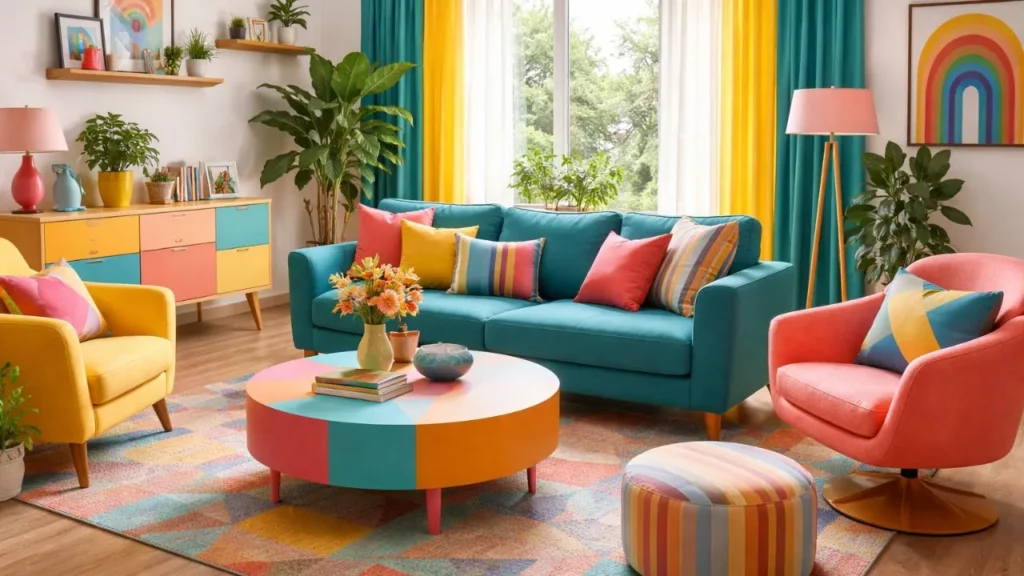
Imagine walking into a room where every piece of furniture is the same color. The space might feel tidy, but it would probably lack excitement. Now imagine that same room with a colorful sofa, vibrant chairs, and playful accent tables. Suddenly, the room feels alive.
Multi colored furniture brightens a room by introducing contrast. When different colors appear together, they highlight each other. A blue chair looks brighter next to a yellow table, and a red cabinet becomes more striking beside a neutral wall. This contrast energizes the entire space.
Colorful furniture also creates focal points that draw attention. Instead of wandering aimlessly across blank surfaces, the eye naturally gravitates toward bold pieces. These focal points give the room structure and visual interest.
Perhaps the most important effect of multi colored furniture is emotional. Colorful environments often feel happier and more inviting than monochromatic ones. The combination of multiple hues stimulates curiosity and creativity, making the space feel more engaging.
Creating Visual Energy and Contrast
Contrast is one of the most powerful tools in interior design. When colors differ dramatically from one another, they create visual excitement. Multi colored furniture naturally produces this effect because each piece introduces a new hue into the environment.
For example, a teal armchair placed next to a mustard sofa creates a vibrant contrast that instantly captures attention. This dynamic pairing prevents the room from feeling flat or predictable. Instead, the space feels energetic and visually stimulating.
Contrast also helps highlight architectural features. If the walls and floors remain neutral, colorful furniture stands out even more. The room becomes a gallery where each piece contributes to the overall composition.
Designers often use contrast to guide movement within a space. Bright furniture placed strategically around the room encourages people to explore different areas. The result is a room that feels lively and interactive.
Enhancing Natural Light and Perception of Space
Colorful furniture can make a room appear brighter by reflecting light across different surfaces. Lighter colors, in particular, bounce sunlight around the room and amplify natural brightness. Even bold hues can enhance lighting when combined with reflective materials or glossy finishes.
Rooms with multiple colors often feel more open because the eye travels between different visual points. Instead of focusing on one large surface, attention moves across the space. This motion creates a sense of depth that makes the room feel larger.
Colorful furniture also interacts beautifully with natural light throughout the day. Morning sunlight might highlight warm tones, while evening light emphasizes cooler shades. The room becomes dynamic, changing subtly as lighting conditions shift.
This interaction between color and light adds life to the space. Instead of remaining static, the room evolves throughout the day, offering new visual experiences.
Choosing the Right Multi Colored Furniture
Selecting multi colored furniture requires more than simply choosing bright pieces. The goal is to create harmony between colors so that the room feels cohesive rather than chaotic. Understanding basic color theory can help achieve this balance.
Designers often rely on the color wheel when planning interiors. Complementary colors sit opposite each other on the wheel and create strong contrast, while analogous colors sit next to each other and produce softer harmony. Both approaches can work beautifully in furniture design.
Another helpful guideline is the 60-30-10 rule often used in interior design. According to this principle, 60 percent of the room should feature a dominant color, 30 percent a secondary color, and 10 percent an accent color. Multi colored furniture often serves as the accent that ties the entire palette together.
Best Rooms for Multi Colored Furniture
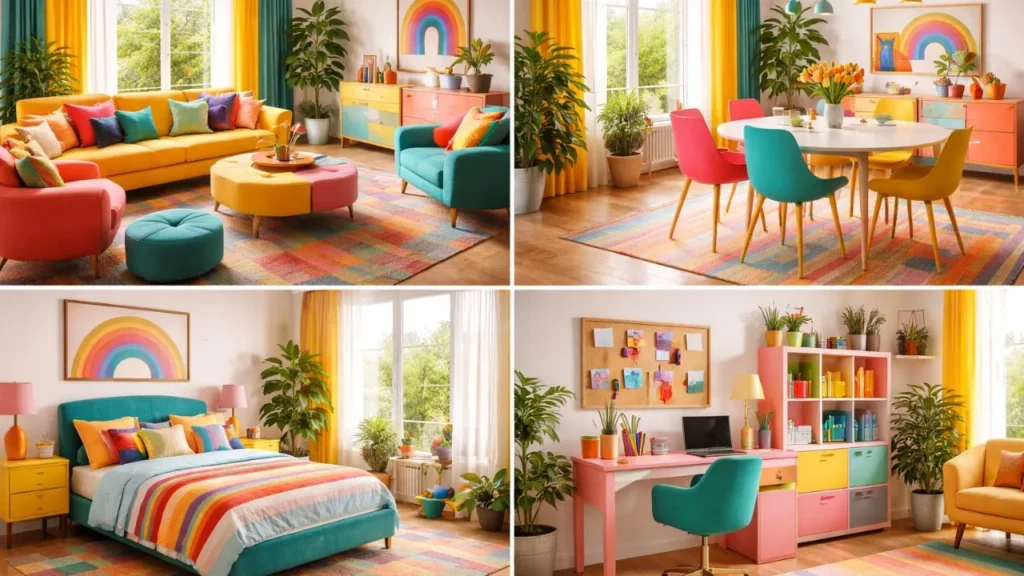
Not every room benefits from the same design approach. Some spaces thrive on bold colors, while others require a softer touch. Multi colored furniture works particularly well in areas where people gather and interact.
Living rooms are the perfect example. These spaces often serve as social hubs where family members relax and entertain guests. Colorful furniture adds warmth and energy, making the room feel welcoming and lively.
Bedrooms can also benefit from subtle multi colored elements. Instead of overwhelming the room, designers often introduce softer palettes such as pastel combinations or muted earth tones. These colors maintain tranquility while still adding personality.
Even home offices are embracing colorful furniture. A vibrant desk chair or colorful bookshelf can stimulate creativity and prevent the workspace from feeling monotonous.
Styling Tips for Multi Colored Furniture
Styling colorful furniture requires balance. If every element in the room competes for attention, the result can feel chaotic. Designers often pair bold furniture with neutral backgrounds to maintain harmony.
Neutral walls, flooring, and large furniture pieces create a calm foundation that allows colorful accents to shine. This approach prevents the room from feeling overwhelming while still embracing vibrant design.
Accessories also play a key role. Throw pillows, artwork, and rugs can echo the colors of the furniture, tying the entire room together. These smaller elements create continuity between different parts of the space.
Another useful technique is repetition. When the same color appears in multiple places, the room feels more cohesive. A blue sofa paired with blue artwork and a blue vase creates a subtle visual rhythm that unifies the design.
Common Mistakes to Avoid
While colorful furniture can transform a room, it must be used thoughtfully. One common mistake is overusing highly saturated colors. Extremely bright hues in large quantities can overwhelm the senses and create visual stress.
Another mistake is ignoring balance. If every piece of furniture is colorful, the room may lack a clear focal point. Mixing colorful items with neutral ones helps maintain visual harmony.
Lighting should also be considered carefully. Colors can appear dramatically different under artificial light compared to natural sunlight. Testing furniture colors in the actual room ensures that they look as intended throughout the day.
Future Trends in Colorful Furniture Design
The future of interior design is moving toward personalization and creativity. Homeowners increasingly want spaces that reflect their identities rather than following standardized trends. Multi colored furniture fits perfectly into this movement.
Designers predict that bold colors, mixed materials, and playful shapes will continue to dominate interior trends. Curved furniture and vibrant palettes are already gaining popularity as homeowners seek interiors that feel warm and expressive.
Another emerging trend is sustainable design. Furniture makers are experimenting with eco-friendly materials while offering diverse color options. This combination allows homeowners to create vibrant interiors without compromising environmental values.
Technology may also influence colorful furniture in the future. Customizable furniture with interchangeable panels or fabrics could allow homeowners to change colors easily as their tastes evolve.
FAQs
1. Is multi colored furniture suitable for small rooms?
Yes, it can actually make small rooms feel larger and more vibrant. Using lighter tones and balanced color combinations helps reflect light and create visual depth.
2. How many colors should I include in a room?
Most designers recommend using three to five colors in a room to maintain harmony while still creating visual interest.
3. Can colorful furniture work in minimalist interiors?
Absolutely. In minimalist spaces, colorful furniture often serves as a striking focal point against neutral backgrounds.
4. What colors brighten a room the most?
Warm tones such as yellow, coral, and orange often create a cheerful atmosphere, while lighter shades like pastel blue and mint green enhance brightness.
5. Should walls match colorful furniture?
Not necessarily. Neutral walls often work best because they allow colorful furniture to stand out without overwhelming the room.
Conclusion
Multi colored furniture has the power to transform a room from ordinary to extraordinary. By introducing vibrant hues, it creates visual energy, enhances light, and adds personality to interior spaces. Colorful furniture also influences mood, making rooms feel more welcoming and engaging.
The secret to successful colorful design lies in balance. When colors complement each other and integrate with the overall palette, the room feels harmonious rather than chaotic. With thoughtful planning, even a single colorful piece can brighten an entire space.
As interior design continues to embrace creativity and individuality, multi colored furniture will likely remain a favorite choice for homeowners who want their spaces to feel lively and expressive.

