

A cramped bathroom often feels like a design problem with no solution. Traditional tubs eat up floor space, bulky shower enclosures create visual clutter, and the room begins to feel smaller every time the door closes. Homeowners dealing with compact bathrooms frequently face the same frustration. They want a modern shower experience but fear that removing a tub will make the space look unfinished or awkward.
Walk in showers have quietly changed how small bathrooms function. Instead of dominating the room, these showers open the layout and create visual flow. Architects, interior designers, and renovation specialists increasingly recommend walk in shower designs for compact bathrooms because they solve several problems at once. They maximize usable floor space, allow more natural light to move across the room, and bring a clean architectural look that older bathroom designs lacked.
A thoughtfully designed walk in shower can turn even the tightest bathroom into a refined and functional space. Layout choices, materials, lighting, and smart construction techniques all influence the final result. The difference between a cramped shower corner and a spa-like experience often lies in subtle design decisions that most homeowners overlook.
Why Walk In Showers Work So Well in Small Bathrooms
Bathroom remodeling specialists frequently point out that space perception matters more than physical square footage. A small bathroom can appear larger when the layout allows visual continuity across the floor and walls. Walk in showers support this principle because they eliminate bulky barriers such as shower curtains, framed enclosures, and raised tubs.
A clear shower zone visually extends the floor area. When the same tile continues seamlessly from the bathroom floor into the shower area, the eye reads the room as a single uninterrupted space. This design technique is widely used in European bathrooms where compact layouts are common.
Walk in showers also introduce flexibility in layout. Traditional tubs require a fixed footprint, yet walk in showers adapt to corners, narrow walls, or awkward spaces beneath windows. Designers often treat the shower area as an integrated architectural element rather than a separate fixture.
Homeowners renovating small bathrooms often discover that removing a bathtub instantly creates design opportunities. Storage niches become possible, lighting improves, and the room feels less confined.
Space Efficiency and Open Layout Design
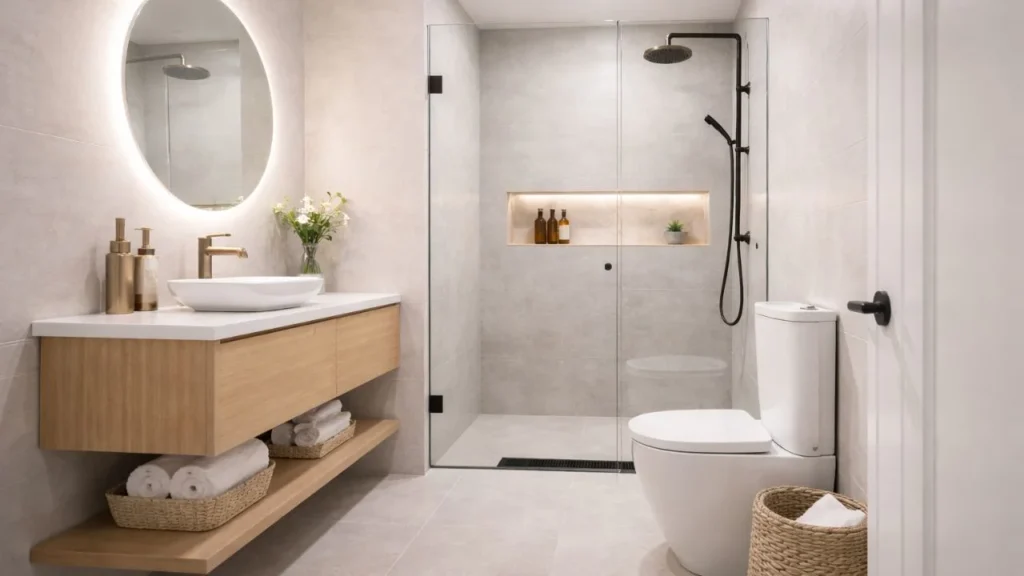
A walk in shower supports open floor planning. Glass panels or frameless partitions maintain visibility across the room, preventing the boxed in appearance that framed shower doors often create.
Bathrooms under 60 square feet benefit especially from this design approach. Without heavy framing, the shower becomes visually lighter. The room appears more balanced, even when the actual dimensions remain unchanged.
Interior designers frequently recommend a single fixed glass panel rather than a full enclosure. This solution protects the surrounding area from water while preserving openness. It also simplifies cleaning and reduces hardware clutter.
The sense of openness contributes to psychological comfort as well. Bathrooms are used daily, and the feeling of breathing space influences how relaxing the environment becomes.
Modern Aesthetic Value in Compact Bathrooms
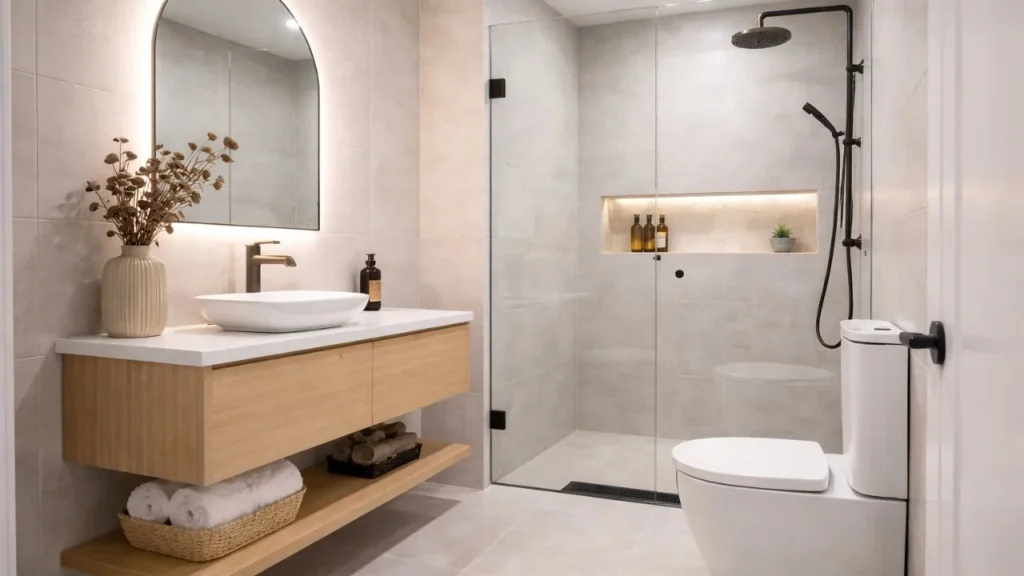
Design trends in residential architecture increasingly favor minimal structures and clean lines. Walk in showers align naturally with this aesthetic direction. Instead of heavy enclosures or raised tubs, the shower blends into the surrounding design.
Materials play a large role here. Large format tiles, natural stone surfaces, and textured porcelain finishes create subtle depth without overwhelming the room. Matte black or brushed brass fixtures introduce character without visual noise.
A small bathroom often benefits from fewer design elements that carry stronger visual presence. Walk in showers follow this philosophy by simplifying the layout while elevating the overall design.
Many homeowners renovating older homes find that replacing a tub with a walk in shower instantly modernizes the bathroom.
Layout Ideas That Make Small Walk In Showers Feel Larger
Spatial planning determines whether a small bathroom feels cramped or elegant. Even a difference of a few inches can influence comfort and movement. Professional designers approach walk in shower placement with careful attention to traffic flow, door swing, and visual alignment.
Positioning the shower at the far end of the room often works well because it creates depth. The eye naturally travels toward the back wall, making the room feel longer than it actually is.
Strategic placement of glass panels, tiles, and lighting further enhances spatial perception.
Corner Walk In Shower Layout
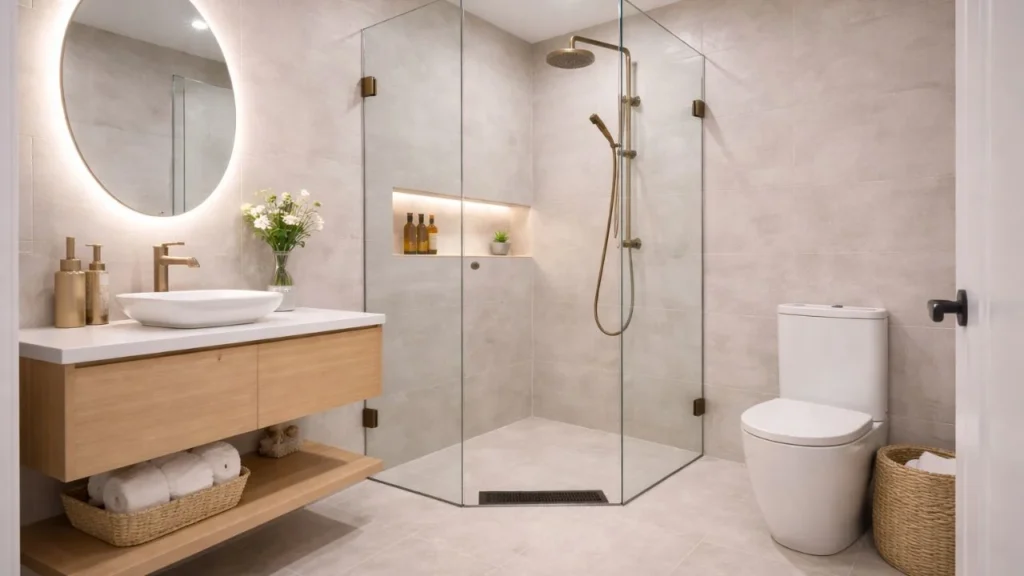
Corner showers represent one of the most efficient configurations for compact bathrooms. A corner location uses two existing walls while leaving the rest of the room open for the vanity and toilet.
Glass panels positioned diagonally or perpendicular to the walls create an elegant enclosure without overwhelming the layout. This configuration works particularly well in bathrooms with square floor plans.
Corner walk in showers also reduce plumbing adjustments during renovation. Existing supply lines along exterior walls can remain in place, which lowers renovation costs and simplifies installation.
Designers often incorporate built in wall niches in corner showers to eliminate the need for bulky storage racks.
Linear Walk In Shower Along One Wall
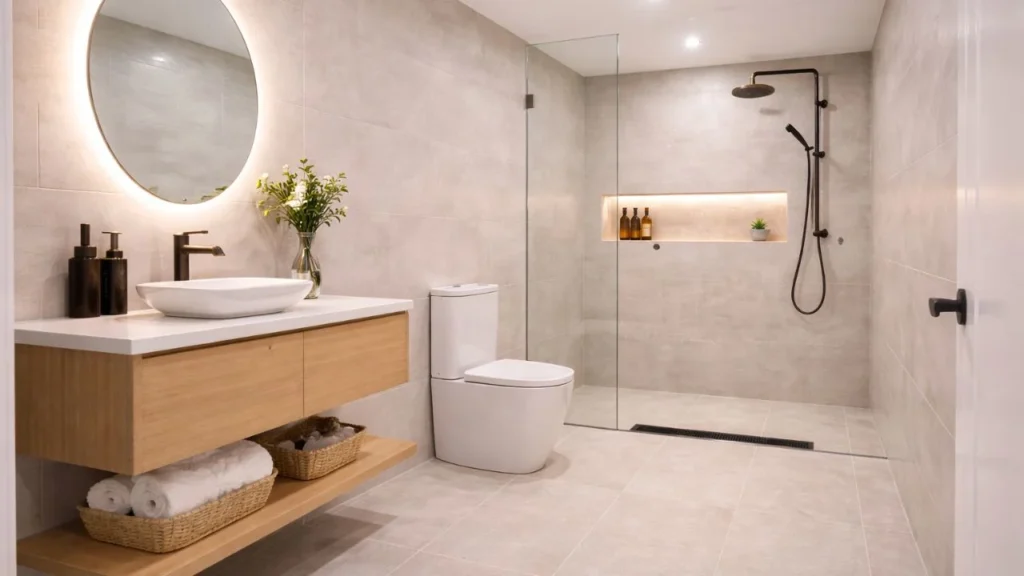
Narrow bathrooms benefit from a linear shower layout placed along the back wall. This design transforms the entire width of the room into a shower area while maintaining clear pathways elsewhere.
A single glass panel separates the shower from the rest of the bathroom. Water drains through a linear floor drain installed near the back wall. This type of drain eliminates the need for a raised curb, allowing the floor to remain level across the room.
Architectural lighting enhances this layout. Recessed ceiling lights or waterproof LED strips highlight the tile textures and create subtle depth.
The linear walk in shower layout works especially well in urban apartments where bathroom width is limited.
Wet Room Style for Ultra Small Bathrooms
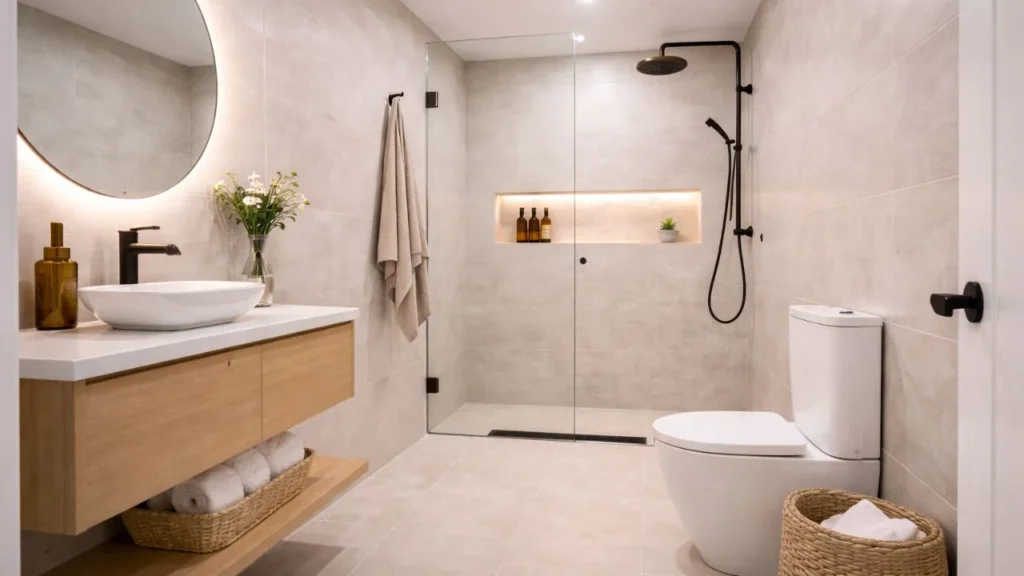
In extremely compact bathrooms, the entire room can function as a wet room. The floor is waterproofed, and a slight slope directs water toward a central drain.
Glass partitions may be minimal or completely absent. The shower area blends seamlessly with the rest of the bathroom.
This design approach requires careful waterproofing and professional installation. Yet the visual result often feels spacious and contemporary. European hotels frequently use wet room layouts in smaller suites due to their efficiency and elegant simplicity.
Design Materials That Elevate Walk In Shower Spaces
Material choices influence both aesthetics and durability. Bathrooms experience high humidity, temperature fluctuations, and daily water exposure. Surfaces must handle these conditions while contributing to the overall design language of the room.
Small bathrooms benefit from materials that reflect light and reduce visual clutter. Large tiles, neutral color palettes, and subtle textures all contribute to this effect.
Professional bathroom designers frequently recommend minimizing grout lines because excessive patterns can visually shrink a room.
Large Format Tiles for Visual Expansion
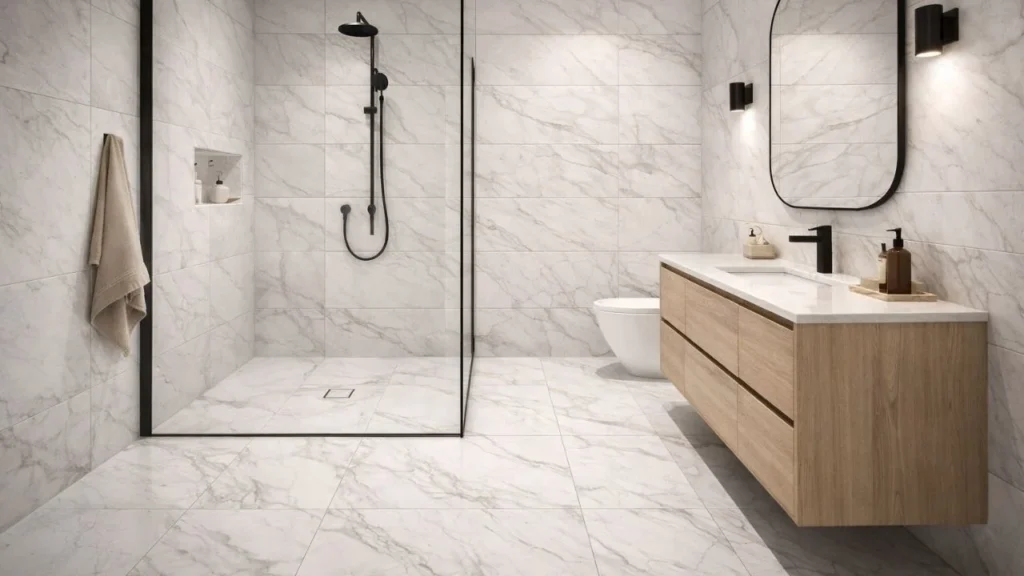
Large format tiles remain a popular choice for small bathroom showers. These tiles reduce the number of grout lines across the walls and floor, producing a cleaner appearance.
A continuous tile pattern across both the bathroom and shower floor enhances spatial continuity. This technique tricks the eye into perceiving a larger surface area.
Porcelain tiles dominate modern bathroom design because they resist moisture and require minimal maintenance. Marble effect porcelain tiles offer the look of natural stone without the upkeep challenges.
Texture also plays an important role. Soft matte finishes reduce glare while maintaining a sophisticated appearance.
Frameless Glass Panels and Doors
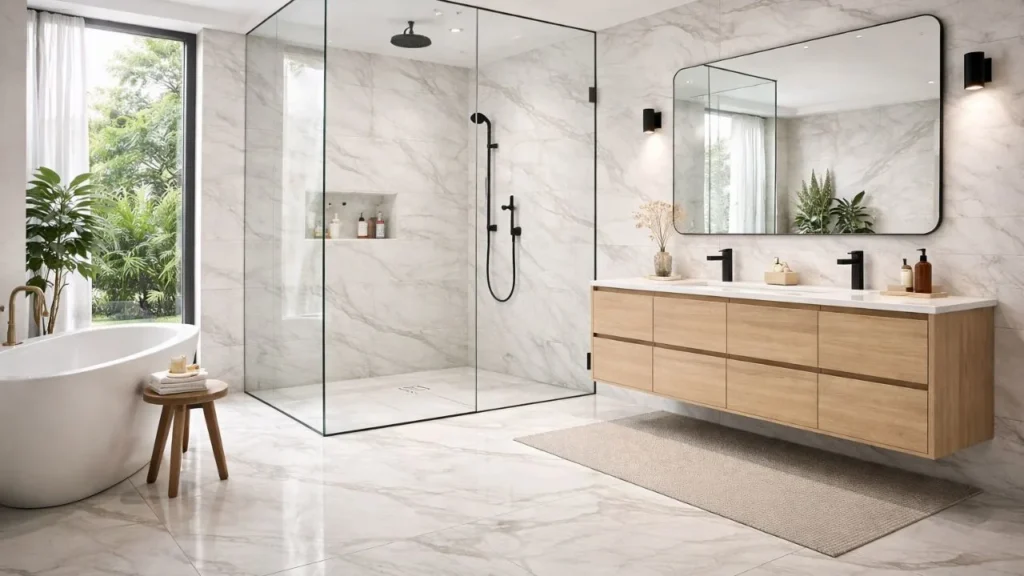
Glass panels create transparency, which visually expands a room. Frameless designs eliminate bulky metal edges that interrupt sight lines.
A single fixed glass panel often provides adequate splash protection for walk in showers. This minimalist approach preserves openness and reduces the mechanical complexity associated with hinged doors.
Clear glass remains the most common choice, though low iron glass improves clarity by removing the slight green tint present in standard panels.
For homeowners seeking additional privacy, lightly frosted glass or subtle textured patterns can be incorporated without sacrificing brightness.
Natural Stone and Textured Surfaces
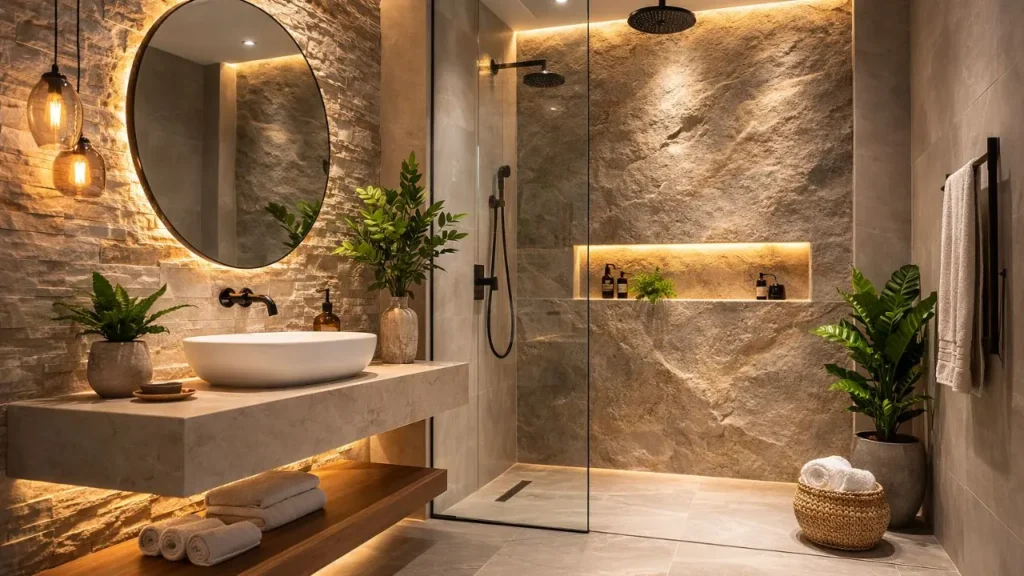
Natural materials bring warmth to modern bathroom spaces. Stone tiles, pebble floors, and textured porcelain surfaces add tactile depth.
Small bathrooms particularly benefit from feature walls inside the shower area. A textured stone accent wall can draw attention away from the room’s limited dimensions.
Pebble shower floors remain popular for their natural look and gentle massage effect underfoot. Designers frequently pair pebble floors with smooth wall tiles to maintain visual balance.
Lighting Techniques That Enhance Small Shower Spaces
Lighting transforms how a bathroom feels. Poor lighting flattens surfaces and creates shadows that exaggerate cramped conditions. Carefully placed illumination introduces depth and highlights architectural features.
Bathrooms with walk in showers often incorporate layered lighting strategies. Ceiling lights provide overall brightness, while accent lighting enhances specific design elements.
Waterproof LED strips have become particularly popular in contemporary bathroom design.
Recessed Ceiling Lighting in Shower Areas
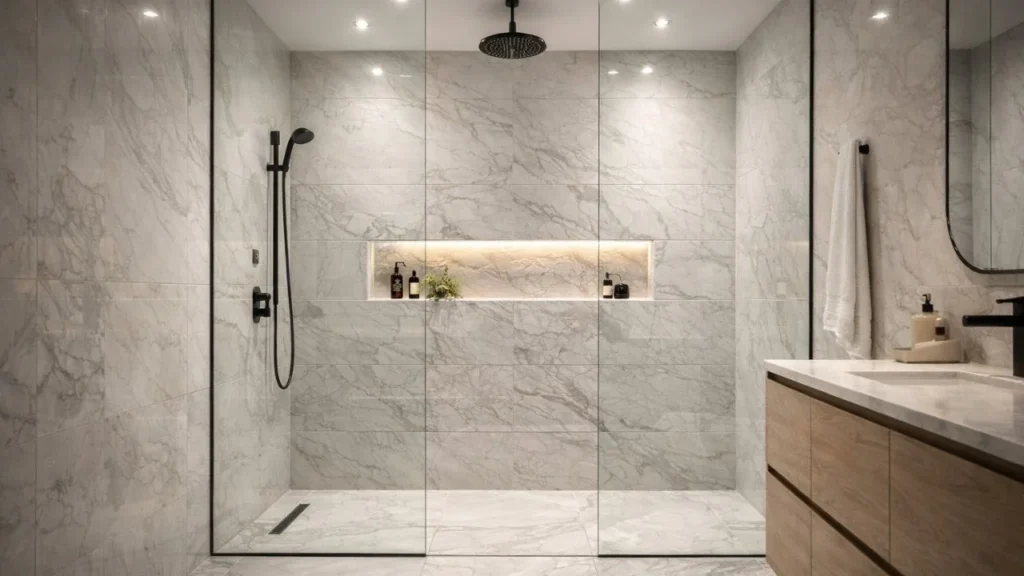
Recessed ceiling fixtures maintain a clean ceiling surface while delivering focused light. Moisture rated recessed lights are installed directly above the shower area.
These lights eliminate shadows on tile surfaces and make the shower feel brighter and more inviting. Proper spacing ensures even illumination across the space.
Lighting color temperature also influences the bathroom atmosphere. Neutral white lighting around 4000K produces a natural daylight effect that works well with most tile finishes.
LED Niches and Indirect Lighting
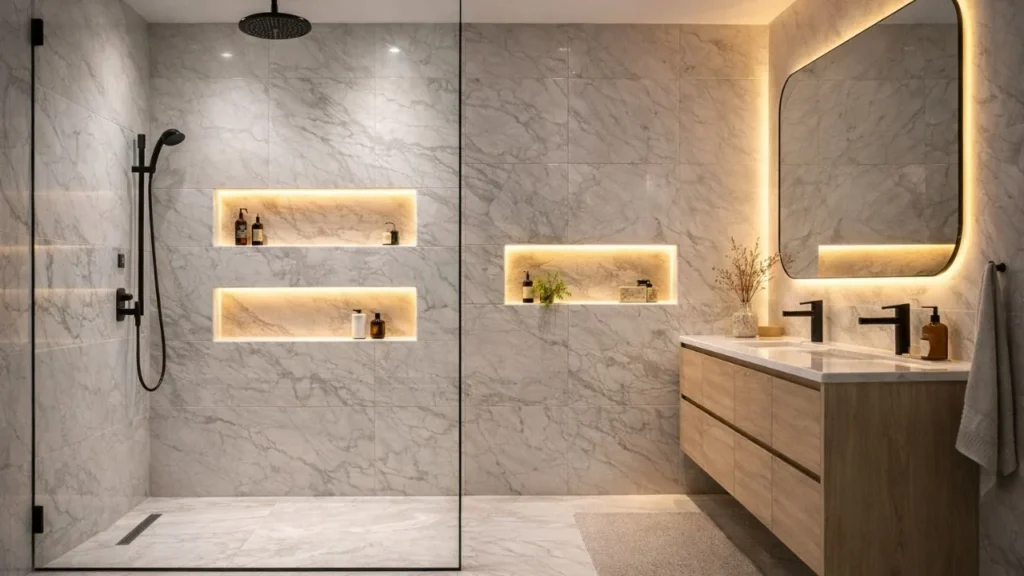
Shower niches serve both functional and decorative roles. Built in niches eliminate the need for hanging storage while providing a place for shampoo and soap.
LED lighting integrated into these niches introduces a subtle glow that enhances the overall ambiance. At night, this soft illumination can serve as a gentle bathroom night light.
Indirect lighting beneath floating vanities or behind mirrors further amplifies the sense of depth within small bathrooms.
Practical Design Considerations for Small Walk In Showers
A successful bathroom design balances visual appeal with daily practicality. Walk in showers must address drainage, waterproofing, accessibility, and maintenance concerns.
Professional installers carefully slope the shower floor toward the drain to prevent water pooling. Even a slight miscalculation can cause persistent drainage problems.
Slip resistant surfaces also play an important role. Many porcelain tiles include textured finishes designed specifically for wet environments.
Proper ventilation ensures that moisture does not accumulate on walls and ceilings. Exhaust fans with humidity sensors automatically remove excess moisture after showers.
Construction Measurements and Planning
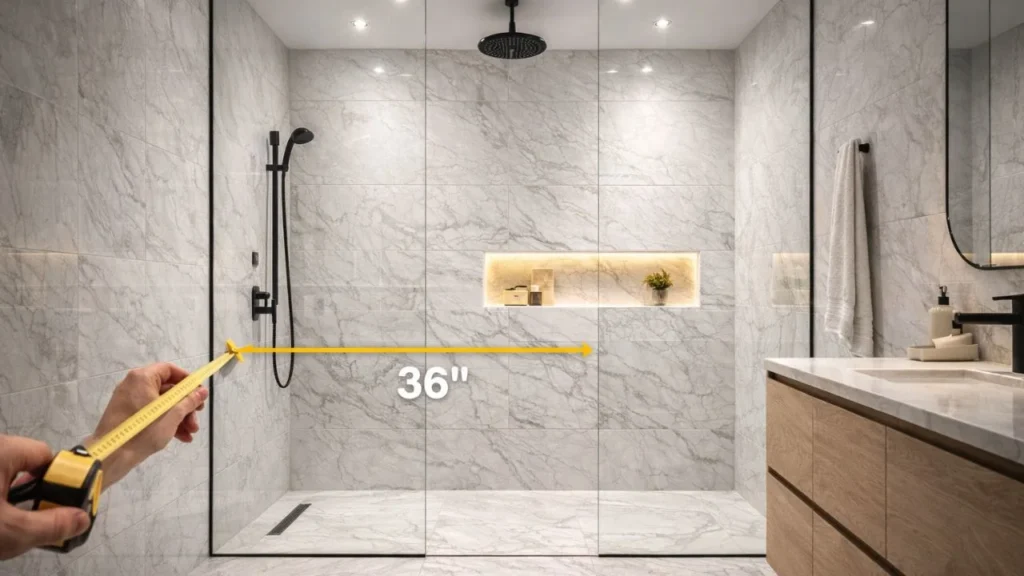
The dimensions of a walk in shower influence comfort and usability. Many designers recommend a minimum width of 36 inches for a comfortable shower experience.
Bathrooms with limited space may accommodate slightly smaller shower footprints when the design remains open and unobstructed.
Accurate measurements ensure that glass panels, tile layouts, and drainage systems align correctly during installation.
Storage Solutions That Work Inside Walk In Showers
Small bathrooms often struggle with storage. Traditional shower caddies or wire racks create clutter and interrupt clean design lines.
Built in niches provide an elegant alternative. These recessed compartments integrate directly into the shower wall, maintaining a streamlined appearance.
Multiple niches arranged vertically allow storage for different products. Larger niches may accommodate decorative items such as small plants or scented candles.
Corner shelves carved directly from stone or tile surfaces represent another discreet storage option.
Designers frequently align niches with tile grout lines to maintain visual symmetry.
Frequently Asked Questions
Can a walk in shower fit inside a very small bathroom?
Yes, compact bathrooms often benefit more from walk in showers than traditional tubs. A small footprint shower placed in a corner or along one wall creates more open floor space and improves the room’s visual balance.
Do walk in showers make bathrooms look larger?
They often create the impression of a larger room. Continuous floor tiles, frameless glass panels, and minimal barriers allow the eye to travel across the entire space without interruption.
What is the smallest recommended size for a walk in shower?
Many designers recommend around 36 by 36 inches for comfortable use. Some bathrooms accommodate slightly smaller dimensions when the shower remains open and unobstructed.
Are walk in showers difficult to clean?
Most designs reduce cleaning effort. Frameless glass contains fewer metal edges where soap residue accumulates, and large format tiles minimize grout maintenance.
Can a walk in shower increase home value?
Modern bathrooms strongly influence buyer perception. A thoughtfully designed walk in shower often signals a contemporary renovation and can make a property more appealing to buyers.
Are walk in showers safe for older adults?
Yes, many homeowners choose walk in showers because they eliminate high tub edges. Slip resistant flooring and strategically placed grab bars further improve safety.
Final Thoughts on Small Bathroom Walk In Shower Design
Compact bathrooms rarely offer generous square footage, yet thoughtful design decisions reshape how these spaces function. Walk in showers stand out as one of the most practical solutions for modern homes with limited bathroom space. Their open layout improves visual flow, introduces contemporary aesthetics, and adapts easily to different floor plans.
When materials, lighting, and layout work together, the smallest bathroom can feel calm, organized, and visually refined. Designers frequently describe walk in showers as architectural features rather than simple fixtures. That perspective changes how the entire room evolves during renovation.
A carefully planned walk in shower transforms tight bathrooms into spaces that feel intentional, balanced, and quietly sophisticated.

