

A tired kitchen carries a particular weight in a home. Cabinets feel dull, lighting looks outdated, and countertops show the scars of years of daily use. The space that once felt welcoming begins to look neglected, yet the thought of a full renovation raises concerns about cost, disruption, and time.
Many homeowners quietly assume that meaningful change requires tens of thousands of dollars. Contractors often highlight complete remodels that replace everything from cabinetry to flooring. That approach works for some households, though it rarely reflects the reality of tighter budgets or practical priorities.
Inexpensive kitchen renovations open a different path. Thoughtful design decisions, selective upgrades, and clever material choices reshape the look and function of a kitchen without dismantling the entire space. Small changes accumulate into a dramatic transformation when guided by practical design thinking and real-world renovation experience.
Rethinking the Kitchen Before Spending on Renovation
Many kitchens appear outdated because visual details age faster than structural elements. Cabinets might remain solid, while color, hardware, or finishes signal a previous decade. Recognizing this difference often separates an expensive remodel from a strategic refresh.
Professional designers frequently begin projects with observation rather than demolition. They study circulation patterns, cabinet condition, lighting distribution, and countertop wear. Often the layout already works well, yet surface materials create the impression of deterioration.
Inexpensive kitchen renovations rely heavily on this evaluation stage. A kitchen with durable cabinet boxes, functional appliances, and stable flooring rarely needs a full rebuild. Cosmetic improvements applied carefully can deliver a fresh appearance while preserving structural components.
Evaluating What Can Stay and What Should Change
A cabinet frame constructed from plywood or hardwood often lasts decades. Replacing it solely for aesthetic reasons wastes both money and materials. Skilled renovators examine hinge alignment, drawer tracks, and door surfaces before deciding whether replacement is necessary.
Countertops offer another example. Some laminate surfaces remain structurally sound even when their pattern appears dated. Resurfacing products or modern overlays create a dramatically different visual effect without removing the base structure.
Lighting frequently receives little attention during kitchen planning. Many older kitchens rely on a single ceiling fixture that casts uneven shadows across preparation areas. Upgrading lighting alone can transform the perception of the entire room.
Visual Updates That Reshape Perception
Color holds remarkable influence over spatial perception. Dark cabinetry absorbs light and visually compresses the room, while lighter tones reflect illumination and expand the sense of space. Painting cabinets or walls often delivers one of the most noticeable improvements within inexpensive kitchen renovations.
Hardware details also influence the visual age of a kitchen. Drawer pulls and cabinet knobs act as jewelry for cabinetry. Contemporary finishes such as brushed nickel, matte black, or warm brass introduce modern character without altering cabinet structures.
Backsplashes deserve attention as well. A dated tile pattern instantly signals an earlier design era. Replacing it with subway tile, textured ceramics, or peel-and-stick alternatives reshapes the entire wall composition behind the counter.
Budget Conscious Cabinet Transformation Techniques
Cabinets dominate the visual landscape of a kitchen. They occupy large wall areas and influence color balance, lighting reflection, and overall style. Renovation budgets often focus on cabinetry because its visual impact exceeds most other elements.
New cabinets carry significant expense due to materials, manufacturing, and installation. Inexpensive kitchen renovations approach cabinetry differently by focusing on refinishing, repainting, or refacing existing structures.
These methods respect the durability of cabinet frames while updating their appearance. Skilled application produces results that resemble new installations without the financial strain.
Cabinet Painting as a Cost Conscious Strategy
Paint holds transformative power when applied to cabinetry with proper preparation. The process requires cleaning, sanding, priming, and multiple coats of durable cabinet-grade paint. Skipping these stages results in chipping or uneven surfaces.
Neutral palettes remain popular because they coordinate with many countertop and flooring styles. Soft white, muted gray, and warm beige tones reflect light effectively while maintaining a timeless look. Darker shades such as charcoal or navy introduce contrast in larger kitchens.
Professional painters often recommend satin or semi gloss finishes. These surfaces resist grease and moisture while remaining easy to wipe clean after cooking.
Cabinet Refacing Instead of Full Replacement
Cabinet refacing preserves the cabinet box while replacing doors, drawer fronts, and external veneers. The structure remains intact while the exterior receives a completely new visual identity.
This approach reduces both labor and material costs compared with full cabinet replacement. Installation also finishes faster because demolition remains minimal.
Many manufacturers offer door styles that match current design trends. Shaker profiles, slab doors, and transitional panel designs allow homeowners to modernize kitchens without rebuilding cabinetry.
Countertop Upgrades That Fit Tight Renovation Budgets
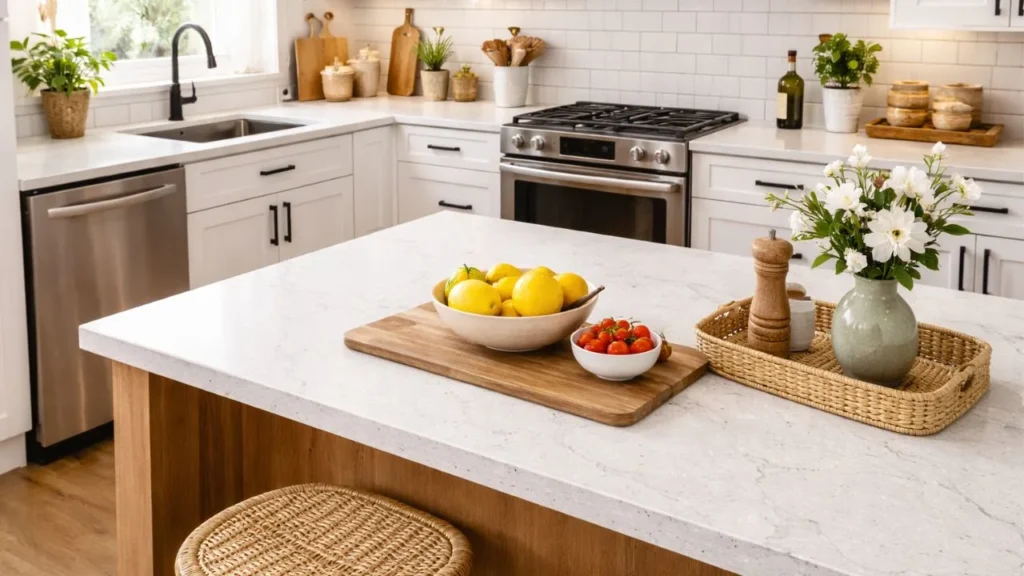
Countertops receive heavy daily use. They hold cutting boards, hot cookware, and appliances. Over time scratches, stains, and discoloration accumulate, making surfaces look older than the rest of the kitchen.
Premium stone surfaces such as granite or quartz attract attention in magazines and design showrooms. Their cost can exceed the budget available for inexpensive kitchen renovations. Fortunately, several alternatives deliver attractive results without high material costs.
Laminate technology has advanced significantly. Contemporary designs mimic natural stone with convincing textures and patterns. Modern laminates also resist scratches and heat more effectively than older versions.
Concrete overlays provide another option. A thin layer of specialized concrete spreads across existing surfaces and cures into a durable finish. Pigments and sealers allow varied color tones, creating a custom countertop appearance at a fraction of the cost of natural stone.
Budget Friendly Surface Refinishing Options
Countertop refinishing kits apply durable coatings over existing surfaces. These products include bonding primers, decorative chips, and protective sealers that simulate granite or stone.
The process requires patience and careful surface preparation. When applied correctly, refinished countertops withstand everyday kitchen use for many years.
Tile countertops present another alternative. Large format porcelain tiles create expansive surfaces with minimal grout lines. Porcelain resists heat and moisture effectively, making it suitable for cooking environments.
Balancing Style and Durability in Affordable Countertops
A renovation budget should consider daily kitchen habits. Families who cook frequently need surfaces that tolerate heat, moisture, and cutting activity. Durability becomes as important as visual appeal.
Edge profiles contribute to design perception as well. A simple squared edge works well for laminate or concrete surfaces, creating a clean modern line.
Backsplash integration also enhances countertop design. Coordinating colors between backsplash tiles and countertops produces a cohesive visual field that feels intentional rather than improvised.
Lighting Adjustments That Change the Entire Kitchen Atmosphere
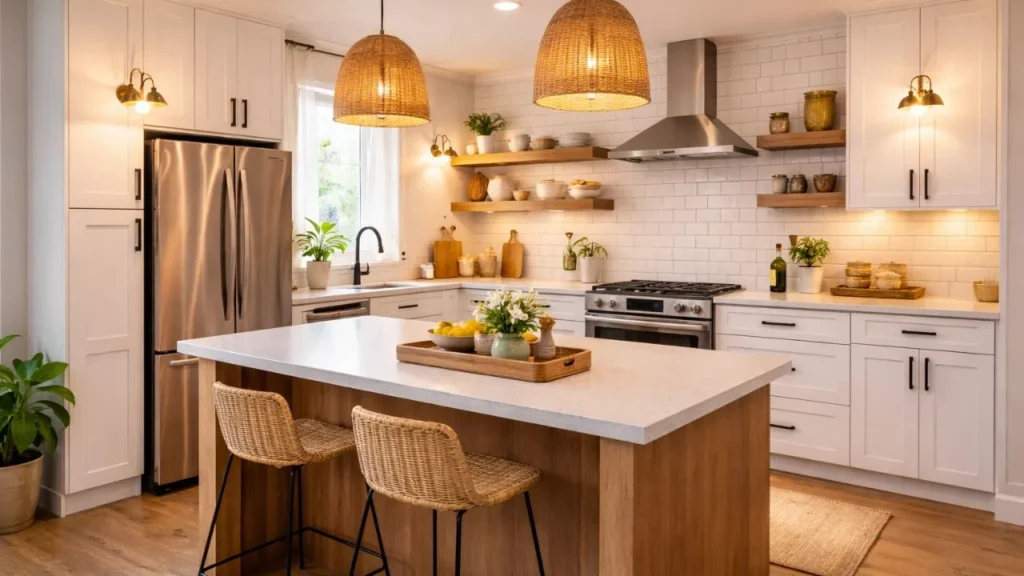
Lighting rarely appears in early renovation conversations, though its impact rivals cabinetry and countertops. Poor lighting hides color variation, creates shadows on work surfaces, and reduces the sense of warmth in the kitchen.
Inexpensive kitchen renovations frequently include lighting updates because installation remains relatively affordable compared with structural remodeling.
Layered lighting introduces depth and functionality. Ambient lighting illuminates the room broadly, while task lighting focuses on specific preparation areas such as countertops or sinks.
Under cabinet lighting demonstrates this principle clearly. Small LED strips mounted beneath upper cabinets cast light directly onto work surfaces. The kitchen becomes brighter and more practical during food preparation.
LED Fixtures for Energy Efficient Illumination
LED technology changed residential lighting dramatically. These fixtures consume less electricity and generate less heat compared with traditional incandescent bulbs.
Color temperature also influences kitchen ambiance. Warm white lighting creates a cozy atmosphere, while cooler tones highlight modern materials and crisp color palettes.
Replacing outdated fluorescent fixtures with sleek LED panels instantly modernizes the ceiling area. The kitchen feels brighter and more contemporary.
Decorative Lighting as a Design Statement
Pendant lights above kitchen islands or dining counters introduce visual interest. Glass shades, metal finishes, or industrial styles can reflect the personality of the household.
Even modestly priced fixtures transform a room when chosen thoughtfully. Lighting draws attention upward, balancing visual weight between cabinetry and ceiling.
Wall sconces near open shelving or dining areas add soft accent lighting that complements task illumination across the kitchen.
Flooring Solutions for Low Cost Kitchen Renovation Projects
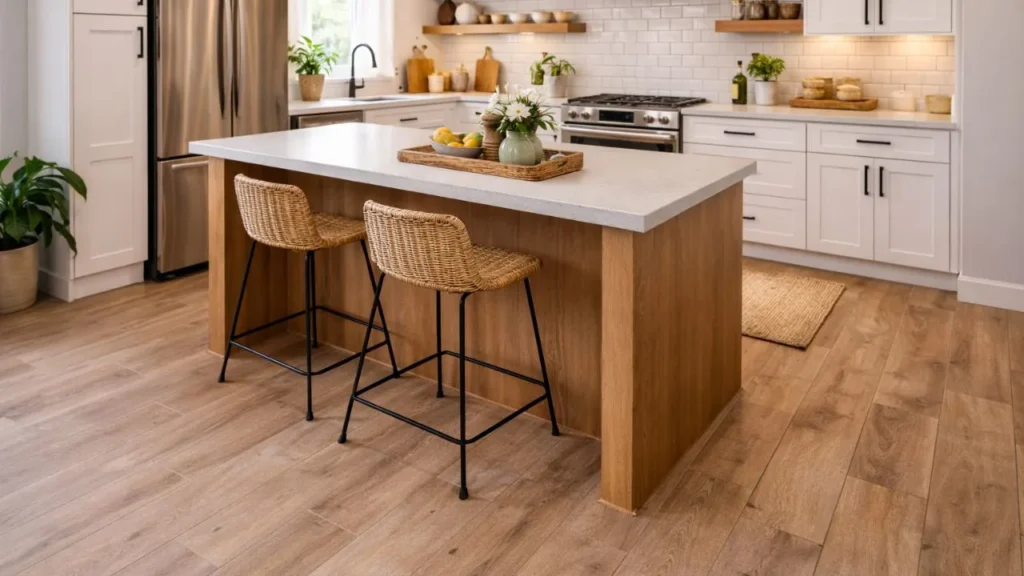
Kitchen flooring experiences constant wear. Foot traffic, spills, and dropped utensils gradually damage surfaces. Replacing flooring often appears expensive, yet several materials support inexpensive kitchen renovations without sacrificing durability.
Luxury vinyl plank flooring gained popularity for this reason. It replicates wood or stone textures while remaining water resistant and relatively easy to install.
Vinyl sheets also provide seamless surfaces that resist moisture effectively. Modern printing technology creates convincing tile or stone patterns.
Peel-and-stick tiles represent another accessible option for homeowners who prefer a hands-on approach. These tiles attach directly to prepared subfloors and require minimal tools.
When Refinishing Existing Floors Makes Sense
Some homes hide hardwood floors beneath older vinyl or laminate layers. Removing the upper layer reveals wood that can be sanded and refinished.
Refinishing preserves the character of natural wood while reducing renovation costs. The result often feels warmer and more authentic than synthetic alternatives.
Tile floors may also benefit from professional cleaning and grout recoloring. A refreshed grout line brightens the entire floor surface.
Texture and Color Influence on Kitchen Flooring
Floor color strongly influences spatial perception. Lighter tones reflect light and expand the appearance of smaller kitchens. Darker surfaces introduce contrast that highlights cabinetry.
Texture contributes to safety as well. Slightly textured flooring reduces slipping hazards in areas where water or cooking oil may spill.
Design continuity matters when kitchens connect to adjacent living areas. Selecting flooring that harmonizes with nearby rooms prevents visual fragmentation across the home.
Strategic Layout Adjustments Without Major Construction
Layout changes often appear expensive because they involve moving plumbing, electrical lines, or structural walls. Inexpensive kitchen renovations approach layout improvements with subtle adjustments rather than major reconstruction.
Open shelving offers one example. Removing a few upper cabinets introduces visual openness while maintaining storage capacity. Shelves also provide space for decorative dishes or everyday items.
Reorganizing storage inside cabinets can also improve efficiency. Pull out trays, vertical dividers, and drawer organizers increase usable space without altering cabinet structures.
Kitchen islands sometimes appear essential in modern design imagery. Portable islands or rolling carts deliver similar functionality without construction work.
Improving Workflow Through Smart Organization
Kitchen workflow revolves around the relationship between the sink, stove, and refrigerator. Minor adjustments such as relocating small appliances or rearranging cabinet contents can improve movement between these zones.
Storage solutions inside drawers and cabinets prevent clutter from spreading across countertops. A cleaner workspace automatically feels more modern and organized.
Magnetic knife strips, hanging pot racks, and wall mounted spice shelves free counter space while introducing visual texture to the kitchen walls.
Small Spatial Changes With Large Visual Impact
Removing a single cabinet door to create open shelving softens the visual density of upper cabinets. This technique works particularly well near windows where natural light enters.
Glass inserts within cabinet doors also break up solid surfaces. Interior lighting behind glass doors creates subtle illumination during evening hours.
Paint color transitions between kitchen and dining areas establish visual continuity while defining each space gently.
Practical Cost Comparison for Common Kitchen Updates
| Renovation Element | Typical Material Cost | Labor Intensity | Visual Impact | Longevity |
|---|---|---|---|---|
| Cabinet Painting | Low | Moderate | High | 5 to 10 years |
| Cabinet Refacing | Moderate | Moderate | High | 10 to 15 years |
| Laminate Countertops | Low to Moderate | Low | Medium | 10 years |
| LED Lighting Upgrade | Low | Low | Medium | 10 to 15 years |
| Vinyl Plank Flooring | Moderate | Moderate | High | 10 to 20 years |
Material Selection That Supports Long Term Value
Budget renovations still benefit from thoughtful material selection. Cheap materials that deteriorate quickly create repeated repair costs. Durable mid range products often represent the smartest investment.
Moisture resistance becomes critical in kitchens. Surfaces exposed to steam, cooking oils, and cleaning products must withstand regular exposure without swelling or discoloration.
Paint quality also matters. Cabinet specific paints contain stronger bonding agents and harder finishes than ordinary wall paint.
Hardware materials such as stainless steel or solid brass last longer than lightweight plated alternatives. Small details influence durability across the entire kitchen.
Environmental Considerations in Renovation Materials
Reusing existing cabinetry reduces waste entering landfills. Many inexpensive kitchen renovations embrace this sustainability advantage by preserving cabinet structures.
Low VOC paints improve indoor air quality during renovation. These formulations release fewer chemical fumes while curing.
Energy efficient lighting also contributes to environmental responsibility. LED fixtures consume less electricity over their lifespan compared with traditional bulbs.
Balancing Style Trends With Timeless Design
Design trends evolve rapidly. Brightly colored cabinets or highly patterned tiles may look exciting for a short period before appearing dated.
Neutral color palettes age more gracefully. They also adapt easily to decorative changes such as new hardware or accessories.
Texture provides visual interest without relying on bold color shifts. Materials like ceramic tile, brushed metal, or natural wood introduce depth that remains appealing across many design cycles.
Frequently Asked Questions About Inexpensive Kitchen Renovations
How much money usually goes into inexpensive kitchen renovations?
Budgets vary widely depending on the kitchen size and existing conditions. Many households achieve noticeable upgrades within a range of three thousand to ten thousand dollars. Costs depend on cabinetry work, countertop selection, and flooring materials.
Labor costs also influence the total investment. Homeowners who handle painting, hardware installation, or backsplash work themselves often reduce renovation expenses significantly.
Material choice shapes the final figure as well. Laminate countertops and vinyl flooring maintain attractive appearances while keeping expenses manageable.
Which renovation change produces the biggest visual improvement?
Cabinet refinishing typically delivers the most dramatic transformation. Cabinets occupy a large portion of wall space, making their color and style immediately visible.
A fresh cabinet finish combined with new hardware alters the entire visual tone of the kitchen. When paired with updated lighting, the space often appears newly constructed.
Backsplashes also create strong visual impact because they occupy eye level surfaces between counters and cabinets.
Can inexpensive kitchen renovations still increase property value?
Real estate professionals frequently note that kitchens influence buyer perception strongly. A well maintained kitchen signals care and investment throughout the home.
Even modest renovations such as cabinet painting, lighting updates, and new countertops improve listing photos and first impressions.
The financial return varies by housing market. Kitchens that appear modern and clean attract more potential buyers during property showings.
Is it better to refinish cabinets or replace them?
Refinishing works well when cabinet structures remain sturdy. Solid frames with properly aligned doors often benefit from repainting or refacing.
Replacement becomes necessary when cabinets suffer from severe water damage, warped frames, or broken internal structures.
Refinishing preserves existing materials while reducing renovation cost. Replacement suits kitchens where structural deterioration has progressed too far.
How long do budget kitchen upgrades typically last?
Durability depends on material quality and installation techniques. Well prepared cabinet paint finishes often last between five and ten years before showing wear.
Vinyl plank flooring frequently remains intact for over a decade under normal kitchen use. Laminate countertops also maintain performance for many years when sealed properly.
Routine maintenance such as cleaning spills and tightening hardware extends the lifespan of renovation upgrades.
Can small kitchens benefit from inexpensive kitchen renovations?
Compact kitchens often show the greatest visual improvement from modest updates. Light colored cabinetry, reflective backsplashes, and efficient lighting expand the perception of space.
Storage organization also becomes crucial in smaller kitchens. Pull out trays and vertical dividers allow limited cabinets to hold more items without clutter.
Strategic renovation decisions allow even very small kitchens to feel modern, functional, and inviting.
Summing Up
Inexpensive kitchen renovations reveal how design intelligence outweighs sheer spending power. A kitchen does not require luxury materials or massive structural changes to regain life and character. Careful observation, selective upgrades, and thoughtful color choices often deliver greater impact than wholesale demolition.
Many of the most appealing kitchens evolve through incremental improvement rather than dramatic rebuilds. Cabinets receive new finishes, lighting becomes brighter, and countertops gain modern surfaces. Each adjustment respects the original structure of the space while enhancing its visual and practical qualities.
A well executed budget renovation restores confidence in the heart of the home. Cooking becomes more enjoyable, family gatherings feel warmer, and the kitchen regains its role as a welcoming center of daily life.

