

Open concept kitchen living room floor plans are home designs that remove walls between the kitchen, dining area, and living room to create one large, shared living space. Instead of dividing a house into multiple small rooms, the layout blends key areas into a single open environment where activities flow naturally from one zone to another. The result is a home that feels larger, brighter, and more connected.
Think of it like a stage where several activities happen at once. Someone might be cooking in the kitchen while another person relaxes on the sofa or children do homework at the dining table. Because there are no walls separating these activities, everyone can interact and remain connected throughout the day. This design philosophy focuses on openness, visibility, and accessibility.
Modern architecture has embraced open layouts because they reflect how families actually live today. Homes are no longer used only for formal entertaining or isolated tasks. Instead, they function as dynamic spaces where cooking, relaxing, socializing, and even working can happen simultaneously.
Another defining feature of open concept kitchen living room floor plans is flexibility. Homeowners can arrange furniture, decor, and zones based on lifestyle needs. Whether it is hosting a dinner party or enjoying a quiet evening with family, the layout adapts easily without the limitations of traditional walls.
Why This Design Became Popular in Modern Homes
The popularity of open concept layouts began growing in the late twentieth century and quickly became a dominant trend in modern home design. One of the main reasons for this shift was the desire for more functional living spaces. Families wanted homes that felt welcoming and allowed them to interact more naturally.
Open floor plans also create the illusion of a larger home. Removing interior walls allows natural light to flow throughout the space, making even smaller houses feel expansive. According to home design experts, open concept homes often appear significantly larger and brighter because light travels freely through connected spaces.
Another reason for their popularity is lifestyle change. Cooking is no longer an isolated activity performed behind closed doors. Many homeowners enjoy entertaining guests while preparing meals, and an open kitchen allows conversation to continue seamlessly between the cook and guests.
Real estate value also plays a role. Homes with open layouts are often highly desirable in the housing market. Some reports suggest that open concept homes can receive resale offers up to seven percent higher than traditional layouts due to their spacious feel and modern appeal.
Key Benefits of Open Concept Kitchen Living Room Floor Plans
More Natural Light and Airflow
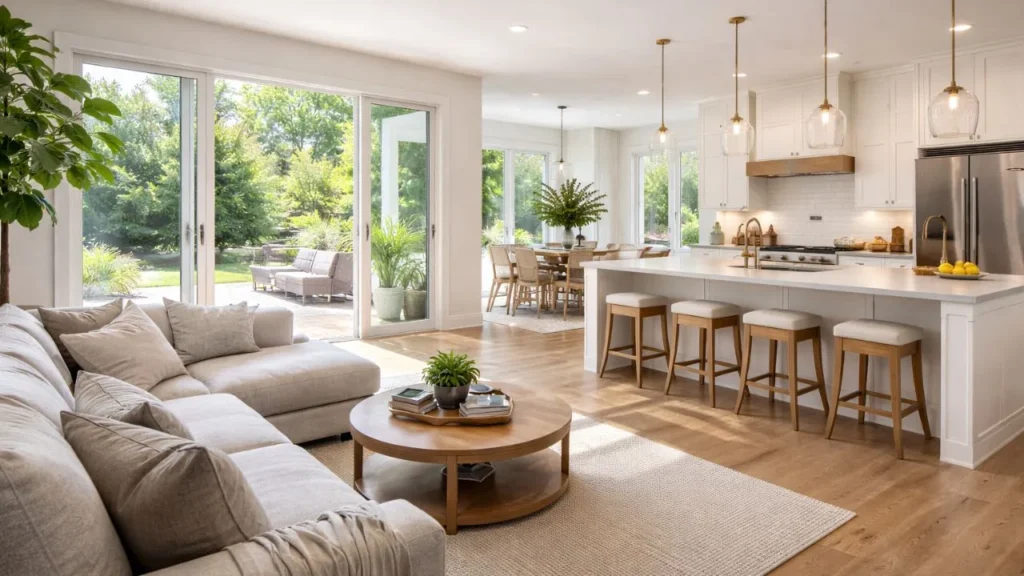
One of the most noticeable advantages of open concept kitchen living room floor plans is the dramatic increase in natural light. When walls are removed, sunlight from windows spreads throughout the entire living area instead of being trapped in a single room. This makes the home feel brighter and more inviting.
Natural light has several benefits beyond aesthetics. It reduces the need for artificial lighting during the day, which can lower electricity usage and energy costs. Large windows, sliding doors, and skylights can further enhance this effect, turning the entire living area into a vibrant, sunlit environment.
Airflow also improves in open layouts. Without walls blocking circulation, air can move more freely throughout the home. This helps heating and cooling systems distribute temperature more evenly, which can increase comfort while reducing strain on HVAC systems.
There is also a psychological effect tied to brighter and more open spaces. People generally feel more relaxed and energized in environments filled with natural light. A spacious layout with visible sightlines can make daily living feel less confined and more enjoyable.
Improved Social Interaction and Family Connection
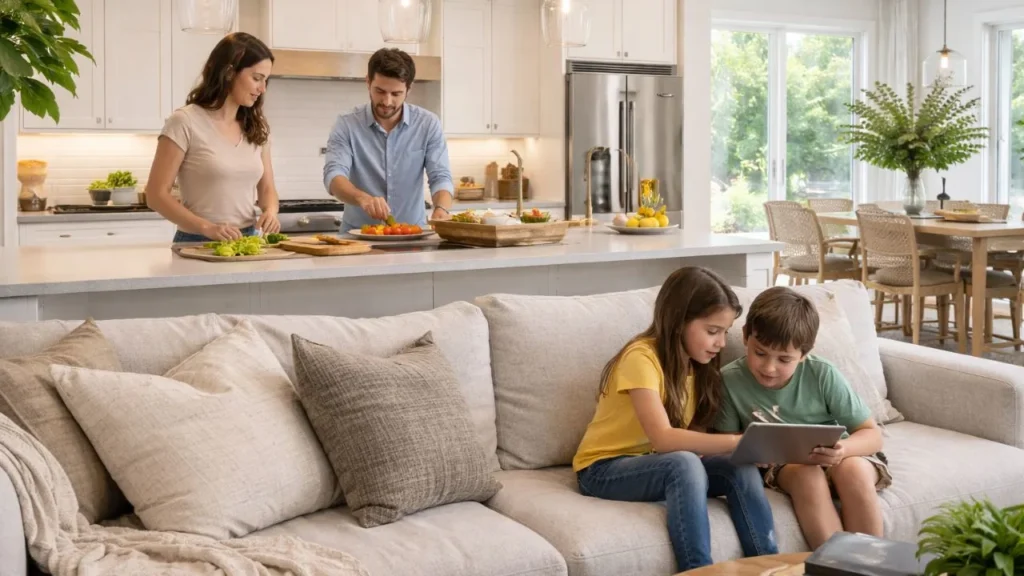
Another major advantage of open floor plans is the way they encourage communication and connection. In traditional homes, the kitchen is often isolated from the living room. When someone is cooking, they are separated from the rest of the family or guests.
Open concept layouts eliminate this barrier. A person preparing meals can easily talk with others in the living room, watch children playing, or engage with guests. The kitchen becomes the social center of the home rather than a hidden workspace.
This design is especially beneficial for families with children. Parents can supervise kids while cooking or cleaning, which adds convenience and peace of mind. It also encourages shared family time since everyone can remain in the same area while doing different activities.
For entertaining guests, the layout works beautifully. Guests can move freely between the kitchen and living area without feeling confined. The host can cook while still participating in conversations, making gatherings feel more relaxed and interactive.
Better Space Utilization in Small Homes
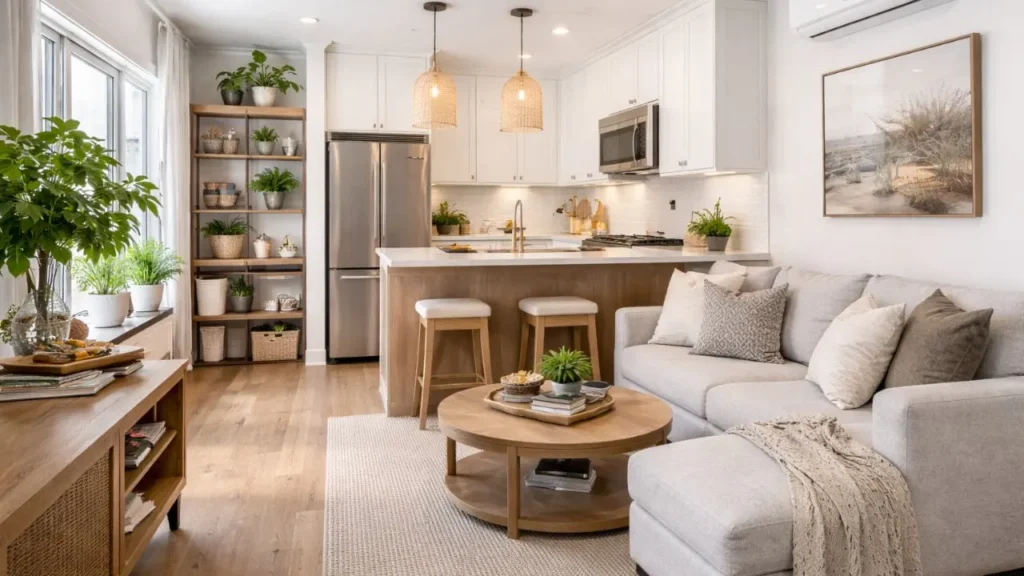
Open layouts are particularly valuable in smaller homes and apartments. When walls divide a small floor plan into multiple rooms, the space can feel cramped and restrictive. Removing those walls creates the perception of a larger, more fluid living area.
Instead of several small rooms, the home becomes one continuous space that can be organized creatively. Furniture placement helps define areas without physically separating them. A sofa might mark the living room boundary while a dining table bridges the transition between kitchen and lounge.
Design experts often note that open concept layouts allow homeowners to make better use of every square foot. Small homes especially benefit from this approach because the space becomes adaptable and multifunctional.
Popular Types of Open Concept Kitchen Living Room Floor Plans
L Shaped Layout
The L shaped open floor plan is one of the most common and practical designs. In this layout, the kitchen occupies one side of the room while the living area extends along the adjacent wall. Together they form an L shaped configuration that naturally divides the space into functional zones.
This layout works well for square or corner shaped rooms. The kitchen often includes an island or peninsula that separates the cooking area from the living room without blocking visibility. This subtle boundary keeps the space organized while maintaining openness.
An L shaped design also allows the living room to remain close to windows or outdoor views, which enhances natural lighting and visual comfort.
Linear Layout
Linear open floor plans are ideal for narrow homes or apartments. In this design, the kitchen, dining area, and living room are arranged in a straight line. Each zone flows into the next without physical barriers.
Typically, the kitchen is placed at one end with a central island or breakfast bar. The dining area sits in the middle, and the living room is positioned near windows or patio doors for maximum light.
Although simple, this layout requires careful planning to avoid the feeling of a corridor. Designers often use rugs, lighting fixtures, and furniture placement to define each section.
Island Centered Layout
The island centered layout is perhaps the most iconic open concept design. In this configuration, a large kitchen island acts as the central anchor of the space. It provides preparation space, seating, and a natural divider between the kitchen and living room.
Kitchen islands often include bar seating, storage cabinets, and sometimes even appliances like sinks or cooktops. This makes the island the heart of the open floor plan.
Beyond functionality, islands create a natural gathering spot where family members or guests can sit, talk, and relax while meals are prepared.
Essential Design Elements for Open Floor Plans
Kitchen Islands as Natural Dividers
In an open layout, defining spaces without walls becomes essential. Kitchen islands are one of the most effective ways to accomplish this goal. They create a visual boundary that separates the cooking area from the living room while still maintaining an open environment.
A well designed island can also add seating, storage, and additional workspace. Many homeowners use islands as breakfast bars or casual dining areas. This multifunctional feature makes it a central element in most open concept kitchen living room floor plans.
Zoning With Furniture and Rugs
Furniture placement is another powerful design tool in open spaces. Instead of pushing all furniture against walls, designers often arrange sofas, chairs, and tables to form distinct zones within the room.
Area rugs can further reinforce these boundaries. For example, a rug under the sofa set clearly defines the living room area, while another rug under the dining table marks the dining space.
This subtle zoning technique keeps the layout organized while preserving the openness that makes the design appealing.
Lighting Layers for Functional Spaces
Lighting plays a crucial role in open floor plans. Because the space serves multiple purposes, different lighting types are needed to support each activity.
A well designed open space usually includes three lighting layers:
| Lighting Type | Purpose | Example |
| Ambient lighting | General illumination | Recessed ceiling lights |
| Task lighting | Focused activity lighting | Pendant lights above island |
| Accent lighting | Decorative highlighting | Floor lamps or wall lights |
Layering lighting creates depth and ensures that each zone feels purposeful rather than undefined.
Open Concept Floor Plans for Small Homes
Maximizing Limited Space
Small homes benefit tremendously from open concept designs. Removing walls allows homeowners to maximize the usable area and prevent rooms from feeling cramped.
Instead of dividing space into tiny compartments, the entire floor plan becomes one fluid living environment. Large windows and consistent color schemes can further enhance the sense of openness.
Designers often recommend using lighter colors, reflective surfaces, and minimal clutter to maintain the illusion of spaciousness.
Smart Storage and Multi Functional Furniture
Storage is essential in open concept homes because clutter becomes visible across the entire space. Built in cabinets, shelving units, and hidden storage solutions help maintain a clean and organized environment.
Multi functional furniture is also extremely useful. For example:
- Storage ottomans
- Expandable dining tables
- Sofa beds
- Built in shelving walls
These pieces allow homeowners to maintain flexibility without sacrificing style or functionality.
Open Concept Kitchen Living Room Layout Mistakes to Avoid
Poor Traffic Flow
One of the most common mistakes in open floor plan design is ignoring traffic flow. If furniture or islands block natural movement paths, the space can feel awkward and uncomfortable.
A well designed layout should allow easy movement between the kitchen, living room, and entrances. Clear pathways ensure that people can move freely without bumping into furniture.
Lack of Visual Boundaries
Another mistake is failing to define zones. When an open space lacks visual separation, it can feel chaotic rather than spacious.
Designers often use furniture placement, rugs, lighting, or ceiling beams to create subtle boundaries between areas. These elements help maintain organization while preserving the open atmosphere.
How Open Concept Floor Plans Increase Home Value
Real estate professionals often highlight the value of open layouts when marketing homes. Buyers frequently prefer homes that feel spacious, modern, and adaptable to different lifestyles.
Open concept homes appeal to a wide range of buyers because they combine functionality with aesthetic appeal. The layout supports entertaining, family interaction, and flexible furniture arrangements.
Research also indicates that open layouts can increase resale value. Homes designed with open concept spaces have been reported to receive resale offers up to seven percent higher due to their perceived spaciousness and desirability.
Modern Design Trends in Open Concept Living Spaces
Interior design trends continue to evolve, and open concept homes are adapting with them. Designers are now experimenting with “broken plan” layouts that maintain openness while introducing subtle divisions such as glass partitions or architectural beams.
Another growing trend involves creating cozy zones within large open spaces. Designers may add reading corners, breakfast nooks, or small seating areas that provide comfort without closing off the space.
Furniture arrangements are also becoming more dynamic. For example, modular seating or central “sofa island” layouts allow homeowners to create social hubs in the middle of large open rooms.
These innovations show that open concept design continues to evolve while remaining one of the most influential trends in modern architecture.
FAQs
1. What is an open concept kitchen living room floor plan
An open concept kitchen living room floor plan removes walls between the kitchen and living area to create a large shared space. This layout improves natural light, communication, and flexibility in home design.
2. Are open concept floor plans good for small homes
Yes, they are especially useful in small homes because removing walls makes the space appear larger and more functional.
3. How do you divide spaces in an open floor plan
Spaces can be divided using furniture placement, rugs, lighting, kitchen islands, and color schemes instead of walls.
4. Do open concept floor plans increase home value
Many buyers prefer open layouts, and studies suggest they can increase resale offers because the home feels larger and more modern.
5. What furniture works best in open concept spaces
Large sofas, modular seating, kitchen islands, area rugs, and multi functional furniture work well because they define zones while maintaining openness.
Conclusion
Open concept kitchen living room floor plans have transformed the way modern homes are designed and experienced. By removing unnecessary walls and blending key living areas into one spacious environment, this layout creates homes that feel brighter, more social, and more flexible.
From improved natural lighting to enhanced family interaction, the advantages of open floor plans are easy to see. Whether used in large modern homes or compact apartments, the design allows homeowners to maximize space while maintaining a sense of comfort and connection.
With thoughtful zoning, smart furniture placement, and layered lighting, open concept layouts can achieve both beauty and functionality. As design trends evolve, these spaces continue to adapt, proving that openness and flexibility remain at the heart of modern home living.

