

The gladiolus flower is one of the most striking and recognizable flowers in ornamental gardening. With its tall spikes lined with vibrant blossoms, it creates a dramatic vertical accent in gardens and floral arrangements alike. The name gladiolus comes from the Latin word gladius, meaning sword, which perfectly describes the shape of its long, pointed leaves. Because of this sword-like appearance, the flower is often nicknamed the sword lily.
Native primarily to Africa, the Mediterranean region, and parts of Europe, the flower gladiolus has been cultivated for centuries for both decorative and symbolic purposes. Today, gardeners and florists value it for its stunning colors, strong stems, and ability to add height and elegance to flower beds. From soft pastels to bold reds and vibrant yellows, gladiolus flowers bring a lively splash of color to any outdoor space.
What makes gladiolus particularly fascinating is its versatility. It can be grown in garden borders, used in containers, or cultivated specifically for cut flowers. When placed in a vase, the tall spikes gradually bloom from bottom to top, offering days of evolving beauty. This slow reveal is part of what makes gladiolus such a favorite among floral designers and gardening enthusiasts alike.
Origins and Botanical Background of the Flower Gladiolus
The gladiolus plant belongs to the Iridaceae family, the same botanical family that includes irises and crocuses. More than 250 species of gladiolus exist in the wild, with countless hybrids developed by horticulturists over the last century. Most modern garden varieties are hybrids specifically bred for large blooms, vibrant colors, and strong stems.
Gladiolus plants grow from structures known as corms, which resemble bulbs but differ slightly in structure. These corms store energy that helps the plant grow rapidly once planted in warm soil. When conditions are right, the plant produces tall flower spikes that can reach heights between two and five feet.
Historically, gladiolus flowers were associated with Roman gladiators. Victorious fighters were sometimes showered with gladiolus blooms as a symbol of strength and triumph. Over time, this association evolved into deeper symbolic meanings connected to integrity, remembrance, and emotional strength.
Why Gardeners Love Gladiolus Flowers
Gardeners are drawn to gladiolus for several reasons. First, the plant grows relatively quickly and blooms dramatically within a single season. Even beginner gardeners can achieve impressive results by planting corms in spring and watching them flourish through summer.
Another reason people love gladiolus is its wide range of colors. You can find nearly every shade imaginable, from deep crimson and lavender to soft pink and creamy white. The yellow gladiolus flower, in particular, is cherished for its bright, cheerful appearance that adds warmth and sunlight-like energy to garden beds.
Gladiolus also performs beautifully as a cut flower. Florists frequently include it in bouquets because the tall stems add structure and height to floral arrangements. When used in a gladiolus flower arrangement, it instantly creates an elegant, professional look that feels both classic and dramatic.
Gladiolus Flower Meaning and Symbolism
The gladiolus flower meaning has evolved over centuries, weaving together history, emotion, and cultural symbolism. While many flowers carry romantic or decorative meanings, gladiolus often symbolizes strength of character, sincerity, and remembrance. Its tall, upright stems visually suggest resilience and determination, which explains why the flower has long been associated with personal integrity.
In Victorian flower language, also known as floriography, gladiolus conveyed messages of admiration and moral strength. Giving someone gladiolus flowers meant acknowledging their courage or honoring their inner strength. Because the blooms appear in a vertical sequence along the stem, some people interpret the flower as representing growth, progress, and personal development.
Another popular interpretation of gladiolus symbolism connects it to emotional honesty. The flower’s bold, open blossoms seem to express feelings without hesitation. In this way, gladiolus has come to symbolize heartfelt sincerity and loyalty in relationships.
Historical Meaning of Gladiolus in Different Cultures
Throughout history, gladiolus flowers have appeared in various cultural traditions and ceremonies. In ancient Rome, gladiolus blooms were associated with warriors and bravery. Victorious soldiers and gladiators were sometimes honored with these flowers as a tribute to their strength.
In European folklore, gladiolus flowers were believed to provide protection against negative energy. Some communities planted them near homes as a symbolic guard against misfortune. Because the leaves resemble blades, the plant was thought to act as a protective sword.
In modern times, gladiolus flowers are commonly used in memorial arrangements and remembrance ceremonies. Their tall presence and dignified beauty create a sense of respect and reflection, making them suitable for honoring loved ones.
Modern Interpretations of Gladiolus Flower Meaning
Today, the gladiolus flower carries several modern symbolic interpretations. It is often associated with perseverance, moral integrity, and emotional strength. Because the flowers bloom sequentially along a tall spike, they can also symbolize personal growth and life’s gradual unfolding.
The symbolism extends into art and body art as well. The gladiolus flower tattoo meaning often reflects resilience, honor, and a commitment to staying strong through challenges. Many people choose this design to represent overcoming obstacles or remembering someone important in their lives.
Whether used in bouquets, gardens, or tattoos, the gladiolus flower continues to carry powerful emotional significance that resonates across cultures and generations.
What Does a Gladiolus Flower Look Like?
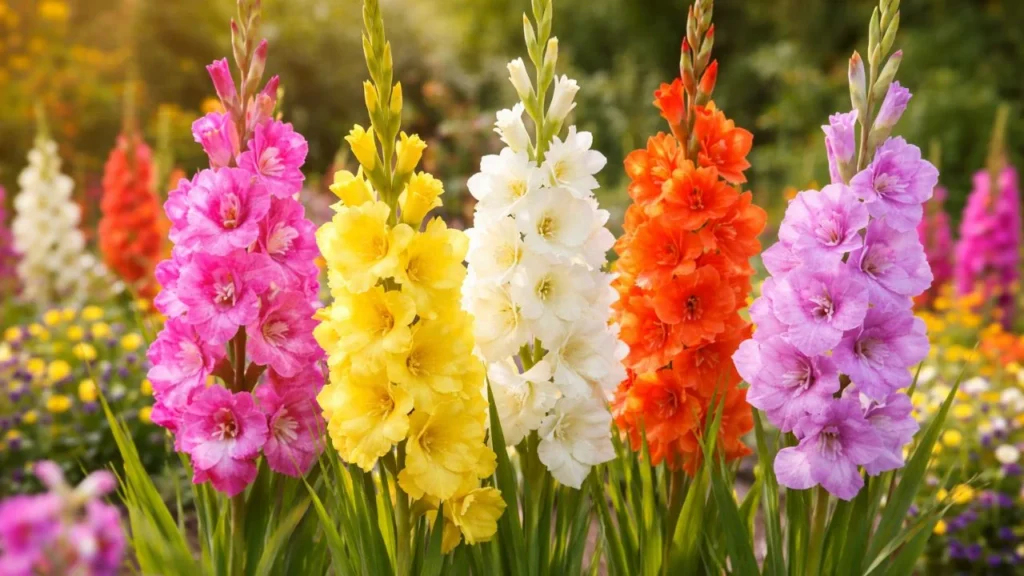
If you have never seen one before, you might wonder what a gladiolus flower looks like. Picture a tall, elegant stem rising above the garden, lined with multiple blossoms arranged vertically like colorful butterflies perched on a ladder. Each bloom typically has six petals that open outward, creating a soft funnel-like shape.
Gladiolus flowers grow on long spikes that can hold anywhere from ten to twenty blossoms. The flowers open gradually from the bottom upward, meaning the plant remains visually interesting for an extended period. This blooming pattern makes gladiolus particularly valuable for both gardens and floral arrangements.
The leaves are long, narrow, and pointed, resembling swords. These blade-like leaves grow in fans at the base of the plant and contribute to the flower’s dramatic silhouette. The combination of tall stems and vivid blossoms gives gladiolus a commanding presence in any landscape.
Popular Colors Including the Yellow Gladiolus Flower
Gladiolus flowers come in an extraordinary range of colors. Some varieties feature solid shades, while others display intricate patterns, gradients, or contrasting edges. This diversity is one reason the plant remains popular among gardeners and florists alike.
The yellow gladiolus flower is especially admired because of its bright, cheerful tone. Yellow varieties often symbolize friendship, positivity, and happiness. When planted in clusters, they can create a sunny focal point that brightens the entire garden.
Other common colors include deep red, lavender, coral, pink, white, orange, and even nearly black shades. Some hybrid varieties feature bi-colored petals, where the throat of the flower contrasts dramatically with the outer petals.
How to Grow Gladiolus Flowers Successfully
Growing gladiolus flowers can be incredibly rewarding, even for beginners. The plants are relatively easy to cultivate as long as you provide the right environment and planting conditions. Gladiolus thrives in warm temperatures and well-drained soil, making it a favorite summer garden plant.
Gardeners usually grow gladiolus from gladiolus flower seeds or, more commonly, from corms. While seeds can be used, corms are preferred because they produce blooms more quickly and reliably. Each corm acts as a small storage unit packed with nutrients that help the plant grow rapidly once planted.
Choosing a sunny location is essential for healthy gladiolus growth. These flowers require at least six hours of sunlight each day to produce strong stems and vibrant blossoms. Without sufficient sunlight, the plants may grow tall but fail to produce many flowers.
Choosing the Right Location and Soil
Soil quality plays a crucial role in gladiolus success. The plant prefers loose, well-drained soil that allows water to pass through easily. Heavy clay soils can cause corms to rot, so gardeners often mix compost or sand into the soil to improve drainage.
Spacing is another important factor. Gladiolus corms should be planted several inches apart to allow each plant enough room to grow. Proper spacing also improves air circulation, which helps prevent fungal diseases.
Adding organic compost before planting can significantly improve plant health. Compost enriches the soil with nutrients while improving its structure, creating an ideal environment for strong root development.
Planting Gladiolus Flower Seeds and Bulbs
Most gardeners plant gladiolus using corms rather than seeds because corms produce blooms much faster. Plant the corms about four to six inches deep with the pointed end facing upward. This orientation allows the shoot to grow quickly toward the surface.
Planting can be staggered over several weeks to create a continuous bloom season. By planting a few corms every two weeks, gardeners can enjoy gladiolus flowers throughout the entire summer.
After planting, water the soil thoroughly but avoid overwatering. Once the shoots emerge, regular watering and occasional fertilization will help the plants develop strong stems and vibrant flowers.
Gladiolus Flower Care Tips for Healthy Blooms
Proper care ensures gladiolus plants produce their best blooms. Once the plants begin growing, they require consistent watering, especially during dry periods. Because the stems can grow quite tall, staking may be necessary to prevent them from bending or breaking.
Applying a balanced fertilizer during the growing season helps support healthy flower production. Fertilizer encourages stronger stems and more vibrant blossoms, particularly in nutrient-poor soil.
Deadheading faded blooms can also encourage the plant to direct energy toward remaining flowers. This simple step keeps the plant looking tidy and ensures the spike continues blooming upward.
Using Gladiolus Flower Arrangement in Home Decor
A gladiolus flower arrangement instantly adds elegance to any interior space. Because of their tall stems and vibrant colors, gladiolus flowers are often used as the centerpiece in floral displays. They bring vertical movement to bouquets, balancing shorter flowers and greenery.
Florists frequently pair gladiolus with roses, lilies, or hydrangeas to create dramatic arrangements. The combination of textures and heights produces a dynamic composition that feels both lush and refined.
Even a single gladiolus stem in a tall vase can make a powerful visual statement. The flower’s natural structure and bold blossoms create a minimalist arrangement that feels modern and sophisticated.
Artistic Inspiration From Gladiolus Flowers
The gladiolus flower has long inspired artists, designers, and illustrators. Its tall structure and delicate blossoms make it an appealing subject for drawing and painting. Many beginners start practicing botanical illustration with a gladiolus flower drawing because the repeating pattern of blossoms along the stem creates a clear, organized composition.
Artists often study gladiolus flower pics to capture the subtle curves of the petals and the graceful alignment of blooms along the stem. Photographs help reveal the fine details that make each blossom unique.
The flower also appears in tattoos, textiles, and decorative patterns. Because of its symbolism of resilience and integrity, the gladiolus flower tattoo meaning resonates with people seeking meaningful floral body art.
FAQs
What is a gladiolus flower?
A gladiolus flower is a tall flowering plant known for its colorful blossoms arranged along a vertical spike. It grows from corms and belongs to the iris family.
What does a gladiolus flower look like?
Gladiolus flowers feature tall stems with multiple trumpet-shaped blossoms arranged vertically. The leaves are long and sword-like, giving the plant its nickname sword lily.
When does gladiolus flower?
Gladiolus typically blooms in summer, usually about 70 to 90 days after planting the corms in spring.
How to draw gladiolus flower?
To draw a gladiolus flower, start with a tall vertical stem, then sketch individual blossoms along the stem. Each flower should have six soft petals forming a funnel-like shape.
When does gladiolus flower grow best?
Gladiolus grows best in warm climates with full sunlight and well-drained soil. Planting in late spring ensures healthy summer blooms.
Conclusion
The gladiolus flower stands as one of the most visually impressive blooms in the gardening world. Its tall stems, vibrant blossoms, and rich symbolism make it a favorite among gardeners, florists, and artists alike. Whether planted in a garden bed or displayed in a vase, gladiolus flowers bring elegance, color, and meaning to any environment.
Growing gladiolus is surprisingly simple once you understand the basics. With plenty of sunlight, well-drained soil, and regular care, these flowers can produce breathtaking blooms throughout the summer season. Their beauty and symbolism continue to captivate people across cultures, proving that the gladiolus remains one of nature’s most remarkable floral creations.

