

Shell ginger is a striking tropical plant that is gaining attention for its beauty, versatility, and practical benefits. If you are looking for a plant that enhances landscapes, supports wellness traditions, and thrives in warm climates, the shell ginger plant deserves your attention. Many gardeners and plant lovers struggle to find ornamentals that are both low maintenance and visually impressive. Shell ginger solves that problem by offering lush foliage, fragrant flowers, and multiple uses beyond decoration.
In this guide, you will learn what shell ginger is, why it is so popular, how it is used, and how to care for it properly. We will also explore different varieties such as variegated shell ginger, discuss whether ginger shell plants are edible, and answer the most common questions people ask before growing or using this plant.
What Is Shell Ginger
Shell ginger, scientifically known as alpinia zerumbet shell ginger, is a tropical perennial plant belonging to the ginger family. It is native to East Asia and is widely grown in warm and humid regions for both ornamental and functional purposes. The plant is best known for its long arching leaves and elegant shell shaped flowers that hang in clusters.
The shell ginger plant can grow up to eight feet tall, making it a popular choice for privacy screens, garden borders, and tropical landscaping. Its leaves are large, glossy, and aromatic when crushed, releasing a mild ginger like scent. Ginger shell plants thrive in full sun to partial shade and prefer well drained soil with consistent moisture.
One of the most visually appealing varieties is variegated shell ginger, which features green leaves streaked with creamy white or yellow. This variety is especially popular in decorative gardens because it adds texture and contrast. Whether grown in the ground or in large containers, shell ginger creates a bold tropical statement with minimal effort.
Benefits of the Shell Ginger Plant
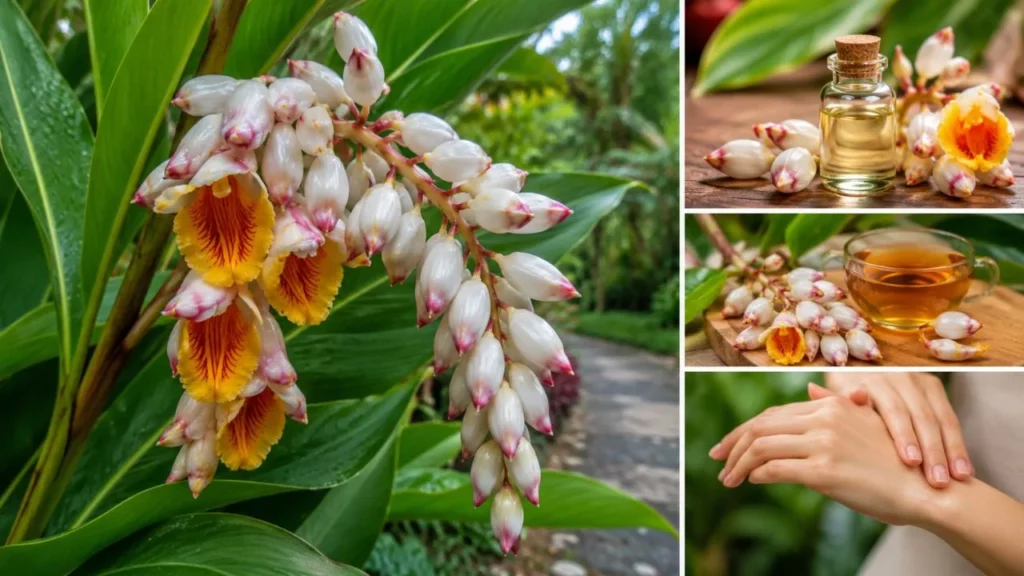
The shell ginger plant offers a wide range of benefits that go beyond its ornamental appeal. One of its biggest advantages is its ability to improve the visual value of any landscape. Its dense foliage provides natural screening, reduces noise, and creates a relaxing tropical atmosphere.
In traditional cultures, ginger shell leaves have been used for their aromatic and protective qualities. The leaves are sometimes used for wrapping food or as natural coverings due to their durability and mild fragrance. In Okinawan traditions, alpinia zerumbet shell ginger is associated with wellness and longevity.
Another benefit of shell ginger is its resilience. Once established, the plant is drought tolerant and resistant to many pests. This makes it ideal for gardeners who want a low maintenance tropical plant. Variegated shell ginger also helps brighten shaded garden areas where flowering plants often struggle.
Shell ginger plants are also environmentally friendly. Their thick foliage helps prevent soil erosion, and they attract beneficial insects such as pollinators. For homeowners looking to combine beauty with function, shell ginger is a smart and sustainable choice.
How to Choose the Right Shell Ginger Variety
Choosing the right shell ginger variety depends on your climate, available space, and design goals. If your priority is visual impact, variegated shell ginger is an excellent option. Its colorful foliage stands out in gardens and works well as a focal point in landscaping designs.
For larger spaces, standard alpinia zerumbet shell ginger is ideal. It grows taller and spreads wider, making it perfect for hedges or natural barriers. If you are planting in containers or smaller gardens, look for compact shell ginger plant varieties that are easier to manage.
Climate also plays a key role. Shell ginger thrives in warm regions but can be grown in cooler climates as a container plant that is brought indoors during winter. When selecting a plant, check the root system and leaves. Healthy ginger shell plants should have firm rhizomes and vibrant leaves without discoloration.
Consider how you plan to use the plant. If you are interested in traditional uses or fragrance, standard shell ginger is preferable. For purely decorative purposes, variegated shell ginger offers maximum visual appeal with the same easy care requirements.
Uses of Shell Ginger in Landscaping and Daily Life
Shell ginger is widely used in landscaping because of its versatility and fast growth. It works well as a background plant, privacy screen, or accent piece in tropical and modern garden designs. Many landscapers use shell ginger plants along fences, walkways, and water features to create a lush environment.
Beyond landscaping, ginger shell plants have practical uses in daily life. In some cultures, the leaves are used for wrapping food or crafting eco friendly packaging. The flowers are often used in floral arrangements due to their unique shape and soft fragrance.
Variegated shell ginger is especially popular in decorative gardens and resorts, where aesthetics matter most. Indoors, shell ginger can be grown in large pots and placed near bright windows to add a tropical touch to living spaces.
Shell Ginger Care Tips
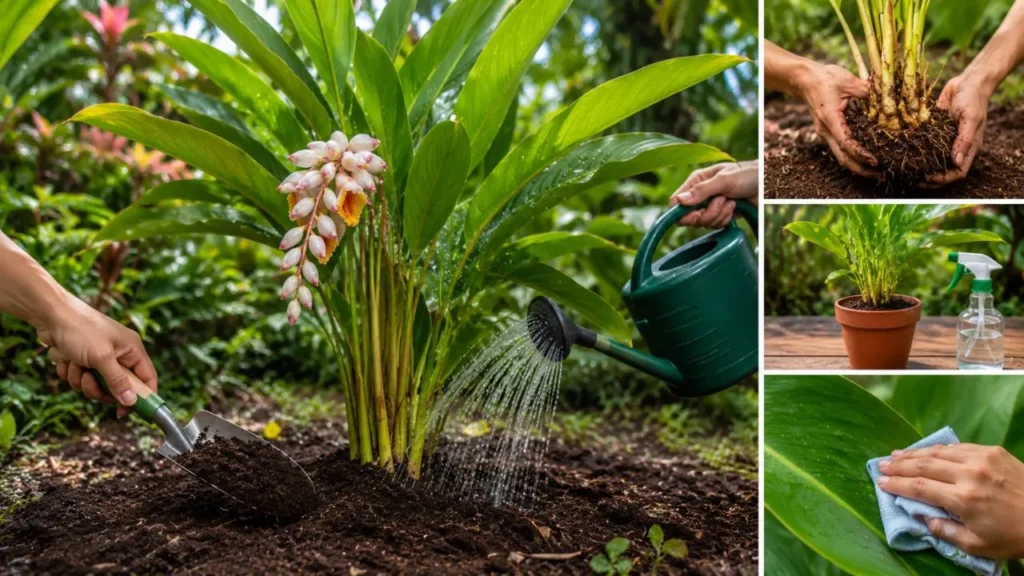
Whether you are growing Alpinia zerumbet for its tropical, variegated foliage or its unique, shell-like blossoms, providing the right environment is essential. While hardy, these plants thrive best when you mimic their native humid habitats. Use the following care guide to ensure your shell ginger stays lush and vibrant throughout the seasons.
Light
Shell ginger loves bright, partial shade but can handle some morning or late afternoon sun. Watch for signs of stress like leaf scorch, if you’re trying it in full sun, and move your plant to a shadier spot if needed.
Soil and Water
Use moist, well-draining soil supplemented with compost, and your shell ginger will thrive. While it needs plenty of moisture, it dislikes standing water. Keep the soil moist but not soggy, whether your plant is outdoors or in a pot inside.
Temperature and Humidity
This tropical plant enjoys warmth and humidity. If their roots are sufficiently protected, shell ginger can handle cold temperatures down to about 10°F. In frost-free climates, it stays evergreen. Indoors, especially in dry winters, give it extra humidity with misting or a humidifier.
FAQs
Is shell ginger edible?
Shell ginger is not commonly consumed as food. While it belongs to the ginger family, it is primarily used for ornamental and traditional purposes rather than cooking. Some cultures use the leaves in non edible applications, but the plant itself is not considered a standard edible ginger.
Is shell ginger root edible?
The root of shell ginger is generally not eaten like culinary ginger. Unlike common ginger used in cooking, shell ginger root is valued more for its aromatic and traditional uses. Always consult reliable sources before considering any plant for consumption.
What is the difference between shell ginger and edible ginger?
The main difference lies in usage and flavor. Edible ginger is grown for its spicy rhizomes, while shell ginger plant varieties are grown for foliage, flowers, and ornamental value. Alpinia zerumbet shell ginger does not provide the same culinary benefits as kitchen ginger.
How fast does shell ginger grow?
Shell ginger grows relatively fast in warm climates. Under ideal conditions, it can reach full height within two to three years. Regular watering and sunlight support healthy growth.
Final Thoughts
Shell ginger is a powerful combination of beauty, resilience, and versatility. Whether you choose a classic shell ginger plant or a vibrant variegated shell ginger variety, you are investing in a plant that delivers long term value with minimal maintenance. From landscaping benefits to traditional uses, ginger shell plants offer something for gardeners, designers, and plant enthusiasts alike.
If you want a tropical plant that enhances outdoor spaces, supports sustainable gardening, and stands out visually, shell ginger is an excellent choice. With proper care and placement, it can transform any space into a lush, calming environment that thrives year after year.

