

A western farmhouse is more than just a type of house. It represents a lifestyle that combines rustic simplicity with modern comfort. Traditionally, farmhouses were built on rural land to serve as the main living quarters for farmers and their families. Over time, this practical structure evolved into one of the most beloved architectural styles in the world.
Historically, a farmhouse functioned as the center of a working farm, often located near barns, fields, and storage buildings. These homes were designed to be sturdy, practical, and spacious enough for large families and daily farm activities. In many early designs, living spaces were even connected to barns or agricultural buildings, highlighting the close relationship between home life and farming operations.
The western farmhouse style specifically draws inspiration from American frontier homes and rural ranch properties. These houses were built to withstand harsh weather, provide comfort, and support hardworking lifestyles. Think of wide porches, wooden beams, open land, and a welcoming atmosphere where neighbors could gather after a long day of work.
Today, the western farmhouse aesthetic has moved far beyond farmland. Designers and homeowners now embrace the style for its cozy charm, timeless appeal, and connection to nature. The style blends rustic textures, natural materials, and spacious layouts to create homes that feel warm and inviting.
Another reason the western farmhouse remains popular is its emotional appeal. In a world dominated by technology and fast-paced living, many people crave homes that feel authentic and grounded. A western farmhouse captures that feeling perfectly, offering a sense of simplicity that feels both nostalgic and comforting.
Origins of the Farmhouse Architecture
The roots of farmhouse architecture stretch back centuries. Many historians trace the inspiration for modern farmhouse design to European rural homes from the 16th and 17th centuries, where houses were built primarily for farmers and agricultural workers.
These early farmhouses focused on functionality rather than aesthetics. Builders used materials that were readily available in their environment, such as wood, stone, or clay. The goal was simple: create a durable shelter that could withstand weather while supporting farm work.
When settlers moved across North America, they brought these architectural ideas with them. Over time, farmhouse designs adapted to local climates and resources. In the American West, for example, farmhouses often featured wide porches and large windows to maximize airflow and natural light.
The western farmhouse style also reflects the independent spirit of frontier life. Families needed homes that could serve multiple purposes—living, cooking, storage, and sometimes even animal care. Because of this, farmhouse interiors were designed with large open spaces that encouraged communal living.
This practical design philosophy continues to influence modern farmhouse architecture today. Even in contemporary homes, you’ll often see the same focus on simplicity, durability, and comfort.
Key Characteristics of Western Farmhouse Homes
Western farmhouse homes are instantly recognizable thanks to their distinctive features. While every house may vary slightly, several elements consistently define this style.
Farmhouses are designed to be welcoming and functional. They often feature spacious layouts, natural materials, and architectural details that connect the home with the surrounding landscape.
Exterior Design Features
One of the most defining aspects of a western farmhouse is its exterior appearance. The design typically emphasizes simplicity, symmetry, and practicality.
Many farmhouse homes feature large front porches, which historically served as a place for farmers to relax after a long day. These porches also function as a transitional space between indoor and outdoor living.
Other common exterior features include:
- Wooden siding or board-and-batten panels
- Gabled or A-frame roofs
- Dormer windows
- Large open yards or rural settings
- Neutral exterior colors such as white, beige, or gray
These elements combine to create a home that feels both rustic and timeless.
Porches, Rooflines, and Layout
The porch is often considered the heart of a farmhouse exterior. Wide porches wrap around the house, offering shade, relaxation space, and a connection to the outdoors.
Rooflines are usually steep and simple. Gable roofs allow rain and snow to slide off easily, which was especially important in rural climates.
The layout of farmhouse homes also tends to be practical. Most designs feature rectangular or square floor plans that maximize interior space while keeping construction straightforward.
Interior Design Elements
Inside a western farmhouse, the atmosphere is warm, relaxed, and comfortable. The interior design focuses heavily on natural textures and handcrafted elements.
Farmhouse interiors often highlight wood, stone, metal, and natural fabrics. These materials create a layered look that feels authentic rather than overly polished.
Natural Materials and Rustic Textures
Wood is perhaps the most important material in farmhouse design. From exposed beams to reclaimed wood flooring, natural wood adds warmth and character to the space.
Farmhouse interiors also emphasize neutral color palettes. Shades like white, cream, gray, and soft earth tones create a calming environment while allowing textures to stand out.
Rustic textures further enhance the farmhouse atmosphere. Linen curtains, woven baskets, wool throws, and vintage furniture pieces contribute to the cozy feel of the home.
Another key characteristic is the mix of old and new. A western farmhouse might combine antique furniture with modern appliances, creating a balanced and functional living space.
Western Farmhouse Architecture and Layout
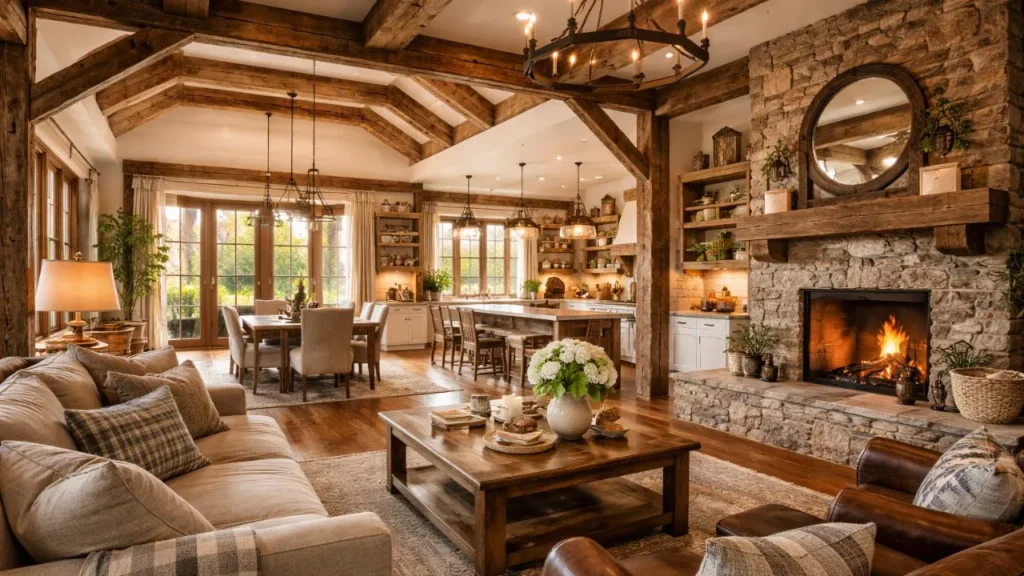
The architecture of a western farmhouse is built around practicality. These homes were originally designed for hardworking families who needed space for cooking, storage, and gathering.
Because of this, farmhouse layouts often prioritize large communal areas rather than many small rooms.
Typical Floor Plans
Traditional farmhouses usually follow a straightforward floor plan. The design often includes one or two stories with spacious living areas and large kitchens.
Common layout features include:
| Feature | Purpose | Benefit |
|---|---|---|
| Large kitchen | Central cooking space | Encourages family gatherings |
| Open living areas | Shared family space | Creates welcoming atmosphere |
| Wide hallways | Easy movement | Practical for busy households |
| Large windows | Natural light | Connects interior with outdoors |
| Front porch | Outdoor relaxation | Enhances social interaction |
Large kitchens are especially important in farmhouse design. Historically, the kitchen served as the center of family life where meals were prepared and stories were shared.
Functional Spaces in Farmhouse Living
Farmhouses are designed with functionality in mind. Rooms are spacious and practical rather than overly decorative.
Dining rooms are typically large enough to accommodate big family gatherings. Living rooms often feature fireplaces, which create warmth during colder months.
Storage spaces such as pantries and mudrooms are also common. These rooms help keep the house organized and practical for everyday life.
Western Farmhouse Interior Design
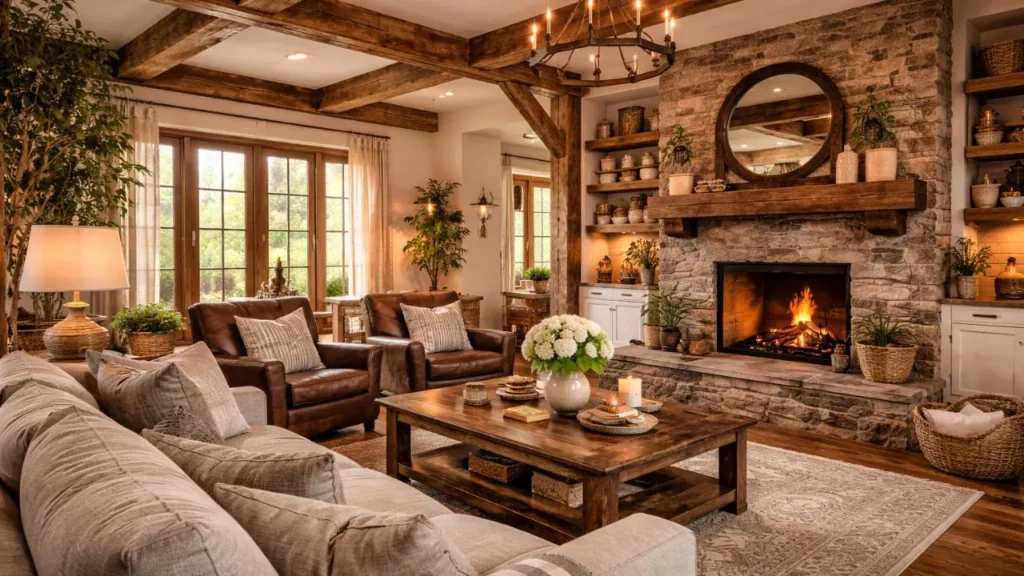
Interior design plays a crucial role in capturing the essence of a western farmhouse. The goal is to create a space that feels cozy, welcoming, and connected to nature.
Color Palettes and Materials
The color palette in farmhouse interiors usually revolves around neutral tones. White walls, beige accents, and soft grays create a calm foundation for the space.
These colors also reflect natural light, making rooms feel brighter and more spacious.
Materials such as wood, stone, and metal are commonly used throughout the home. For example, a farmhouse living room might feature wooden beams, a stone fireplace, and leather furniture.
Furniture and Decor Choices
Furniture in a western farmhouse is often simple, sturdy, and comfortable. Pieces may appear slightly worn or vintage, which adds to the rustic charm.
Popular decor items include:
- Vintage signs
- Mason jars
- Rustic lanterns
- Handmade pottery
- Woven baskets
These elements help create a space that feels personal and authentic.
Western Farmhouse Kitchen Design
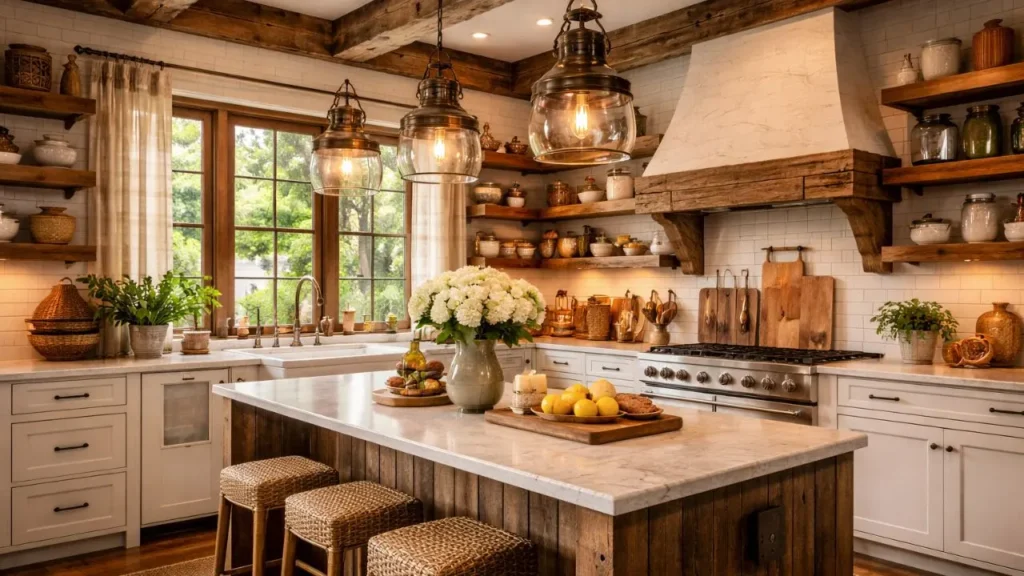
The kitchen is often considered the centerpiece of farmhouse living. In many traditional homes, it serves as both a cooking area and a gathering place for family and friends.
Farmhouse kitchens usually feature large wooden tables, open shelving, and farmhouse sinks. These design elements combine practicality with rustic beauty.
A farmhouse kitchen may also include modern appliances, but they are often integrated into the design to maintain a cohesive aesthetic.
Large windows and natural lighting further enhance the welcoming atmosphere of the kitchen.
Modern Western Farmhouse Trends
Over the last decade, farmhouse design has experienced a huge resurgence in popularity. Social media platforms like Instagram have played a major role in spreading the style across the world.
In fact, farmhouse décor has appeared in more than 4.7 million Instagram posts, demonstrating its global popularity among homeowners and designers.
Modern farmhouse design often blends traditional rustic elements with contemporary features. Clean lines, minimalist decor, and modern lighting fixtures help create a balanced and updated look.
Blending Rustic and Contemporary Design
One of the most interesting aspects of modern farmhouse design is its flexibility. Designers often combine rustic wood textures with sleek modern furniture.
For example, a modern farmhouse living room might include:
- A reclaimed wood coffee table
- Neutral linen sofas
- Industrial-style lighting
- Minimalist wall decor
This combination creates a space that feels both stylish and comfortable.
Benefits of Living in a Western Farmhouse
Living in a western farmhouse offers many advantages beyond aesthetics. These homes are designed to promote comfort, community, and connection with nature.
Comfort, Space, and Lifestyle
Farmhouse homes typically provide more space than traditional suburban houses. Large living areas allow families to spend time together without feeling crowded.
Another advantage is the connection to outdoor living. Porches, patios, and large windows encourage residents to enjoy nature and fresh air.
The farmhouse lifestyle also promotes simplicity. Rather than focusing on flashy decor, the design emphasizes practicality and authenticity.
For many people, this creates a peaceful environment that feels far removed from the stress of modern life.
How to Build or Design a Western Farmhouse
Designing a western farmhouse requires careful planning. While the style may appear simple, achieving the right balance between rustic and modern elements can be challenging.
Essential Design Tips
When designing a farmhouse-style home, consider the following principles:
- Use natural materials such as wood, stone, and metal
- Choose neutral color palettes
- Incorporate large windows for natural light
- Include open living spaces
- Add vintage or handcrafted decor
These elements help capture the authentic charm of a farmhouse while maintaining modern functionality.
Western Farmhouse vs Modern Farmhouse
Many people confuse western farmhouse with modern farmhouse, but the two styles are slightly different.
| Feature | Western Farmhouse | Modern Farmhouse |
|---|---|---|
| Inspiration | Rural ranch homes | Contemporary design trends |
| Materials | Natural wood and stone | Wood mixed with modern finishes |
| Color palette | Earth tones | Neutral whites and blacks |
| Layout | Traditional and spacious | Open-concept design |
| Decor style | Rustic and vintage | Minimalist rustic |
Traditional western farmhouses lean heavily on rustic authenticity, while modern farmhouse designs introduce contemporary elements like sleek furniture and minimalist decor.
FAQs
1. What defines a western farmhouse style home?
A western farmhouse style home is characterized by rustic materials, wide porches, open layouts, and natural textures that reflect rural living and practical design.
2. What colors are commonly used in farmhouse interiors?
Neutral tones such as white, beige, gray, and soft earth colors are commonly used because they create a calm and timeless atmosphere.
3. Are western farmhouses still popular today?
Yes. Farmhouse design remains widely popular due to its cozy aesthetic, practical layouts, and ability to blend traditional and modern design elements.
4. What materials are commonly used in farmhouse homes?
Common materials include wood, stone, metal, linen, and leather, which create a rustic yet comfortable interior environment.
5. How can I add farmhouse style to my existing home?
You can incorporate farmhouse style by using reclaimed wood furniture, neutral colors, vintage decor, open shelving, and natural textiles.
Conclusion
The western farmhouse is more than an architectural style. It represents a way of life rooted in simplicity, practicality, and connection to nature. From its origins in rural farming communities to its modern interpretation in contemporary homes, the farmhouse style continues to captivate homeowners around the world.
Its charm lies in its ability to balance rustic warmth with modern comfort. Wide porches, natural materials, and open living spaces create homes that feel welcoming and timeless.
Even as design trends evolve, the farmhouse aesthetic remains relevant because it speaks to something deeper than style. It reflects the universal human desire for comfort, community, and authenticity.
For homeowners seeking a cozy yet elegant living environment, the western farmhouse offers a perfect blend of tradition and modern living.

