

Flowers have always been one of the most beautiful ways to bring life, color, and creativity into a space. From weddings and celebrations to simple home décor, flowers create a natural atmosphere that instantly improves the mood of any room. Among the many floral design styles, line flowers stand out because they emphasize shape, direction, and movement rather than fullness. Instead of creating a crowded bouquet, this design style highlights the elegance of individual stems.
The idea behind arranging flowers in a line is both artistic and practical. Floral designers use long stems and strategic placement to guide the viewer’s eyes across the arrangement. The result is a clean, modern display that feels organized and visually appealing. This approach is often used in contemporary interior design where simplicity and minimalism are highly valued.
Another interesting aspect of this design style is how closely it connects to artistic concepts like line art flowers and line drawing flowers. Just like a single continuous line can capture the shape of a flower in art, a carefully placed flower stem can define the structure of a real floral arrangement. Understanding this concept allows anyone to create elegant displays with very few flowers.
Learning how to design with line flowers can transform the way you decorate your home or events. With the right techniques and a little creativity, even a small number of stems can create a striking visual effect. This guide explores what line flowers are, how to arrange them, and creative ideas to style them in different environments.
Simple Definition of Line Flowers
In floral design, line flowers are flowers that naturally grow in tall or elongated shapes and are used to create the structure of an arrangement. These flowers usually have long stems that extend outward or upward, helping define the overall direction of the design. Because of their strong visual movement, they are often placed first when building an arrangement. A simple defination of line flowers in a sentence would be: “Snapdragons and delphiniums are popular line flowers used to add height and structure to floral arrangements.
Line flowers act as the framework that supports the rest of the floral display. Designers place them strategically so they guide the viewer’s eyes from one part of the arrangement to another. This directional effect helps create a sense of balance and intentional design.
Common examples of line flowers include gladiolus, snapdragons, delphinium, and liatris. These flowers naturally grow upward and provide a strong visual line that works perfectly in modern floral arrangements.
Understanding what are line flowers makes it easier to appreciate how professional floral designers construct their arrangements. Once the line flowers establish the structure, other flowers can be added to enhance the design without overwhelming it.
Why Flowers in a Line Are Popular in Modern Design
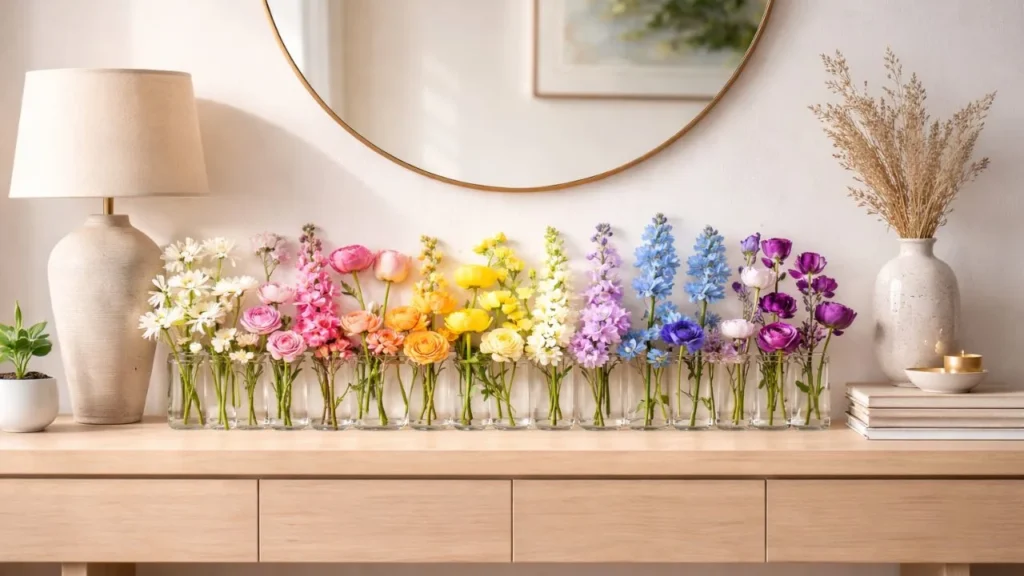
Minimalist design has become extremely popular in modern homes and interior styling. Many people now prefer décor that looks clean, simple, and visually balanced. Flowers in a line perfectly match this design philosophy because they emphasize elegance rather than excess.
Traditional floral bouquets often focus on fullness and symmetry. While those arrangements are beautiful, they can sometimes feel overwhelming in small or modern spaces. Linear floral arrangements, on the other hand, allow each flower to stand out individually.
Interior designers frequently use line flowers to complement architectural features in a room. For example, tall stems placed in a slim vase can mirror the vertical lines of windows, doors, or furniture.
Social media platforms have also played a major role in popularizing this design style. Minimalist floral arrangements photograph beautifully, making them a favorite choice for influencers, stylists, and event planners.
Understanding the Structure of Flowers in a Line
Creating a successful line flower arrangement requires understanding the basic structure behind it. Unlike dense bouquets, linear arrangements focus on direction and spacing.
The first step is establishing the dominant line. This line defines the direction of the arrangement and guides how the other stems will be placed.
Secondary lines support the dominant line and add depth to the design. These stems usually follow the same direction but may vary slightly in angle or height.
Negative space is another important element. Leaving open space between stems allows each flower to remain visible and prevents the arrangement from looking cluttered.
| Design Element | Purpose |
|---|---|
| Dominant Line | Creates the main direction |
| Secondary Line | Supports the primary structure |
| Focal Flower | Adds visual interest |
| Negative Space | Maintains balance and elegance |
Understanding these structural elements makes it much easier to create a balanced and visually pleasing arrangement.
The Connection Between Line Art Flowers and Floral Arrangements
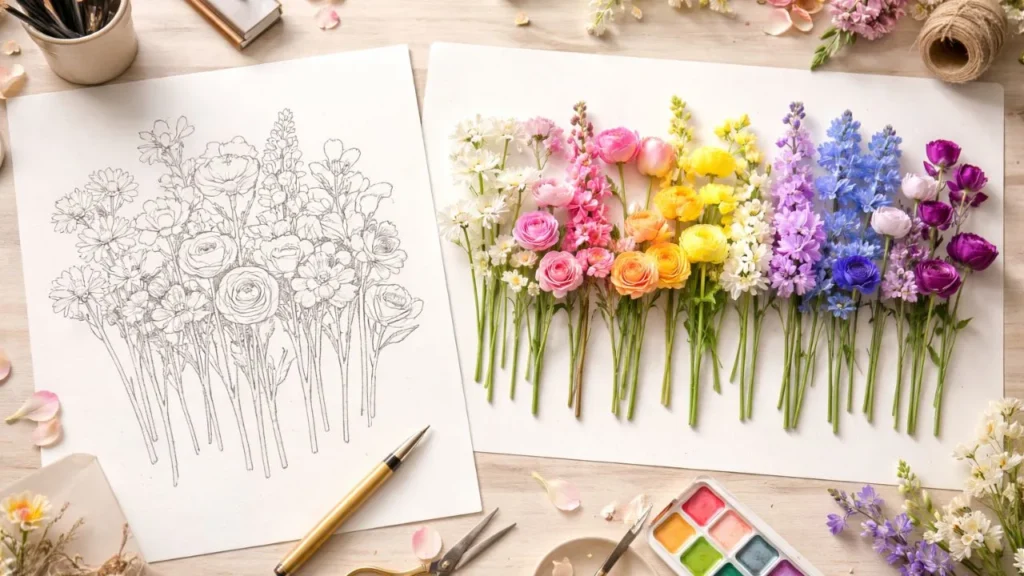
The concept of line art flowers shares many similarities with linear floral arrangements. In art, line drawings capture the essence of a subject using simple lines rather than detailed shading or color.
This minimalist approach highlights the shape and structure of the subject. In floral design, line flowers serve the same purpose by emphasizing the natural direction and curves of each stem.
Artists who practice line drawing flowers often focus on the flow and movement of lines. Floral designers apply the same principle when arranging flowers in a line.
Many modern decorators combine both art forms by displaying floral arrangements alongside line art prints. This pairing creates a cohesive and stylish visual theme.
The simplicity of line art flowers reminds us that beauty often comes from thoughtful composition rather than complexity.
How to Arrange Flowers in a Line at Home
Creating your own line flower arrangement at home is easier than many people think. With a few carefully selected stems and a simple vase, you can create a display that looks elegant and professionally styled.
The first step is choosing flowers that naturally have long stems and strong vertical shapes. Flowers like gladiolus, snapdragons, and delphinium are excellent choices because they naturally create linear movement.
Selecting the right vase also plays a major role in the final look of the arrangement. Tall, narrow vases work best because they help support the stems while emphasizing the vertical line.
Once you have your flowers and vase ready, begin by placing the tallest stem first. This stem becomes the dominant line and defines the direction of the entire arrangement.
After establishing the main line, gradually add supporting stems that follow the same direction. These stems should enhance the design rather than compete with the primary flower.
Spacing is extremely important when arranging flowers in a line. Leaving small gaps between stems allows each flower to remain visible and keeps the design looking clean.
You can also experiment with slight angles instead of perfectly vertical stems. A gentle diagonal line often creates a more dynamic and artistic arrangement.
Another useful trick is to rotate the vase as you work. This helps ensure the arrangement looks balanced from multiple viewing angles.
Adding a small amount of greenery can help soften the design without overwhelming it. Thin branches or delicate leaves often work best for this purpose.
The key to success with line flower arrangements is restraint. Using fewer stems often creates a stronger visual impact than overcrowding the vase.
Creative Ideas for Line Flower Arrangements
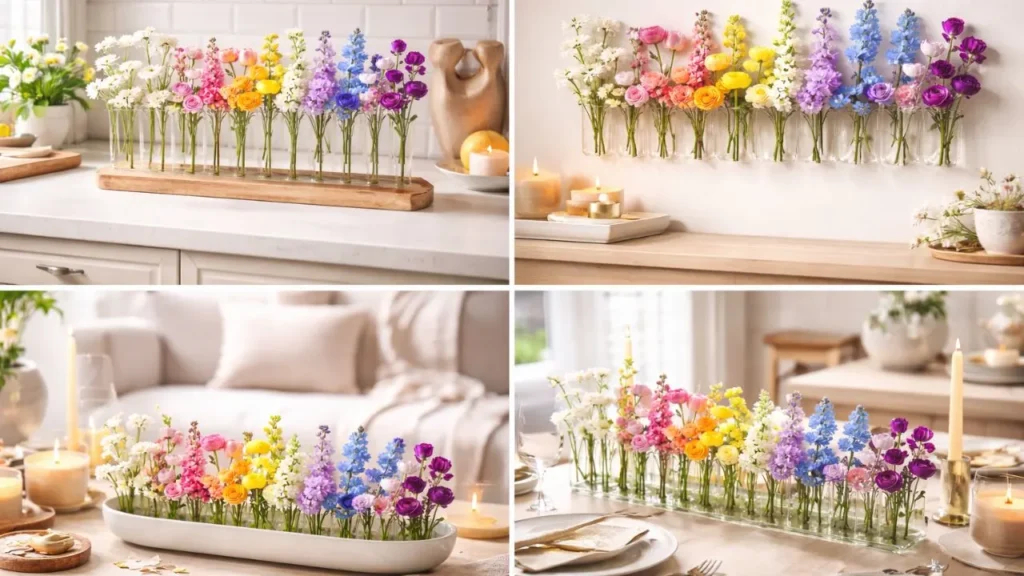
Once you understand the basics, you can begin experimenting with different creative ideas for line flower arrangements. This design style offers endless possibilities for artistic expression.
One popular idea is the vertical minimalist arrangement. In this design, one or two tall flowers are placed in a slim vase with plenty of negative space around them.
This arrangement works beautifully in modern homes because it complements clean architectural lines. It also allows the natural beauty of each flower to stand out.
Another creative option is the diagonal line arrangement. Instead of positioning flowers straight upward, you place stems at a gentle angle.
This technique creates a sense of movement and energy within the arrangement. The diagonal line naturally draws the viewer’s eyes across the design.
A floating line arrangement is another striking option. Transparent glass vases can be used to create the illusion that flowers are floating in space.
Placing stems carefully inside clear containers highlights the elegant structure of the flowers themselves.
A multi-vase line display is also a popular modern trend. Instead of placing several flowers in one vase, you arrange multiple small vases in a straight line across a table.
Each vase can hold a single flower stem, creating a minimalist centerpiece that looks stylish and contemporary.
This approach works particularly well for dining tables, wedding décor, or event styling because it allows guests to see across the table without obstruction.
Another creative idea is combining line flowers with artistic branches. Thin branches add natural curves and texture to the arrangement.
This technique blends floral design with elements of nature, creating a more organic and visually interesting display.
Best Flowers for Linear Floral Designs
Some flowers naturally work better for line arrangements because of their shape and growth pattern.
Flowers with tall stems and elongated blooms are ideal because they naturally create the linear movement required for this style.
| Flower | Reason |
|---|---|
| Gladiolus | Strong vertical structure |
| Delphinium | Elegant height and color |
| Snapdragons | Natural directional growth |
| Liatris | Thin stems create delicate lines |
| Orchids | Graceful curves and elegance |
Choosing the right flowers makes the arrangement process much easier and more visually appealing.
Styling Line Flower Arrangements for Different Spaces
Line flower arrangements can be styled in many different spaces throughout a home or office. Their minimalist appearance allows them to fit seamlessly into a variety of environments.
In living rooms, tall linear arrangements placed on console tables or shelves create visual height. These arrangements help balance large furniture pieces and add a touch of natural elegance.
A single arrangement can also act as a focal point in the room. The vertical lines naturally draw attention and enhance the overall design of the space.
Dining tables offer another great opportunity to showcase flowers in a line. Instead of using a large centerpiece, several smaller arrangements can be placed along the center of the table.
This layout allows guests to maintain eye contact while still enjoying the beauty of fresh flowers.
Offices and workspaces also benefit from linear floral arrangements. A simple vase with a few elegant stems can bring freshness and creativity to the environment.
These arrangements are especially helpful in small offices where large bouquets might feel overwhelming.
Bedrooms can also be enhanced with subtle floral styling. A single flower placed on a bedside table can create a peaceful and relaxing atmosphere.
The simplicity of line flowers helps maintain a calm and uncluttered look that works perfectly in restful spaces.
Even entryways can benefit from linear arrangements. Placing tall stems near the entrance creates an inviting and stylish first impression for guests.
FAQs
What are line flowers in floral design?
Line flowers are flowers with long stems that create the structure and direction of a floral arrangement.
What flowers work best for flowers in a line?
Gladiolus, snapdragons, delphinium, liatris, and orchids are commonly used for linear floral designs.
How many flowers should be used in a line arrangement?
Minimalist line arrangements often use three to seven stems to maintain balance and negative space.
Are line flower arrangements suitable for small spaces?
Yes, their minimalist structure makes them perfect for small rooms, apartments, and offices.
Can beginners create line flower arrangements easily?
Yes, beginners can create beautiful arrangements by focusing on tall stems, simple vases, and proper spacing.
Conclusion
Line flowers represent a beautiful blend of floral design and artistic simplicity. By focusing on direction, spacing, and natural stem movement, these arrangements create elegant displays that feel modern and sophisticated.
Understanding what are line flowers and how to arrange flowers in a line allows anyone to experiment with creative floral styling. Whether you are decorating your home, preparing for an event, or simply enjoying the beauty of fresh flowers, this technique offers endless possibilities.
The connection between line art flowers and real floral arrangements also highlights the artistic nature of this design style. Both forms rely on clean lines, thoughtful placement, and balanced composition.
With a little creativity and practice, anyone can transform simple stems into stunning floral designs that enhance any space.

