

TL;DR
There are seven primary elements of interior design, including color, texture, space, line, form, light, and pattern. These elements are balanced to aesthetically complement one another in order to create beautiful interior spaces. The steps utilized to create this balance, such as correct proportioning, matching/clashing colors, and maintaining visual rhythm, together with the elements themselves, form the basics of interior design.
In the post below, we’re going to learn about them in more detail.
Introduction
Designing an interior space properly can be tricky. You can have a certain image in mind, but when it comes to implementing it, it might not be that easy. There can be certain challenges and hurdles that you can face in making the space appear exactly as you visualize it.
Knowing the basics of interior design helps you understand and overcome these challenges so that you can come through with the type of space that you envisioned.
In this post, we’re going to help you get those basics down.
Importance of Properly Implementing the Basics of Interior Design
In order to make an interior space look objectively aesthetic and appealing, you have to make sure that the elements it contains all work together and complement each other. That way, the design looks continuous and carefully thought over, rather than the product of an eccentric mind.
That is one reason why you should properly learn and implement the basics of interior design. Other than that, here are a few others listed below:
- With the basics properly implemented, any problems and constraints in the space are properly addressed. For instance, small nooks, narrow areas, etc., are all put to good use.
- Knowing the basics also helps to make the layout of the space practical for daily use.
- Following basic rules pertaining to color, form, space, and line allows the space to appear balanced.
And so forth.
Basics of Interior Design: Primary Elements
Now, let’s move on to the actual basic elements of interior design. There are seven in total, which we’ve listed below:
- Color
- Texture
- Space
- Line
- Form
- Light
- Pattern
Let’s take a look at each of these one by one
1. Colour
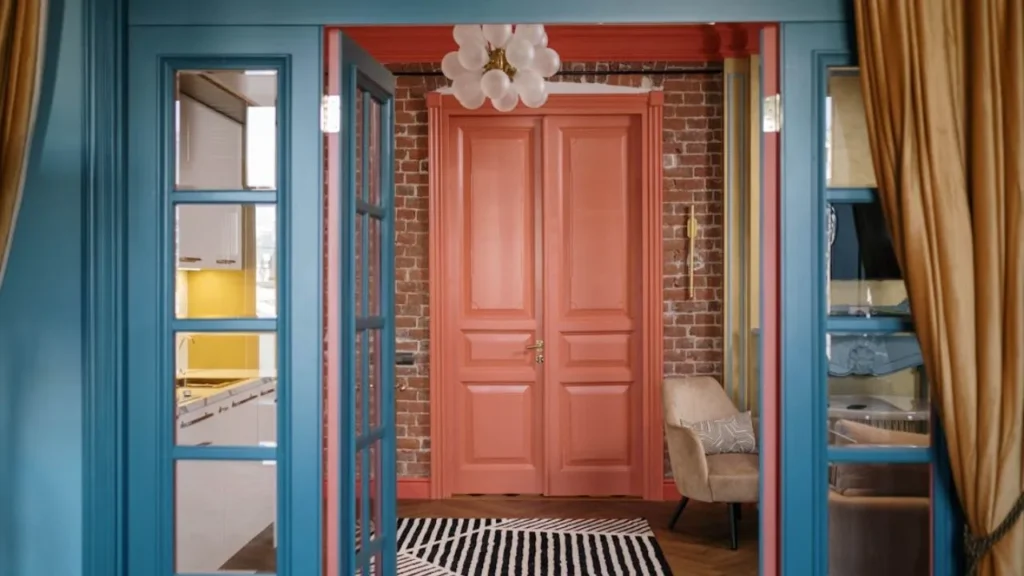
Color refers to the shades and hues that are used in the interior design, such as on the walls and floors, as well as in the fixtures and furniture. It is a key element of interior design because it sets the tone for the entire space. The color combination used in a room can make it look either vibrant and energetic or warm and cozy.
2. Texture
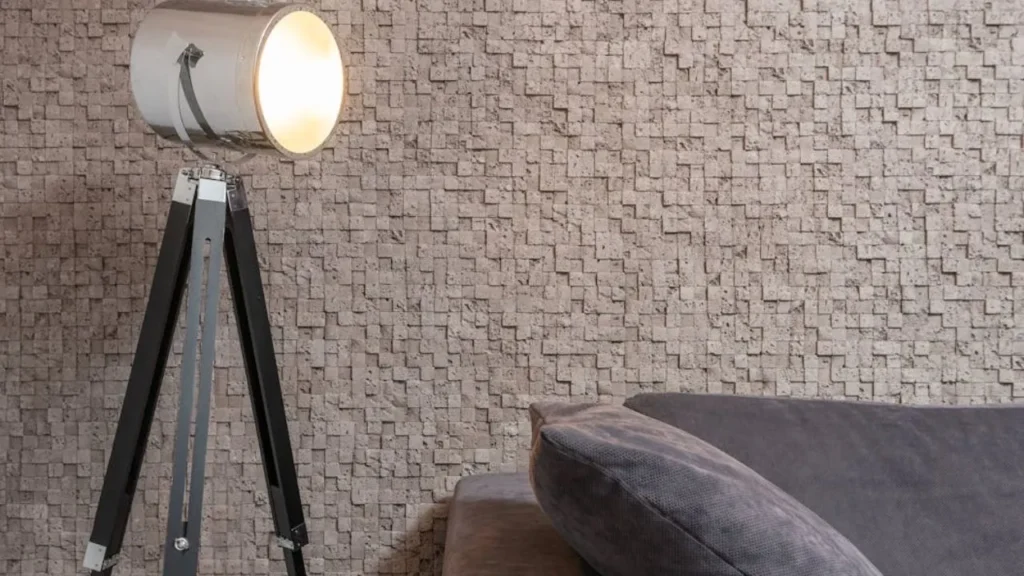
Texture refers to the quality or style of the various surfaces that are featured in the interior design. There are different types of textures that can be used in a design, such as smooth, ribbed, matte, and glossy. A combination of textures can also be used.
Textures are used to create depth and visual engagement in a space, especially in areas where colors or other visual elements cannot be added or altered. For instance, in a neutral space where colors are monochrome, textures can be used to make the surfaces pop.
3. Space
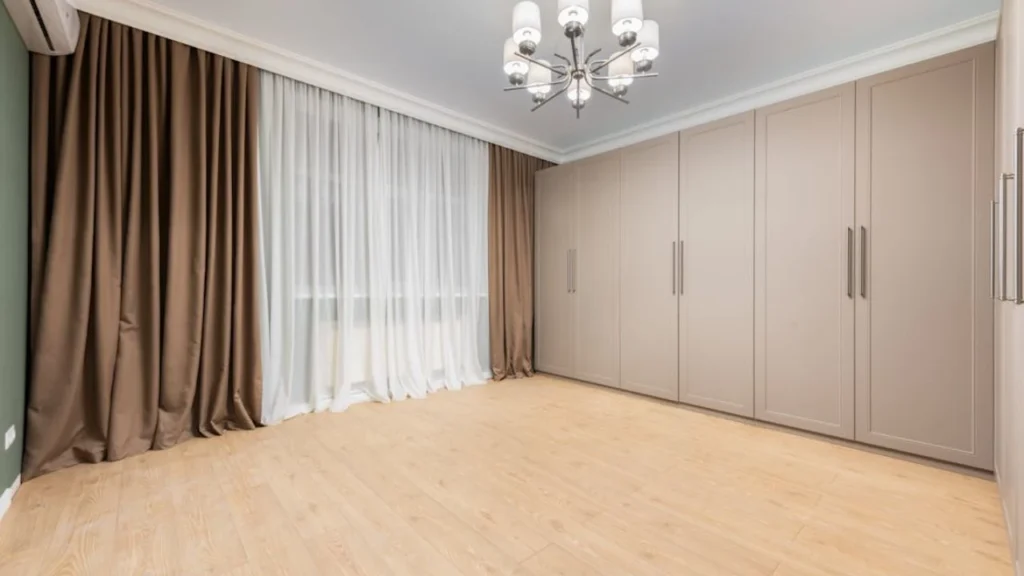
Space refers to the area that you have available for implementing your design. As a primary element of interior design, the space in a room is used to judge how much it can be furnished and decorated.
Positive space refers to the area in the room where items are placed, while negative space is the area that is left empty. In an ideal design, both of these spaces have to be balanced.
4. Line
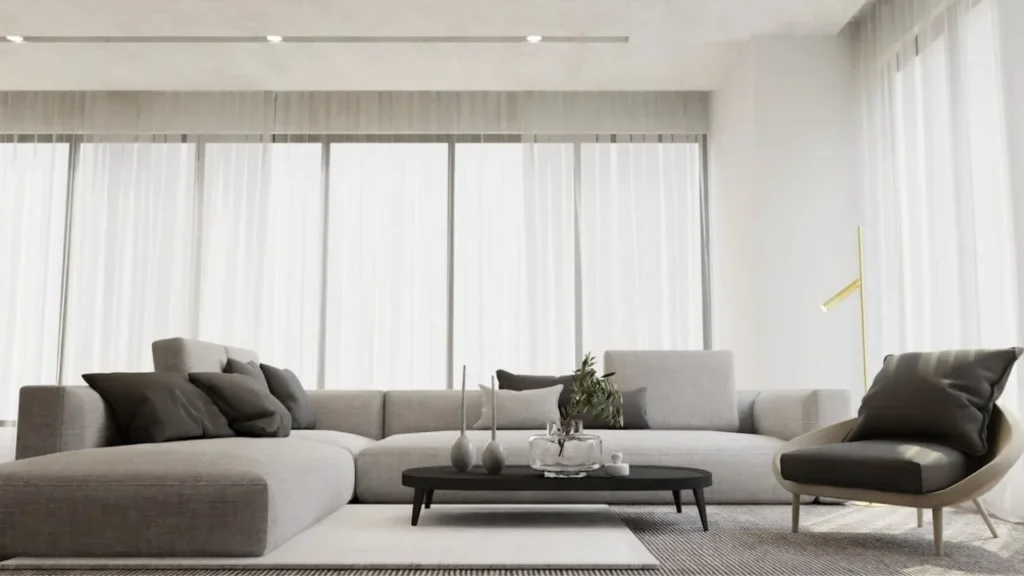
Line refers to the progression and direction that your eye naturally follows in a room.
In interior design, the line is maintained by the furniture and fixtures, as well as decorative elements and accents.
Horizontal lines, which are created with elements such as shelves and tables, invoke a sense of stability and warmth. Vertical lines, on the other hand, which are created with elements like long windows and curtains, make the space look luxurious.
A good design combines both of these
5. Form
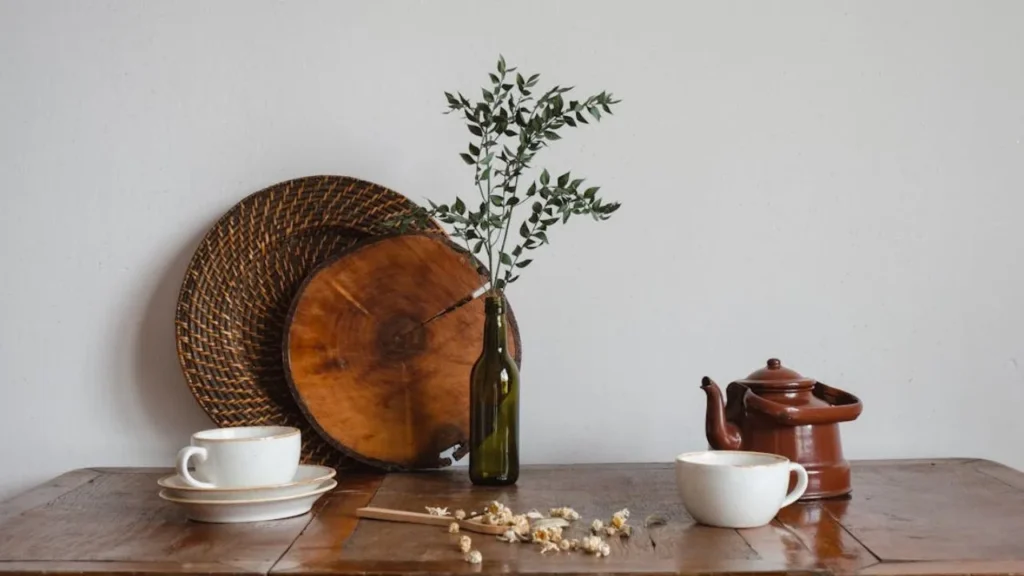
Form means the physical shape of the objects and elements used in an interior design. The two key types of form include geometric and organic.
Geometric form includes sharp and defined shapes, which can be reflected through elements like symmetrical wall patterns and floor designs.
Organic form, on the other hand, reflects a natural and unrestricted appearance, and is created with the use of objects like plants and live-edge tables, and with other asymmetrical furniture shapes.
6. Light
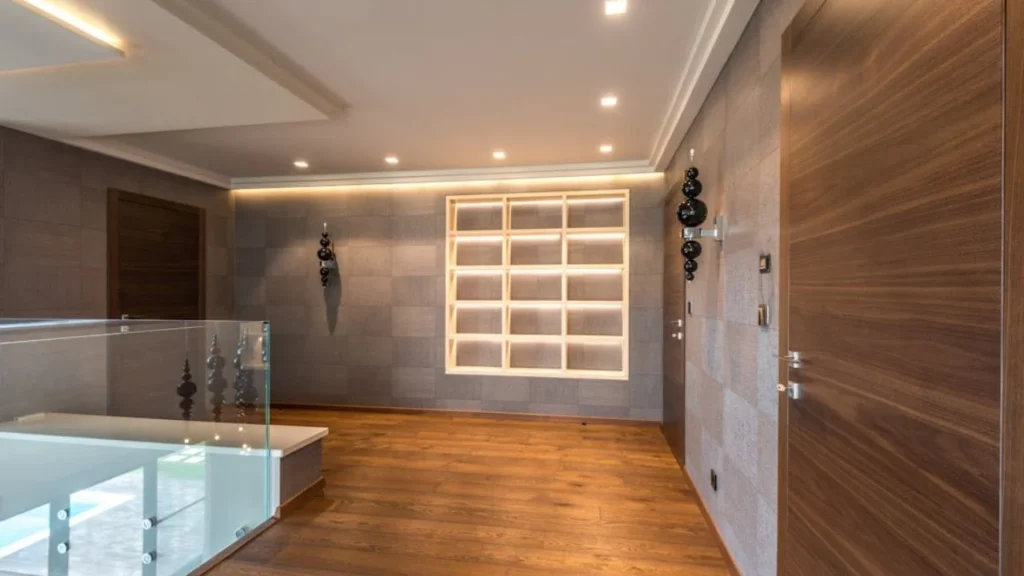
Light is a key element in interior design as it decides how the space is felt and perceived. The appearance of your furniture, fixtures, decorations, etc., all depend on the lighting.
The lighting in a room can complement color and also accentuate space and form. Interior designers use lighting as the final touch that ties everything in the room together and makes it look complete.
7. Pattern
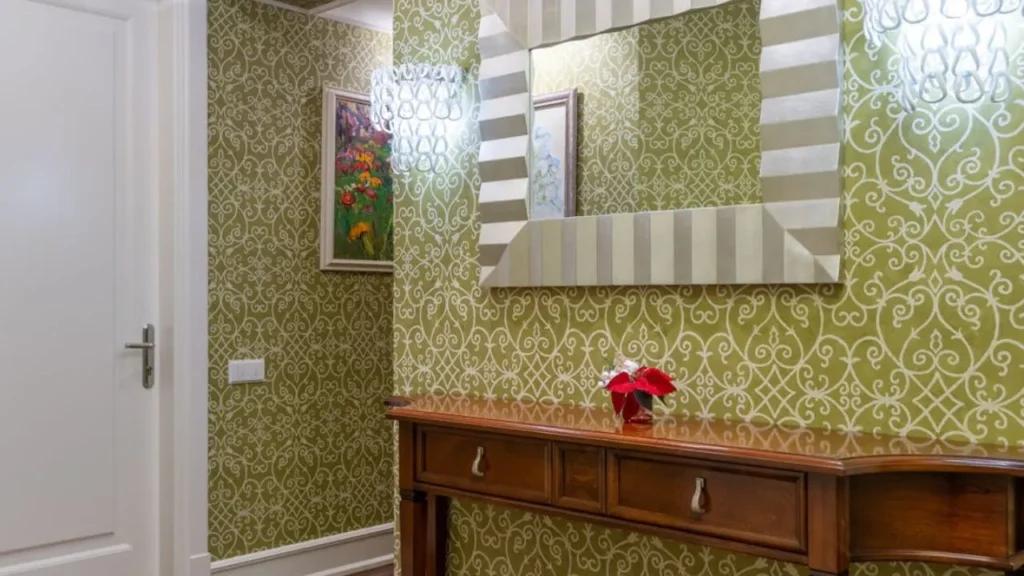
Pattern refers to the recurrent visual theme, shape, or motif that is found in the interior design. Patterns are necessary for creating rhythm in the room and making it look continuous. These can be created via the walls and floors and with the furniture.
Basics of Interior Design: Primary Rules and Steps
Above, we’ve mentioned the basic elements of interior design. Now, let’s move on to some of the basic rules that are followed when designing an interior space.
- Creating balance is a primary rule to follow in interior design. The visual weight in the room should be balanced and not concentrated on one side.
There are different ways in which balance is created, including symmetrical balance (mirrored arrangement of items on either side) and asymmetrical balance (where visual weight is distributed using different items). - Maintaining proportion and scale is likewise an important rule. Every item that you place in the room and every addition that you make to the design of the surfaces, i.e., the walls, ceiling, etc., should be proportionate to one another. Adding something very large in a room full of small items can look awkward.
- Creating a rhythm is also an important step in interior design. Aim to create an artistic cadence in the design by repeating certain themes, such as shapes, colors, or patterns. This acts as a seam that holds the design together and makes it look thoroughly thought over.
- Making emphasis with a focal point is another step that makes up the basics of interior design. There is usually a centerpiece in a room that draws the eye immediately, and the rest of the room is built around it. This helps to anchor the room’s design and make it look grounded.
Color complementation is very important in interior design. Either by clashing or by matching, the colors in the design have to go with each other so that they appear aesthetic to look at, rather than mismatched.
Images to Illustrate the Basics of Interior Design
We’ve talked about the basics of interior design. We mentioned both the elements and the rules that form the foundation of a good design.
Now, let’s take a look at some pictures of excellently designed spaces and see how the various basics have been applied.
This will help you understand how the basics are practically applied.
Image # 1
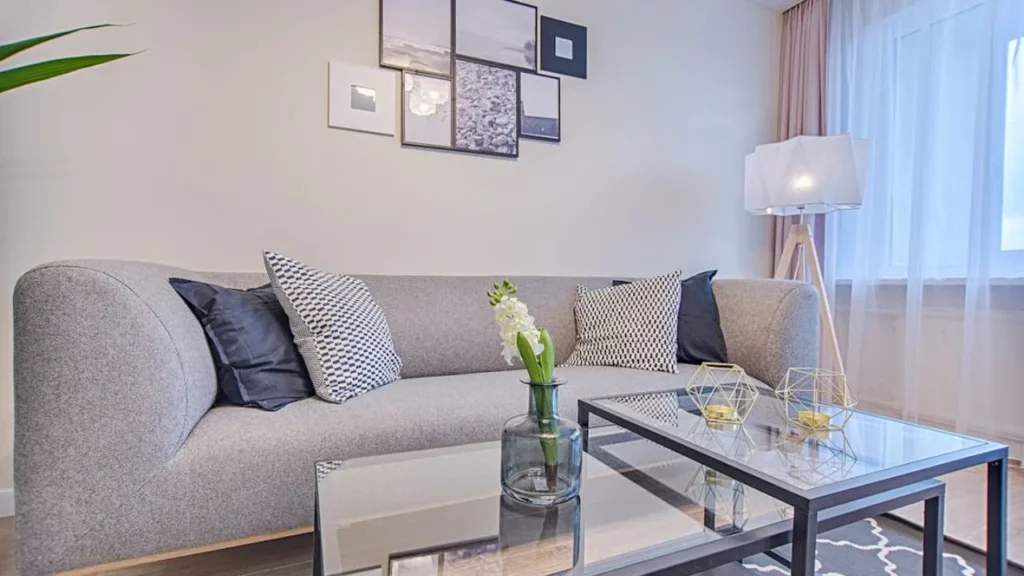
In this image, you can see a portion of the interior. However, that alone shows one of the most important basics of designing excellently executed: form. If you look at the frames on the wall, the shape profile of the table, the structure of the golden candle holders, as well as the shape of the lamp shade, you’ll notice they all have a geometric appearance, which creates an excellent look overall. Then, the basic element pattern can also be seen used quite well. The pattern on the rug, as well as on the couch cushions, creates visual engagement.
Image # 2
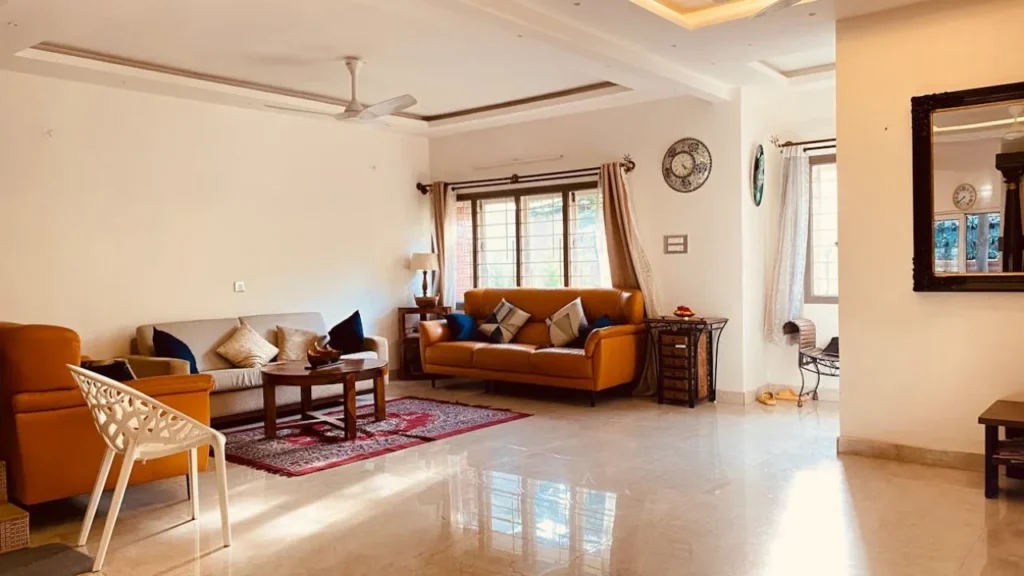
In this image, we can see a number of basics executed properly. The colors, for instance, are matched and contrasted properly. The colors of the sofas, walls, chairs, etc., are all harmonized. The balance in the room is also well-kept. For instance, if you imagine the same space but without the white chair next to the sofa, the balance would be off because there would be nothing to balance the small table next to the right side of the orange sofa.
Final Thoughts
And there you have it.
In the post above, we’ve mentioned the seven basic elements of interior design as well as the main principles/rules that are followed in order to utilize them.
The elements and the rules together make up the basics.
We hope you enjoyed reading this article, and we hope you learned something new! Be sure to check out the other posts on our website as well.

