

Designing a bathroom in a limited space can feel like trying to solve a puzzle with missing pieces. You want functionality, comfort, and style, yet every square inch counts. The good news is that limited space small bathroom designs with shower have become one of the most creative areas in interior design. With smart layouts, clever storage solutions, and modern shower styles, even the tiniest bathrooms can feel open, luxurious, and functional.
In many modern homes and apartments, bathrooms are shrinking as overall living space becomes more valuable. According to interior design data, a typical compact bathroom can measure around 5 × 7 feet or about 35 square feet, which is just enough room to fit essential fixtures like a toilet, sink, and shower when designed efficiently.
Instead of seeing a small bathroom as a limitation, designers view it as an opportunity. When every element is carefully chosen, the result can feel more sophisticated than larger spaces. A thoughtfully planned shower area, combined with smart lighting and minimalist fixtures, can transform a cramped bathroom into a relaxing retreat that feels surprisingly spacious.
Understanding the Challenges of Small Bathroom Spaces
Designing a small bathroom begins with understanding why these spaces often feel cramped. Many homeowners assume the problem is simply square footage. In reality, the challenge usually lies in layout, visual clutter, and inefficient fixtures.
A small bathroom often includes several bulky elements competing for space. Traditional bathtubs, oversized vanities, and swinging doors consume valuable floor area that could otherwise make the room feel open. The layout becomes especially challenging when plumbing must remain in a fixed position, limiting the flexibility of redesign.
Another issue is poor visual flow. Dark tiles, heavy partitions, and multiple decorative elements can break the visual continuity of the room. When the eye cannot move smoothly across surfaces, the space instantly feels smaller.
Interior designers emphasize that small bathrooms should prioritize openness and simplicity. Removing unnecessary divisions, installing floating fixtures, and using large mirrors can visually expand the room while maintaining functionality.
Once homeowners understand these challenges, they can begin to approach the design with strategy rather than frustration. The key is not adding more elements but choosing smarter ones.
Typical Dimensions of Compact Bathrooms
Understanding common bathroom dimensions can help homeowners design more effectively. Many small bathrooms follow standard layouts that have been used in homes for decades.
| Bathroom Type | Typical Size | Features |
|---|---|---|
| Compact Full Bathroom | 5 x 7 ft | Shower, toilet, small vanity |
| Standard Full Bathroom | 5 x 8 ft | Shower or tub, toilet, vanity |
| Square Layout | 6 x 6 ft | Flexible fixture placement |
A 5 × 8 bathroom layout is one of the most common designs because it allows fixtures to line up along one wall, simplifying plumbing while maximizing usable space.
Once you understand these typical dimensions, planning your shower placement becomes far easier.
Why Showers Are Ideal for Small Bathrooms
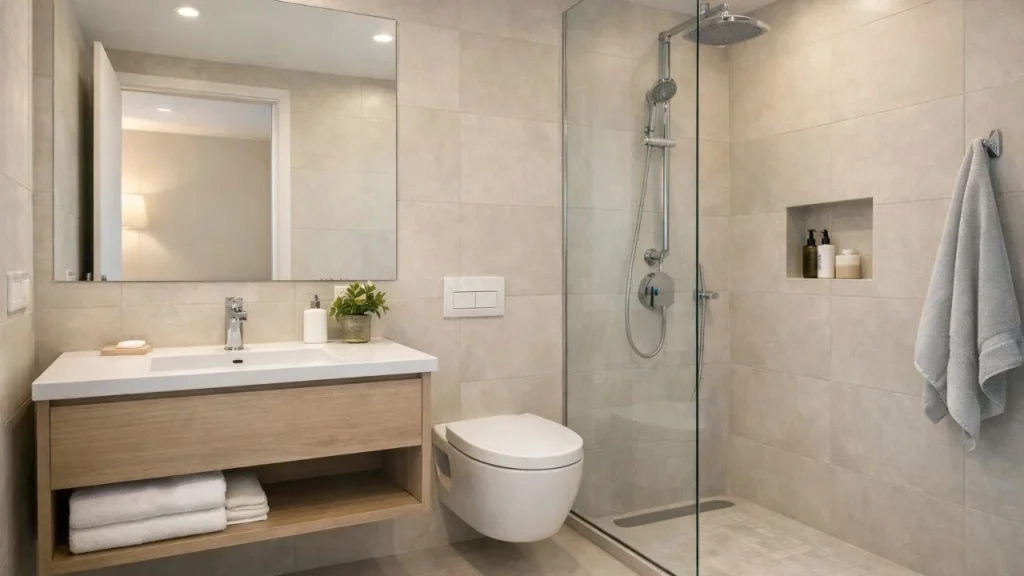
When space is limited, a shower almost always outperforms a bathtub in terms of efficiency. Bathtubs occupy a large footprint and visually dominate the room. Showers, on the other hand, can be designed in compact corners or even integrated seamlessly into the room.
Many modern small bathrooms now favor walk in showers or frameless glass enclosures because they remove visual barriers. Without heavy frames or curtains blocking the view, the room appears significantly larger.
Design experts often recommend removing a bathtub entirely in tight spaces. A spacious shower can dramatically improve the usability of a small bathroom and create a more luxurious feel.
Another reason showers work well in small bathrooms is flexibility. They can fit into awkward corners, sloped ceilings, or narrow spaces that would never accommodate a bathtub. Some homeowners even adopt a wet room design, where the entire bathroom floor is waterproofed and the shower area flows seamlessly into the rest of the room.
With the right layout and materials, a shower can become the centerpiece of the bathroom while still saving space.
Smart Layout Ideas for Small Bathrooms with Shower
The layout is the foundation of any successful bathroom design. When dealing with limited square footage, the arrangement of fixtures becomes even more critical.
One of the most popular solutions is the corner shower layout. By placing the shower in a corner, the central floor area remains open. This simple change can make the room feel far larger than it actually is.
Another modern solution is the wet room concept. In this design, the shower is not enclosed by bulky walls or trays. Instead, the entire bathroom floor slopes gently toward a drain. This eliminates visual barriers and creates a seamless appearance.
A third option is the linear layout, where the toilet, vanity, and shower align along a single wall. This arrangement simplifies plumbing and creates a clean, streamlined look.
Each layout has its advantages. The right choice depends on the size of the room, the location of existing plumbing, and the homeowner’s lifestyle preferences.
Design Tricks That Make Small Bathrooms Look Bigger
Even if your bathroom is physically small, clever design techniques can dramatically change how it feels.
One of the most effective tricks is using light colors and reflective surfaces. Light colored tiles, especially white or soft neutral tones, reflect light and make the space appear larger. Large format tiles also help reduce grout lines, creating a seamless visual effect.
Another powerful design element is the mirror. Interior designers frequently recommend oversized mirrors in small bathrooms because they reflect light and create the illusion of depth. Large mirrors can make the room appear almost twice its actual size.
Glass shower panels are another essential feature. Frameless glass enclosures maintain visibility across the entire room, preventing the shower from visually dividing the space.
Minimalist fixtures also play a significant role. Wall mounted sinks, floating vanities, and compact toilets keep the floor visible, which visually expands the room.
Together, these design strategies transform small bathrooms into spaces that feel open and airy rather than cramped.
Space Saving Storage Ideas
Storage is often the biggest challenge in a compact bathroom. Without enough space for cabinets and shelves, everyday items can quickly create clutter.
One effective solution is wall mounted storage. Floating cabinets and vanities free up floor space while still providing room for toiletries and towels.
Another excellent option is built in shower niches. Instead of installing bulky shower racks, designers create recessed shelves directly into the shower wall. These niches provide storage without protruding into the space.
Vertical shelving is also highly effective. Tall cabinets or ladder style shelves take advantage of unused wall height rather than floor space.
Here are some popular storage ideas for small bathrooms:
- Recessed wall cabinets
- Over the toilet shelving
- Shower niches
- Floating vanities
- Vertical storage towers
When storage is integrated into the design rather than added later, the bathroom feels cleaner and more organized.
Choosing the Right Shower Style
Not all showers are created equal. The right style can make a dramatic difference in how spacious your bathroom feels.
Frameless Glass Showers
Frameless glass showers are one of the most popular choices for modern small bathrooms. Because they lack heavy metal frames, they appear almost invisible. This transparency allows the eye to travel across the room uninterrupted.
Sliding Door Showers
Sliding doors are another smart solution for tight spaces. Traditional shower doors swing outward and require clearance space. Sliding doors eliminate this issue by moving along a track.
Doorless Walk In Showers
Doorless showers, often used in wet room designs, offer a luxurious and minimalist look. These showers rely on strategic placement and drainage rather than physical barriers to contain water.
Each of these options can help maximize space while maintaining a stylish appearance.
Best Materials and Finishes for Small Bathrooms
Materials play a crucial role in determining how large or small a bathroom feels.
Light colored tiles are commonly recommended because they reflect natural and artificial light. Glossy finishes enhance this effect even further.
Natural materials such as stone and wood textures can also add warmth to the space without overwhelming it. Many modern bathrooms combine neutral tiles with wooden accents to create a spa like atmosphere.
Large tiles are another smart choice. Smaller tiles create more grout lines, which visually breaks up the space. Larger tiles create a smoother, more continuous surface.
Designers also emphasize the importance of keeping materials consistent throughout the room. When the same tile is used for both the shower and the floor, the bathroom feels more cohesive and spacious.
Lighting Ideas for Compact Bathrooms
Lighting is often overlooked in bathroom design, yet it has a massive impact on how the space feels.
A well lit bathroom appears larger, cleaner, and more inviting. Natural light is always the best option, but when windows are limited, layered lighting can replicate the effect.
Three types of lighting work best in small bathrooms:
- Ambient lighting for overall brightness
- Task lighting around mirrors for grooming
- Accent lighting to highlight architectural features
LED mirrors and recessed ceiling lights are particularly popular in modern small bathroom designs. These fixtures provide strong illumination without taking up space.
Budget Friendly Small Bathroom Design Ideas
A beautiful bathroom does not require a massive renovation budget. Many small upgrades can dramatically improve the appearance of the space.
Replacing an old shower curtain with a glass panel can instantly make the room feel more modern. Updating the mirror or installing new lighting can also transform the atmosphere.
Painting the walls in light colors and upgrading hardware such as faucets and towel bars are affordable ways to refresh the design.
Even small details like matching storage baskets or stylish soap dispensers can create a cohesive look that elevates the entire room.
The key is focusing on changes that improve both functionality and aesthetics.
FAQs
1. What is the best shower type for a small bathroom?
Frameless glass walk in showers are often considered the best option because they remove visual barriers and make the room appear larger.
2. Can a shower replace a bathtub in a small bathroom?
Yes. In many cases, replacing a bathtub with a shower improves functionality and creates more usable space in compact bathrooms.
3. What colors make a small bathroom look bigger?
Light colors such as white, beige, soft gray, and pastel shades reflect light and help the room appear more spacious.
4. How can I add storage in a small bathroom?
Use wall mounted cabinets, built in shower niches, vertical shelves, and floating vanities to maximize storage without using floor space.
5. Are walk in showers suitable for very small bathrooms?
Yes. Walk in showers can be customized to fit small spaces and often make the room feel more open than traditional shower enclosures.
Conclusion
A limited space bathroom does not have to feel cramped or uncomfortable. With the right design approach, even the smallest bathroom can become a stylish and highly functional space.
The secret lies in smart layouts, minimalist fixtures, and thoughtful material choices. Showers are particularly effective in compact bathrooms because they save space while offering modern convenience.
When combined with clever storage, light colors, and strategic lighting, limited space small bathroom designs with shower can feel far more spacious than their actual dimensions.
Small bathrooms may have less square footage, but they often deliver the most creative and satisfying design transformations.

