There is nothing quite as frustrating as spending a weekend planting a new tree only to watch it struggle and fade away a few seasons later. Many homeowners find themselves stuck with trees that grow too slowly or, even worse, fail to deliver that vibrant autumn color promised on the nursery tag.
You want a landscape that stops traffic every October, but you are worried about picking a species that is too high-maintenance or susceptible to disease. If you do not choose the right variety now, you could be left with a dull, stunted yard for years.
The red sunset maple tree is the perfect solution to this landscaping anxiety, offering a reliable explosion of color and a robust growth rate that outshines almost every other cultivar. In this guide, we will walk through everything you need to know about this spectacular tree, from its scientific background to the best ways to keep it thriving in your own backyard.
What is the Red Sunset Maple Tree?
When you hear professionals talk about the red sunset maple tree, they are often referring to the cultivar known scientifically as acer red sunset maple tree (specifically Acer rubrum ‘Franksred’). This tree is a standout variety of the native Red Maple, which is famous across North America for its adaptability. However, the Red Sunset cultivar was specifically developed to provide a more symmetrical shape and a more consistent fall color than its wild relatives. It is a deciduous tree that typically reaches a mature height of 40 to 50 feet with a spread of about 35 feet, making it a medium-to-large shade tree that fits perfectly in most residential yards.
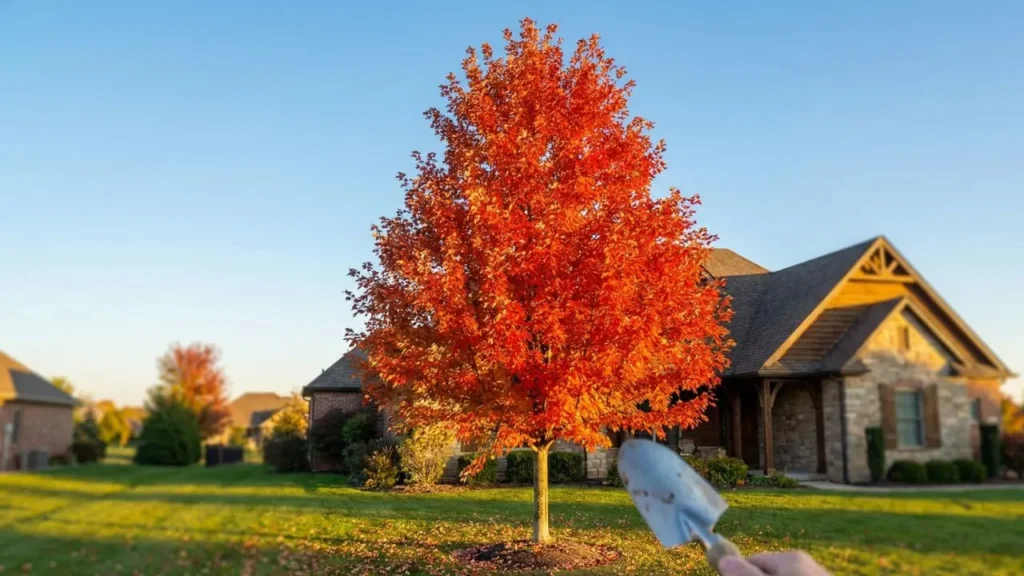
The acer red sunset maple tree is prized for its year-round visual interest. In the early spring, before the leaves even appear, the branches are covered in small but beautiful red flower clusters. As summer takes over, the tree develops a dense canopy of glossy, dark green leaves that provide deep, cooling shade. But the real magic happens in the fall. While other trees might turn a muddy yellow or brown, this maple tree red sunset variety transforms into a brilliant, fiery scarlet and orange. This color often arrives earlier than other maples and stays on the branches longer, giving you a few extra weeks of autumn beauty.
In terms of structure, the red sunset maple tree grows with a strong central leader and develops a neat, pyramidal-to-oval silhouette as it matures. This symmetry is one of the reasons it is such a popular choice for street plantings and formal landscapes. It is a tough, hardy tree that can handle a variety of climates, thriving in USDA zones 4 through 8. Whether you are dealing with the cold winters of the North or the humidity of the South, this tree is designed to perform.
Red Sunset Maple Tree Pros and Cons
Before you rush out to find a red sunset maple tree for sale, it is important to understand the trade-offs. Every tree has its strengths and weaknesses, and knowing the red sunset maple tree pros and cons will help you decide if it is truly the right fit for your specific plot of land. One of the biggest pros is undoubtedly the speed of growth. This tree is a vigorous grower, often adding one to two feet of height per year once established. This makes it an excellent choice for new homeowners who want to establish shade quickly without waiting decades.
Another major entry in the pros column is its adaptability to soil moisture. Many maples struggle in wet feet or areas with poor drainage, but the red sunset maple tree is actually quite tolerant of moist or even occasionally boggy soil. This makes it a great candidate for rain gardens or lower spots in your yard. Additionally, it has a very strong wood structure compared to other fast-growing trees like the Silver Maple, which means it is much less likely to lose large branches during a heavy wind or ice storm.
However, a balanced look at the red sunset maple tree pros and cons must also mention its sensitivities. The most significant con is its lack of tolerance for alkaline (high pH) soils. If your soil is too alkaline, the tree may suffer from chlorosis, where the leaves turn a sickly yellow because the tree cannot absorb enough manganese or iron. It also has a relatively thin bark when young, which can be easily damaged by lawnmowers or weed wackers. Protecting the trunk during the first few years is essential to prevent long-term rot or pest issues.
Lastly, while the roots are less aggressive than some other maple species, they can still become surface roots over time if the soil is heavily compacted. This can make mowing around the tree a bit of a challenge or potentially lift nearby sidewalk slabs if planted too close. Weighing these red sunset maple tree pros and cons is mostly a matter of checking your soil pH and ensuring you have enough space for the roots to breathe and spread.
The Growth Rate and Appearance of the Maple Tree Red Sunset
Understanding the life cycle of the maple tree red sunset helps you plan your landscape more effectively. As mentioned, the growth rate is considered moderate to fast. In ideal conditions meaning plenty of sunlight and consistent moisture you can expect a young tree to reach its full shade-producing potential in about 10 to 15 years. The bark starts out smooth and light gray, providing a beautiful winter silhouette, and eventually becomes more fissured and dark as the tree ages.
The foliage of the maple tree red sunset is its defining characteristic. Each leaf typically has three to five lobes with serrated edges, a classic maple shape. During the summer, the top of the leaf is a rich, shiny green, while the underside has a slightly silvery-gray tint. When the wind blows, the tree has a shimmering effect that adds movement to your garden. Because the canopy is so dense, it is remarkably effective at blocking out the hot afternoon sun, which can actually help lower your home’s cooling costs if planted on the western or southern side of the building.
In the spring, the red sunset maple tree produces winged seeds called samaras. While some homeowners find these helicopters to be a bit of a mess, they are much less prolific on this cultivar than on others. The small red flowers that precede them are a vital early-season food source for pollinators like bees, which are often hungry when few other plants are in bloom. This ecological benefit, combined with its stunning appearance, makes the maple tree red sunset a favorite for both humans and local wildlife.
How to Plant Your Acer Red Sunset Maple Tree
Success starts the moment your acer red sunset maple tree arrives at your home. The best time to plant is in the late fall or early spring when the tree is dormant. This allows the roots to settle into the soil without the stress of supporting a full canopy of leaves during the heat of summer. First, you need to find a location with full sun. While it can tolerate partial shade, you will get the most wow factor from the fall colors if the tree receives at least six to eight hours of direct sunlight every day.
Digging the hole is the most important physical step. The hole should be at least two to three times as wide as the root ball but no deeper. Planting a red sunset maple tree too deep is a common mistake that leads to trunk rot and girdling roots that can eventually choke the tree. The flare at the base of the trunk where the roots begin should be slightly visible above the soil line. If you are planting a balled-and-burlapped tree, be sure to cut away as much of the wire basket and burlap as possible once the tree is in the hole to ensure the roots can spread freely.
After you backfill the hole with your native soil, water the area thoroughly to remove any air pockets. Do not feel the need to add heavy amounts of fertilizer or specialized soil mixes to the hole; you want the acer red sunset maple tree to get used to the natural soil in your yard right away. Finish by applying a two-to-three-inch layer of organic mulch, like shredded bark, around the base. Make sure the mulch does not touch the trunk itself, as this can trap moisture and cause the bark to decay.
Caring for Your Red Sunset Maple Tree
Once your tree is in the ground, the first two years are the most critical for establishment. The red sunset maple tree has higher-than-average water needs compared to some drought-tolerant oaks or pines. You should aim to give it a deep soaking once a week, or more often during periods of extreme heat or drought. A deep watering encourages the roots to grow down into the soil rather than staying near the surface, which makes the tree more stable and resilient in the long run.
Pruning is usually minimal for this variety because it naturally grows in such a symmetrical shape. However, you should occasionally check for v-shaped crotches or competing leaders. It is best to prune in the late winter or very early spring while the tree is still dormant. Avoid pruning in the late spring when the sap is flowing heavily, as maples are known as bleeders and will leak sap from the cuts. While this isn’t usually harmful to the tree, it can be messy and attract insects. Removing any dead or crossing branches will keep the red sunset maple tree healthy and looking its best.
Monitoring for pests and diseases is the final piece of the care puzzle. While the red sunset maple tree is generally resistant to many common issues, it can occasionally be affected by leaf spots or aphids. Usually, these are cosmetic problems that do not require chemical treatment. The most serious threat is Verticillium wilt, a soil-borne fungus. Keeping your tree well-watered and mulched reduces the stress that often invites these diseases. A healthy tree is its own best defense.
Finding a Red Sunset Maple Tree for Sale
If you are ready to make the leap, you will find that there is usually a red sunset maple tree for sale at most reputable local nurseries or through online specialized tree retailers. Buying locally has the advantage of seeing the specific specimen before it goes in the ground, and local nurseries often stock trees that are already acclimated to your regional climate. When looking at a red sunset maple tree for sale, look for a tree with a single, straight central trunk and branches that are evenly spaced around the tree.
If you choose to buy online, you will often find a red sunset maple tree for sale in smaller sizes, such as three-to-five-foot whips or potted saplings. While these take a little longer to become a full shade tree, they are much easier to plant and often have a higher survival rate because they experience less transplant shock than older, larger trees. Regardless of where you buy, make sure the seller provides a guarantee or can confirm that the tree is a true ‘Franksred’ clone to ensure you get that legendary fall color.
Keep in mind that the cost of a red sunset maple tree for sale can vary significantly based on the size and age of the tree. A small sapling might cost under $50, while a large, mature specimen that requires professional equipment to plant could cost several hundred or even a thousand dollars. For most homeowners, a tree in the five-to-seven-foot range offers the best balance of affordability and immediate impact.
FAQs
How long does it take for a red sunset maple to turn red?
The fall color usually begins to appear in late September or early October, depending on your location. The intensity of the color is often influenced by the weather; a combination of warm, sunny days and cool (but not freezing) nights produces the most vibrant reds.
Can the red sunset maple grow in clay soil?
Yes, it is surprisingly tolerant of clay soil, provided the soil is not extremely alkaline. It can handle the density of clay better than many other ornamental trees, as long as it gets enough moisture.
How far should I plant a red sunset maple tree from my house?
Because of its mature spread and potential for surface roots, it is recommended to plant the tree at least 15 to 20 feet away from your home’s foundation or any major paved surfaces like a driveway.
Do red sunset maples have a lot of seeds?
This cultivar is known for having fewer seeds (samaras) than the standard wild Red Maple. While it will still produce some, they are generally not considered a major maintenance issue.
Final Thoughts
Choosing the right tree is an investment in the future of your home and your neighborhood. The red sunset maple tree stands out as one of the most reliable and visually rewarding choices for anyone looking to add shade and seasonal beauty to their landscape. By understanding the acer red sunset maple tree and its specific needs, you can avoid the common pitfalls of tree planting and enjoy a legacy of brilliant autumn color for decades to come.
Whether you are just starting your search for a red sunset maple tree for sale or you are preparing to dig the hole for a new arrival, remember that consistency is key. Proper watering, the right soil pH, and a little bit of patience will reward you with a maple tree red sunset that is the envy of the block.