

Let us be honest for a moment. Few areas of a home create more frustration than a tiny bathroom. You walk in, try to move around, and suddenly everything feels cramped. The sink bumps into the door, the storage is almost nonexistent, and the shower area feels like a phone booth. Many homeowners struggle with these challenges daily, which is why they start searching for small bathroom remodel ideas that can finally make the space comfortable and functional.
One of the biggest pain points is storage. Where do you keep towels, toiletries, and cleaning supplies when the room is already tiny? Another issue is layout. Small bathrooms often have awkward designs that make them feel even tighter. Poor lighting and outdated fixtures only add to the problem. These issues are not just cosmetic. They affect how comfortable and relaxing your home feels every day.
Many homeowners assume a bathroom remodel requires a huge budget or a complete reconstruction. The truth is that small spaces often offer the greatest opportunity for transformation. With the right design strategies and clever space planning, even the tiniest bathroom can feel modern, spacious, and stylish.
Interior designers frequently point out that small bathrooms are actually ideal spaces for bold design choices. Because the room is small, even minor upgrades can create a dramatic transformation. Something as simple as replacing a vanity or changing the lighting can change the entire atmosphere of the room.
Once you understand how to work with the limitations instead of against them, remodeling a compact bathroom becomes far less intimidating.
Why Smart Design Matters in Small Spaces
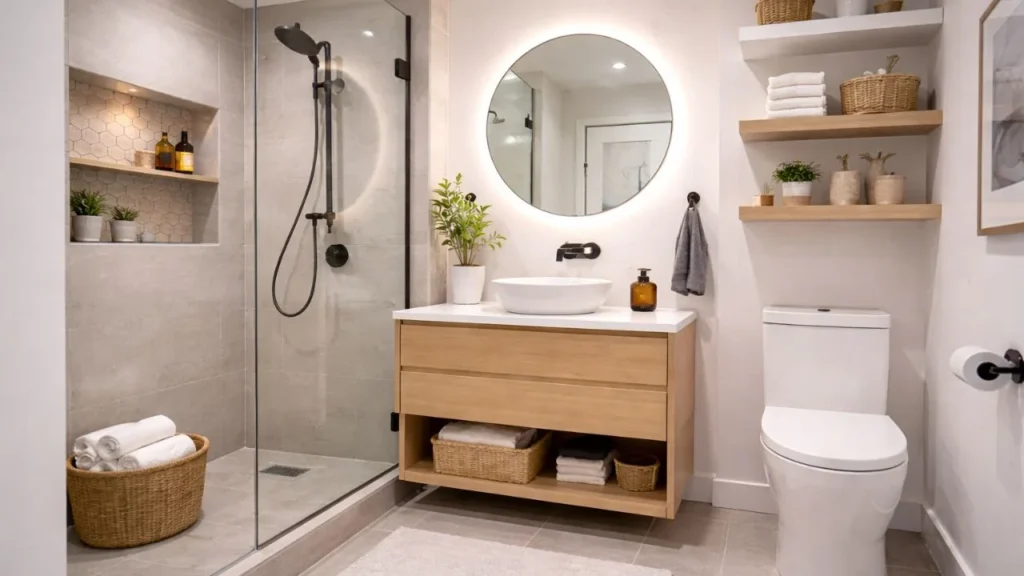
Design matters in any room, but it becomes absolutely critical in small bathrooms. When square footage is limited, every inch must work harder. A poorly planned layout can make a bathroom feel claustrophobic, while a thoughtful design can make the same space feel open and functional.
Experts often explain that visual space is just as important as physical space. Mirrors, lighting, and color choices can dramatically influence how large a room feels. For example, oversized mirrors reflect light and create the illusion of depth, instantly making a small bathroom feel bigger.
Another powerful design trick is removing visual barriers. Glass shower doors, floating vanities, and wall mounted fixtures all create a more open appearance. Designers often recommend these solutions because they expose more floor space and allow light to travel freely across the room.
Trends in bathroom renovation also show that homeowners are prioritizing functionality. According to renovation studies, more than sixty percent of homeowners upgrading bathrooms focus on improving systems such as ventilation, plumbing, and lighting rather than changing the layout entirely. These improvements help create a more comfortable environment while maintaining practical functionality.
Smart design turns a cramped bathroom into a space that feels calm, organized, and surprisingly spacious.
Understanding the Budget for Small Bathroom Renovations
Average Cost of a Small Bathroom Remodel
Before diving into design ideas, most homeowners want to know one thing first: how much will this actually cost? Bathroom remodeling costs vary widely depending on the size of the room, materials used, and labor rates in your region.
Industry data shows that the average bathroom remodel costs roughly $6,600 to $18,000, with many homeowners spending around $12,000 on average for a renovation project.
When focusing specifically on small bathrooms, costs tend to be more manageable. A compact bathroom remodel often ranges between $3,000 and $15,000, depending on whether the project includes major plumbing changes or simply cosmetic upgrades.
Here is a simplified breakdown of typical costs.
| Remodel Type | Average Cost Range |
|---|---|
| Budget refresh | $3,000 – $7,000 |
| Mid range remodel | $7,000 – $15,000 |
| High end renovation | $15,000 – $30,000+ |
While these numbers may seem high at first glance, bathroom renovations often provide strong returns on investment. Many remodeling reports show that a midrange bathroom renovation can deliver about 80 percent ROI when selling a home.
Factors That Affect Bathroom Renovation Costs
Several key factors influence the final price of a bathroom renovation. Understanding these elements can help homeowners plan more effectively and avoid budget surprises.
The first major factor is plumbing. Moving toilets, sinks, or showers often requires new pipes and professional installation. This can significantly increase labor costs. Many contractors recommend keeping the existing plumbing layout whenever possible to save money.
Materials are another major cost driver. High end tile, custom cabinets, and luxury fixtures can quickly increase the project budget. However, there are many affordable alternatives that offer similar aesthetics without the premium price tag.
Labor costs also vary widely depending on location. Urban areas often have higher contractor rates than smaller cities or rural regions. The complexity of the renovation also plays a role. A simple cosmetic upgrade is far less expensive than a full structural remodel.
Understanding these cost factors allows homeowners to prioritize the features that matter most.
Ideas for Small Bathroom Remodeling That Actually Work
Use Floating Vanities to Open Floor Space
Floating vanities have become one of the most popular design features in modern bathrooms, and for good reason. Unlike traditional cabinets that extend to the floor, floating vanities are mounted directly to the wall, leaving open space beneath them.
This simple design change can dramatically alter how a bathroom feels. When the floor remains visible, the room instantly appears larger. Interior designers often compare this effect to lifting furniture off the ground in a small living room. The visual openness makes the entire space feel lighter.
Floating vanities also provide practical benefits. Cleaning becomes easier because there are no tight corners where dust and dirt can accumulate. They also allow homeowners to customize storage solutions underneath if needed.
Design experts predict floating vanities will continue to dominate bathroom trends because they combine elegance with functionality. Their minimalist appearance works beautifully in modern homes while still fitting well in traditional designs.
For homeowners exploring ideas for small bathroom remodeling, replacing a bulky vanity with a floating model can be one of the most impactful upgrades.
Install Wall Mounted Fixtures
Wall mounted fixtures are another powerful solution for maximizing space in compact bathrooms. Instead of placing faucets, sinks, or toilets on the floor, these elements are installed directly into the wall structure.
This design approach offers several advantages. First, it frees up valuable floor space, which is essential in tight rooms. Second, it creates a cleaner and more streamlined appearance. The room looks less cluttered because fewer objects interrupt the visual flow.
Wall mounted faucets also allow for narrower sink designs. This provides more walking space without sacrificing functionality. Many modern bathroom designs combine floating vanities with wall mounted faucets to achieve a sleek and contemporary look.
Another advantage is customization. Homeowners can adjust the height of wall mounted fixtures to match their preferences. This flexibility makes them ideal for families with varying needs.
When done correctly, these fixtures blend practicality with sophisticated design.
Bathroom Remodel Ideas for Small Bathrooms That Maximize Space
Replace Bathtubs with Walk In Showers
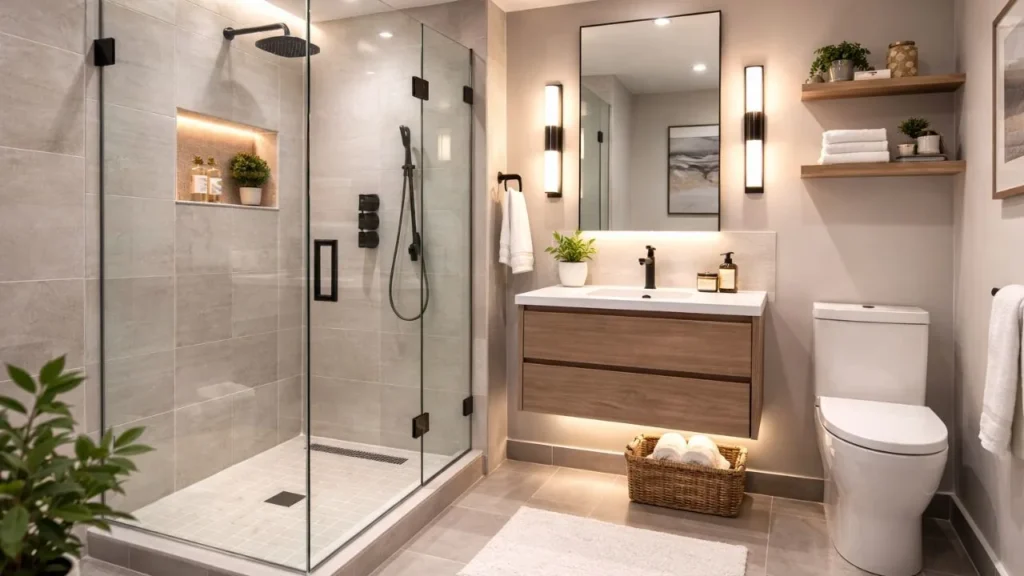
In many small bathrooms, the bathtub consumes the majority of available space. While tubs can be relaxing, they are not always practical in compact layouts. Replacing a bulky tub with a walk in shower can dramatically open up the room.
Walk in showers create a more streamlined layout because they remove barriers and improve movement. Frameless glass panels are particularly effective because they maintain clear sightlines throughout the bathroom.
Designers often recommend corner showers for extremely small bathrooms. This configuration uses previously unused space while keeping the center of the room open.
Another advantage of walk in showers is accessibility. They are easier to enter and exit, making them ideal for households with older adults or individuals with mobility concerns.
Many homeowners discover that switching from a bathtub to a walk in shower instantly makes their bathroom feel twice as large.
Use Glass Shower Doors Instead of Curtains
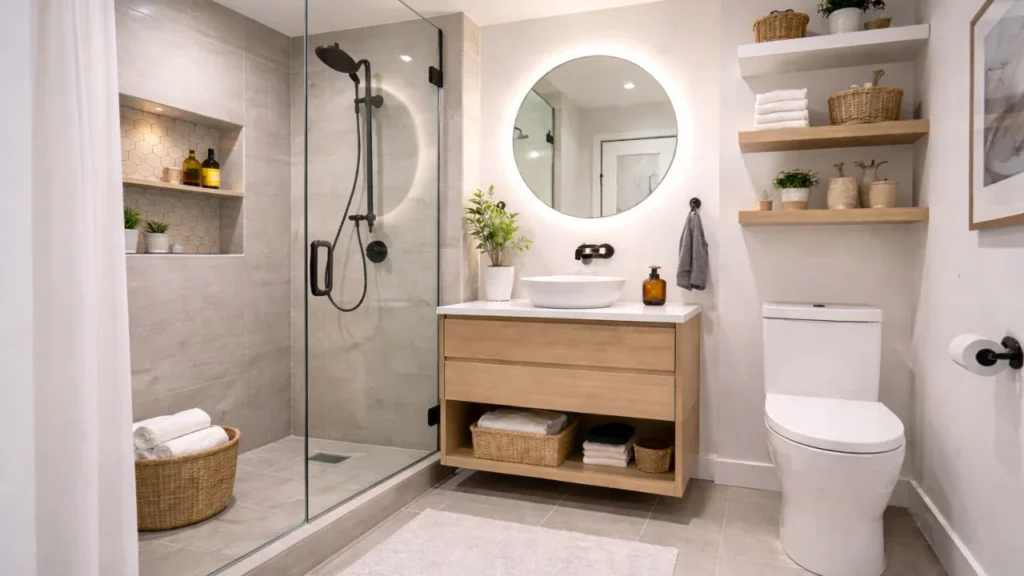
Shower curtains may seem convenient, but they often make small bathrooms feel crowded. Curtains visually divide the room and block light from traveling through the space.
Glass shower doors solve this problem by creating a transparent barrier that allows light to move freely. The result is a brighter and more open environment.
Designers also recommend frameless glass panels whenever possible. Without metal frames, the shower area blends seamlessly with the rest of the bathroom.
Another benefit is durability. High quality tempered glass is resistant to moisture and easier to clean than fabric curtains.
For homeowners searching for bathroom remodel ideas for small bathrooms, switching to glass shower doors is one of the simplest upgrades with the biggest visual impact.
Remodeling Bathroom Ideas for Small Bathrooms That Improve Storage
Vertical Storage and Wall Shelves
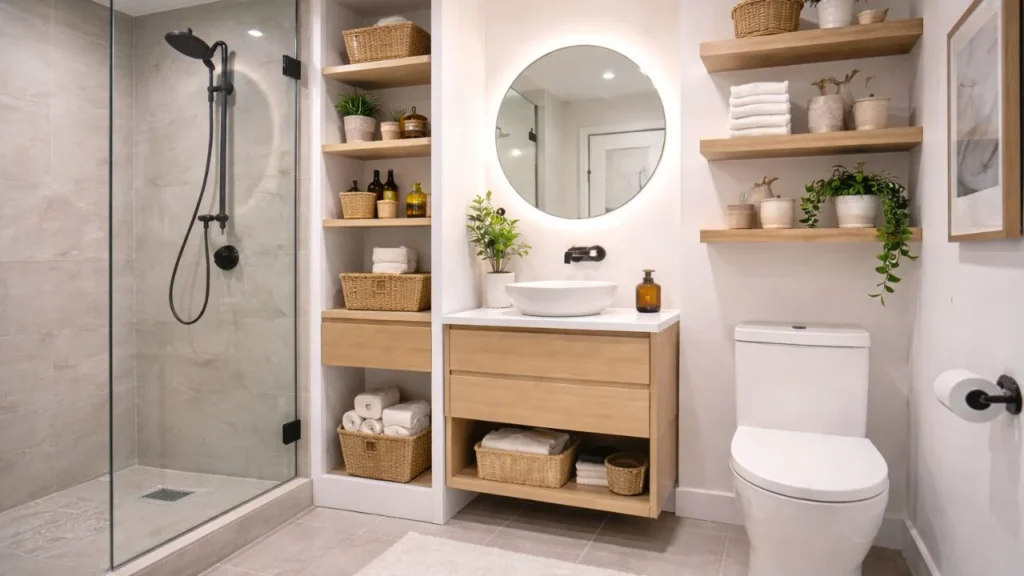
Storage is often the biggest challenge in a small bathroom. With limited floor space, traditional cabinets can quickly make the room feel overcrowded.
Vertical storage offers an effective solution. Instead of expanding outward, homeowners can utilize the height of the walls. Floating shelves, tall cabinets, and ladder style storage units help maximize storage without consuming valuable floor area.
Open shelving is particularly popular in modern bathroom design. It provides easy access to everyday essentials while adding decorative elements to the room. Towels, plants, and decorative jars can transform simple shelves into stylish displays.
Another clever idea involves installing cabinets above the toilet. This area often goes unused, yet it provides an ideal location for storing toiletries and cleaning supplies.
By thinking vertically, homeowners can dramatically improve storage capacity without making the room feel smaller.
Built In Niches for Showers
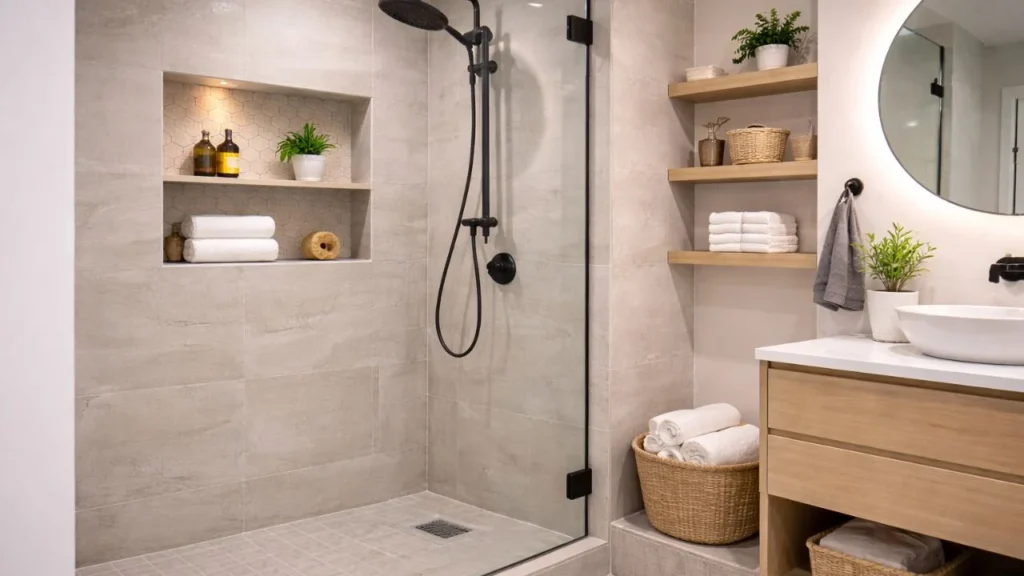
Built in niches are small recessed shelves integrated directly into the shower wall. These niches provide convenient storage for shampoo, soap, and other bathing products without requiring additional racks or baskets.
The biggest advantage of shower niches is that they do not protrude into the room. Because they are built into the wall, they maintain a clean and uncluttered appearance.
Many designers recommend incorporating multiple niches at different heights to accommodate various items. Some homeowners even add decorative tile patterns inside the niche to create a subtle focal point.
In compact bathrooms where every inch counts, built in storage solutions like these can make a noticeable difference.
Lighting Strategies That Make Small Bathrooms Look Bigger
Mirror Placement Tricks
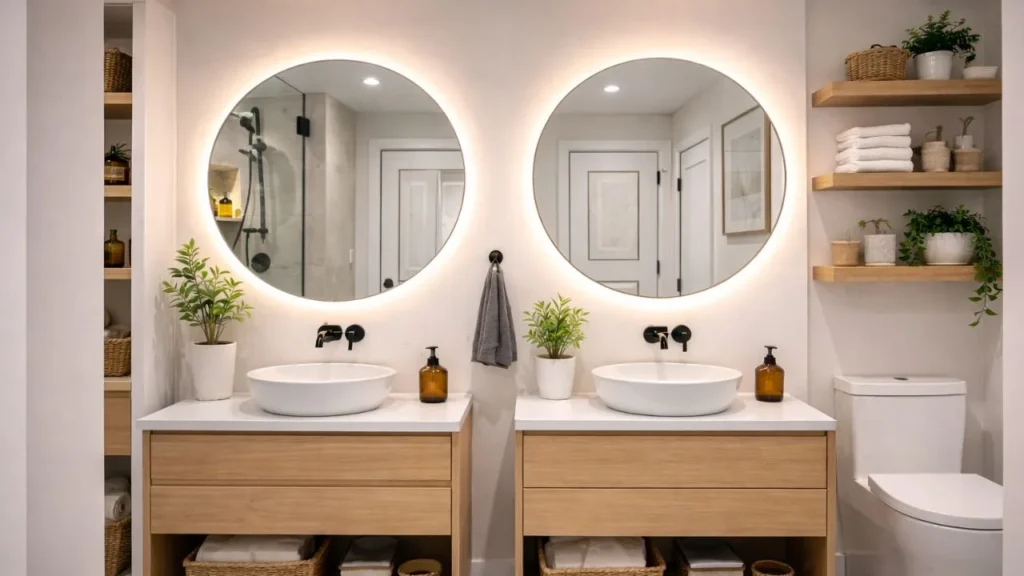
Lighting and mirrors work together like magic in small bathrooms. When used correctly, they can completely transform how a space feels.
Large mirrors reflect both natural and artificial light, making the room appear brighter and more spacious. Designers often recommend installing mirrors that extend across the entire vanity wall.
Another effective technique involves placing mirrors opposite windows or light fixtures. This maximizes reflection and spreads illumination evenly throughout the room.
Backlit mirrors have also become increasingly popular in modern bathroom design. These mirrors include integrated LED lighting that creates a soft glow around the edges.
The combination of strategic lighting and reflective surfaces can turn a dim bathroom into a bright and welcoming space.
Color and Tile Ideas for Small Bathroom Remodels
Light Colors vs Dark Accents
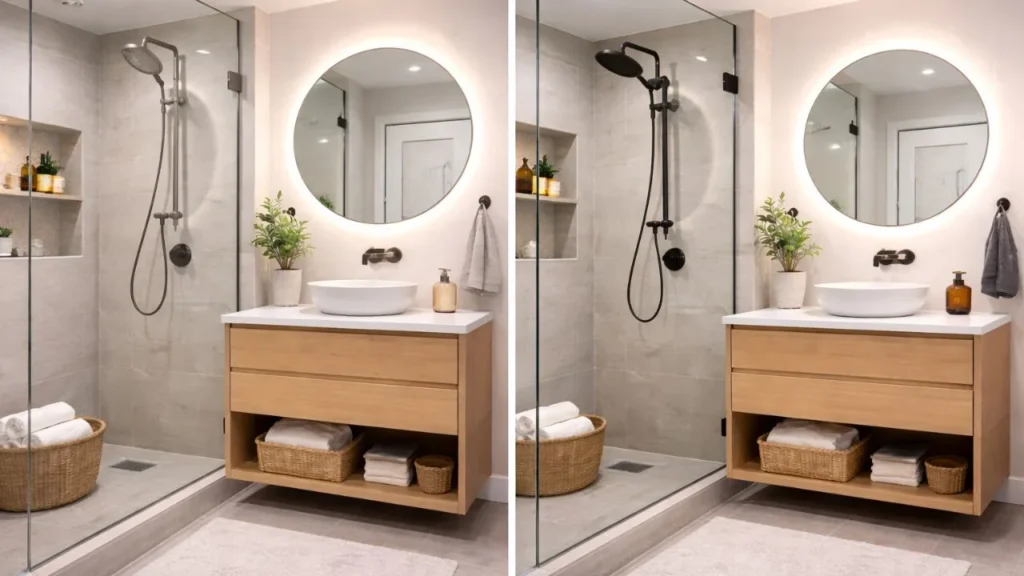
Color plays a powerful role in shaping how large or small a room feels. Light colors such as white, soft gray, and pastel tones reflect more light, which naturally makes a space appear larger.
However, that does not mean small bathrooms must be completely neutral. Many designers recommend combining light backgrounds with darker accents. This contrast adds depth and character without overwhelming the room.
Large tiles are another smart choice for small bathrooms. While it may seem counterintuitive, bigger tiles create fewer grout lines, which results in a more seamless appearance.
Vertical tile patterns can also visually elongate the room, making ceilings appear higher.
With thoughtful color and tile selections, even the smallest bathroom can feel stylish and spacious.
Smart Layout Ideas for Compact Bathrooms
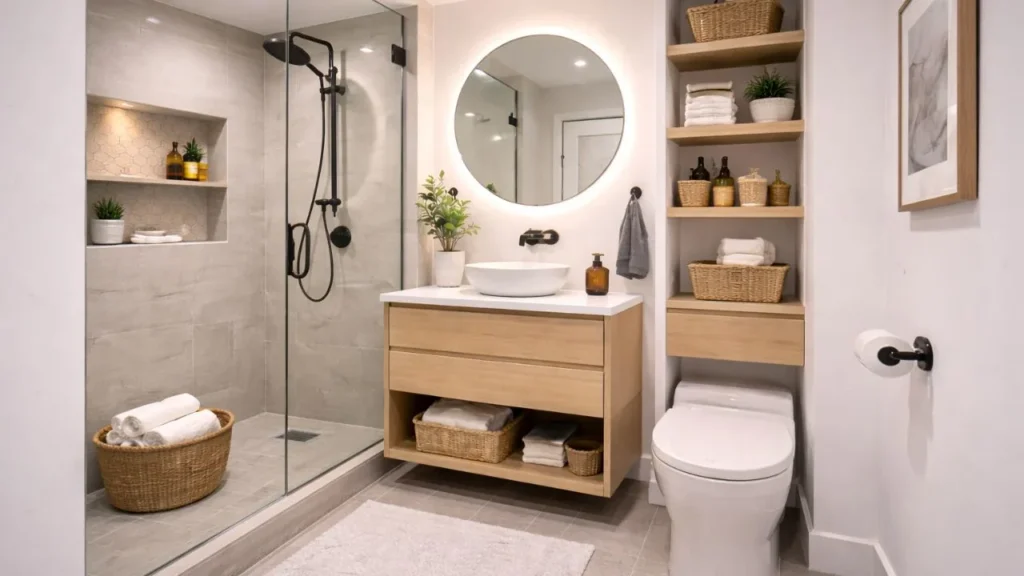
The layout of a bathroom determines how comfortable it feels during everyday use. Even small adjustments can significantly improve functionality.
One popular approach is shifting fixtures along a single wall. This configuration simplifies plumbing and creates a more open walkway through the center of the room.
Corner sinks are another excellent solution for extremely tight spaces. They provide essential functionality without interfering with door clearance or movement.
Pocket doors can also make a surprising difference. Traditional swing doors require valuable floor space, while sliding doors eliminate this issue entirely.
When planning a bathroom remodel, focusing on layout efficiency is often more important than adding new features.
Common Mistakes to Avoid in Small Bathroom Remodeling
Many bathroom renovations fail not because of poor materials, but because of poor planning. One of the most common mistakes is choosing oversized fixtures that overwhelm the room.
Another mistake involves ignoring lighting. Dim bathrooms often feel smaller and less inviting. Proper lighting should include both task lighting around the mirror and ambient lighting for the entire space.
Clutter is another major problem. Too many decorations, shelves, or accessories can make the bathroom feel chaotic. Minimalism often works best in compact spaces.
Finally, some homeowners attempt complex layout changes without consulting professionals. Moving plumbing or electrical systems can quickly become expensive and complicated.
Avoiding these mistakes ensures the remodel delivers both beauty and functionality.
FAQs
1. What is the cheapest way to remodel a small bathroom?
The most affordable upgrades include repainting walls, replacing fixtures, installing new lighting, and updating the vanity. Keeping the existing plumbing layout also helps reduce costs.
2. How long does a small bathroom remodel take?
Most small bathroom renovations take between two and four weeks depending on the complexity of the project and contractor availability.
3. What colors make a small bathroom look bigger?
Light colors such as white, cream, soft gray, and pale blue reflect light and create the illusion of a larger space.
4. Should I remove the bathtub in a small bathroom?
If you rarely use the tub, replacing it with a walk in shower can significantly increase available space and improve the layout.
5. Do small bathroom remodels increase home value?
Yes. Bathroom renovations are known for delivering strong returns on investment and improving overall home appeal for buyers.
Conclusion
A small bathroom does not have to feel cramped, outdated, or frustrating. With thoughtful design, smart storage solutions, and modern fixtures, even the tiniest space can become one of the most beautiful rooms in a home.
From floating vanities and walk in showers to vertical storage and strategic lighting, the possibilities for transformation are endless. The key is focusing on efficiency and simplicity. Every element should serve both a practical and aesthetic purpose.
Bathroom renovations may require careful planning and budgeting, but the results are often worth the effort. A well designed bathroom not only improves daily comfort but can also increase the value of a home.
When you approach the project with the right ideas and a clear vision, a small bathroom can become a surprisingly luxurious retreat

